

Writing for Search Engines vs Writing for Users: How to Satisfy Both

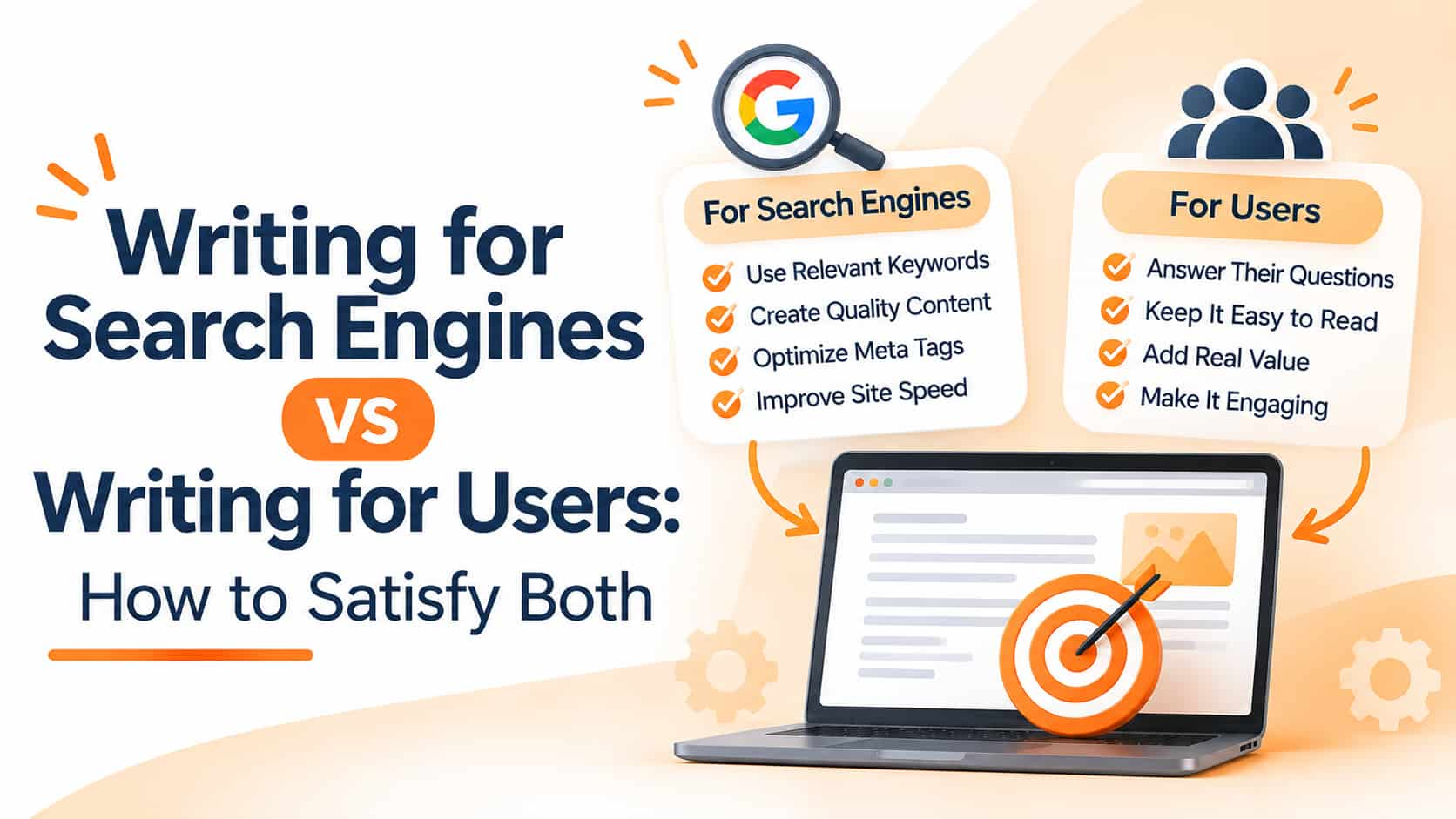
Marketing teams often describe a tension. The SEO specialist wants keywords in headings, the writer wants a natural flow, and the sales manager wants every page to push a product. The result can be content that technically targets a search phrase but reads like it was written for a robot. Readers leave quickly, search engines notice, and rankings slip. The question behind it, content for ranking versus content for users, has a simple answer: you cannot succeed with one without the other. Here is how to write for search engines and for people at the same time.
Why the choice is a false one
Search engines exist to help people find useful answers. Google has repeatedly said that its systems aim to reward helpful, reliable content written for people instead of content created mainly to manipulate rankings. That does not mean keywords no longer matter. Search engines still need to understand what a page is about, and keywords help them do that. But a page that ranks and then fails to satisfy visitors rarely keeps its position. If readers click back to the results quickly, it is a sign that the page did not meet their need. The sustainable approach is to use search data to understand what people want, then write the best possible answer.
What "writing for rankings" gets wrong
Content created mainly for ranking tends to show recognisable habits. Keywords are repeated unnaturally. Headings are stuffed with variations of the same phrase. Paragraphs are padded with generic text to hit a word count. Pages copy what competitors say without adding anything new. Topics are chosen because they have search volume, not because the business has expertise. Readers sense this immediately, and engagement suffers.
What "writing for users only" gets wrong
The opposite extreme also fails. A beautifully written article that ignores how people search may never be found. If your title uses clever wordplay but never mentions what the page is about, search engines and users have no clue. If you cover a topic but miss the questions people actually ask, competitors will fill the gap. Users-first writing still needs structure, clear language and some search research.
Start with search intent
Search intent is the reason behind a query. Some searches seek information, such as "what is GST on services". Others compare options, such as "best CRM for small business". Others aim to buy or contact, such as "bulk SMS provider in Ludhiana". Before writing, search the phrase yourself and study the top results. What type of pages appear: guides, lists, product pages, videos? What questions do they answer? What do they miss? Matching the format and depth that users expect is a ranking factor and a user satisfaction factor at once.
Use keywords as a map, not a script
Choose a main phrase and a handful of related phrases and questions. Place the main phrase naturally in the title, the first paragraph, one or two headings and the page address. Use related terms where they fit in the explanation. Read the text aloud: if a sentence sounds odd because of a keyword, rewrite it. Modern search systems understand synonyms and context, so there is no need to repeat the exact phrase many times.
Structure content so both can scan it
Readers skim before they read. Give them a clear headline, a short introduction that confirms they are in the right place, descriptive subheadings, short paragraphs and lists where appropriate. Put the direct answer near the top, then explain. This structure also helps search engines understand the topic and sometimes qualifies content for featured snippets and AI-generated summaries.
Show real expertise and experience
Content that reflects first-hand experience stands out. Include examples from your projects, real numbers where possible, photos, screenshots, case studies and honest lessons, including what did not work. Identify authors and their credentials. For topics that affect money or health, accuracy and sourcing are especially important. This kind of depth is hard for competitors to copy and builds trust with readers.
Write clearly and respect the reader's time
Use simple words and short sentences. Avoid jargon unless your audience expects it, and explain terms when you use them. Remove filler. Length should match the topic: a complex guide may need thousands of words, while a simple answer may need a few hundred. Do not stretch content to reach an arbitrary count. For Indian audiences, consider regional language versions and local examples.
Optimise titles and descriptions for humans
Your title and meta description are what people see in the results. Include the main phrase, but write them as a promise a human would want to click. Be accurate, because misleading titles cause quick returns to the results page. Avoid all-capital words and excessive punctuation.
Keep content fresh and useful
Review important pages periodically. Update facts, add new questions, fix broken links and remove outdated advice. Old pages that still bring traffic are valuable assets, and refreshing them often delivers quicker gains than creating new ones.
Measure both sides
Track search signals such as impressions, clicks and rankings in Search Console, and user signals such as time on page, scroll depth, conversions and returning visitors in analytics. If a page ranks but nobody engages, improve the content. If it engages well but gets no impressions, improve discoverability through titles, internal links and keyword coverage.
A simple checklist before publishing
Does it answer the main question clearly in the first screen? Does it match the search intent? Is it better, clearer or more original than the pages already ranking? Are headings descriptive? Do keywords read naturally? Is there evidence, an example or a first-hand detail? Is there a clear next step for the reader? Would you be comfortable showing it to a customer?
Frequently asked questions
How many times should I use the keyword?
There is no magic number. Use it where it fits naturally and cover related terms.
Does word count affect ranking?
Not directly. Completeness and usefulness matter more than length itself.
Can AI-written content rank?
Content is judged on helpfulness, not on how it is produced, but unedited generic text rarely stands out.
Create content that ranks and converts
OM Enterprises plans keyword research, content strategy and writing that serve both search engines and customers. Request a free content audit.