

WhatsApp Marketing: Send Marketing Messages With WhatsApp

Introduction
With over 2 billion active users across 180+ countries, WhatsApp is no longer just a personal messaging app — it has become one of the most powerful marketing channels available to businesses today. Unlike email or social media, WhatsApp puts your brand directly into the same space where people chat with their closest friends and family. That kind of intimacy translates into something every marketer dreams about: attention.
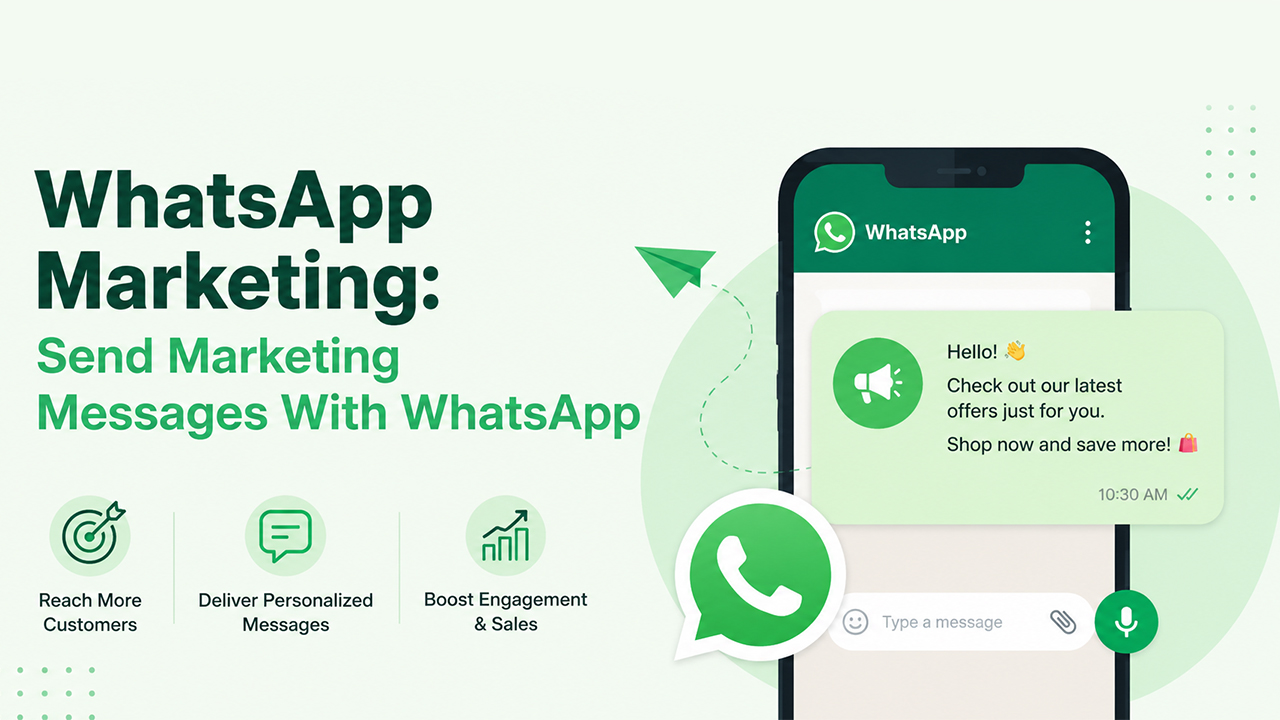
WhatsApp marketing refers to the use of WhatsApp — either through the standard Business app or the advanced Business API — to promote products, engage customers, deliver support, and drive conversions. Whether you're a local retailer or a fast-scaling e-commerce brand, WhatsApp marketing offers a direct, personal, and high-converting communication channel that traditional platforms simply can't match.
What Is WhatsApp Marketing?
WhatsApp marketing is the practice of using WhatsApp as a channel to send promotional content, transactional updates, customer support messages, and personalized communications to opted-in users. It can range from broadcasting a flash sale to thousands of subscribers, to sending a single automated order confirmation to a new customer.
The Legality of WhatsApp Marketing
WhatsApp marketing is legal — but only when done right. Meta (WhatsApp's parent company) has strict policies in place, and businesses must obtain explicit consent from users before sending them marketing messages. Unsolicited bulk messaging is a violation of WhatsApp's terms of service and can result in your account being banned. Always ensure your audience has opted in before you start sending campaigns.
WhatsApp Business Account Features for Marketing
Send Messages From Your WhatsApp Business Profile
The WhatsApp Business app allows you to create a branded profile complete with your business name, logo, description, website, and operating hours. This builds trust and gives customers confidence they're dealing with a legitimate business.
Deliver Unique and Personalized Marketing Messages
WhatsApp supports rich media — images, videos, PDFs, voice notes, and more. This enables brands to create marketing messages that feel personal rather than broadcast. Addressing a customer by name with a tailored offer feels vastly different from a generic email blast.
Automate Messages, Alerts, and Reminders
With the WhatsApp Business API, businesses can automate a wide range of communications: abandoned cart reminders, appointment confirmations, shipping updates, payment receipts, and re-engagement campaigns. Automation saves time while keeping customers informed throughout their journey.
Provide Customer Support
WhatsApp isn't just for outbound marketing. It's equally powerful as a customer support channel. Fast response times, rich media sharing, and the familiar chat interface make it easier for customers to get help — and for businesses to resolve issues quickly.
Why Growing Businesses Need WhatsApp Business API
The standard WhatsApp Business app works well for small businesses managing a handful of conversations. But as you scale, you need the WhatsApp Business API. The API allows businesses to send messages to large audiences, integrate WhatsApp with CRMs and marketing tools, assign conversations to support agents, build chatbots, and track campaign performance — all at scale. It's the difference between a bicycle and a truck.
Five WhatsApp Marketing Strategies
1. Use Click-to-WhatsApp Ads to Grow Broadcast Lists
Run Facebook or Instagram ads with a "Send Message on WhatsApp" CTA. When users click, they're taken directly into a WhatsApp conversation with your business. This is one of the fastest ways to grow your opted-in subscriber list and warm up cold leads at the same time.
2. Send Automated Promotional Messages
Use broadcast lists or API-powered campaigns to send promotional messages — new arrivals, limited-time discounts, seasonal sales — to segmented audiences. Since recipients have opted in, open rates tend to be dramatically higher than email.
3. Promote Special Offers via WhatsApp Status
WhatsApp Status (similar to Instagram Stories) lets businesses share time-sensitive promotions, product highlights, or behind-the-scenes content with all their contacts. It's a zero-cost way to keep your brand top of mind.
4. Create Personalized Messages Beyond Text
Go beyond plain text. Send product demo videos, voice messages from founders, personalized discount codes, or interactive PDF catalogs. The richer and more relevant the content, the stronger the response.
5. Boost Engagement With Customer Support
Use WhatsApp as a two-way channel. Invite customers to ask questions, share feedback, or get post-purchase support via WhatsApp. Brands that respond quickly and helpfully build loyalty that no ad budget can buy.
Benefits of WhatsApp Marketing
Higher Open and Response Rates
WhatsApp messages see open rates of up to 98% — compared to around 20% for email. Response rates are similarly higher, making it a much more effective channel for time-sensitive campaigns.
Real-Time Customer Communication
WhatsApp enables instant, two-way communication. Whether you're running a flash sale or answering a product query, the speed of interaction creates a better customer experience overall.
Personalized Customer Experiences
With segmentation and rich media support, every interaction can feel tailor-made. Customers are far more likely to engage with content that feels relevant to them specifically.
Better Lead Nurturing and Retention
WhatsApp's conversational nature makes it ideal for nurturing leads over time. A well-timed message — a helpful tip, a personalized recommendation, a loyalty reward — can turn a one-time buyer into a lifelong customer.
Best Practices for WhatsApp Marketing
Get user consent before messaging — always use opt-in forms or keyword triggers to build your list legally.
Avoid spammy promotional campaigns — too many sales messages will drive unsubscribes and account flags.
Segment your audience — send different messages to new leads, existing customers, and lapsed buyers.
Track campaign performance — monitor delivery rates, open rates, reply rates, and conversions to optimize over time.
Common WhatsApp Marketing Mistakes to Avoid
Sending too many promotional messages — frequency matters. Overwhelming subscribers causes opt-outs and complaints.
Ignoring customer support queries — if you're using WhatsApp as a marketing channel, you must also manage inbound messages responsibly.
Using generic messaging — one-size-fits-all campaigns underperform. Personalization is the standard, not the exception.
Violating WhatsApp policies — sending spam or purchasing contact lists can get your number permanently banned.
Improve Your Marketing Efforts With WhatsApp Business API
For businesses serious about scaling their WhatsApp marketing, the Business API is non-negotiable. It unlocks automation at scale, CRM integration, multi-agent support, analytics dashboards, and chatbot capabilities. Paired with a WhatsApp Business Solution Provider (BSP), it becomes one of the most cost-effective and high-performing marketing channels in your stack.
Conclusion
WhatsApp marketing is not a trend — it's a fundamental shift in how businesses communicate with customers. With unmatched open rates, real-time two-way communication, and the ability to deliver genuinely personalized experiences, it outperforms most traditional digital marketing channels. The key to success lies in respecting your audience: get proper consent, send relevant content, respond promptly, and use the right tools for your scale.
Whether you're just setting up your WhatsApp Business profile or ready to integrate the full API, the businesses that embrace this channel now will have a significant advantage over those that wait. Start building those conversations — your customers are already there.