

WhatsApp Business API Pricing 2026: What Indian Businesses Actually Pay Per Message

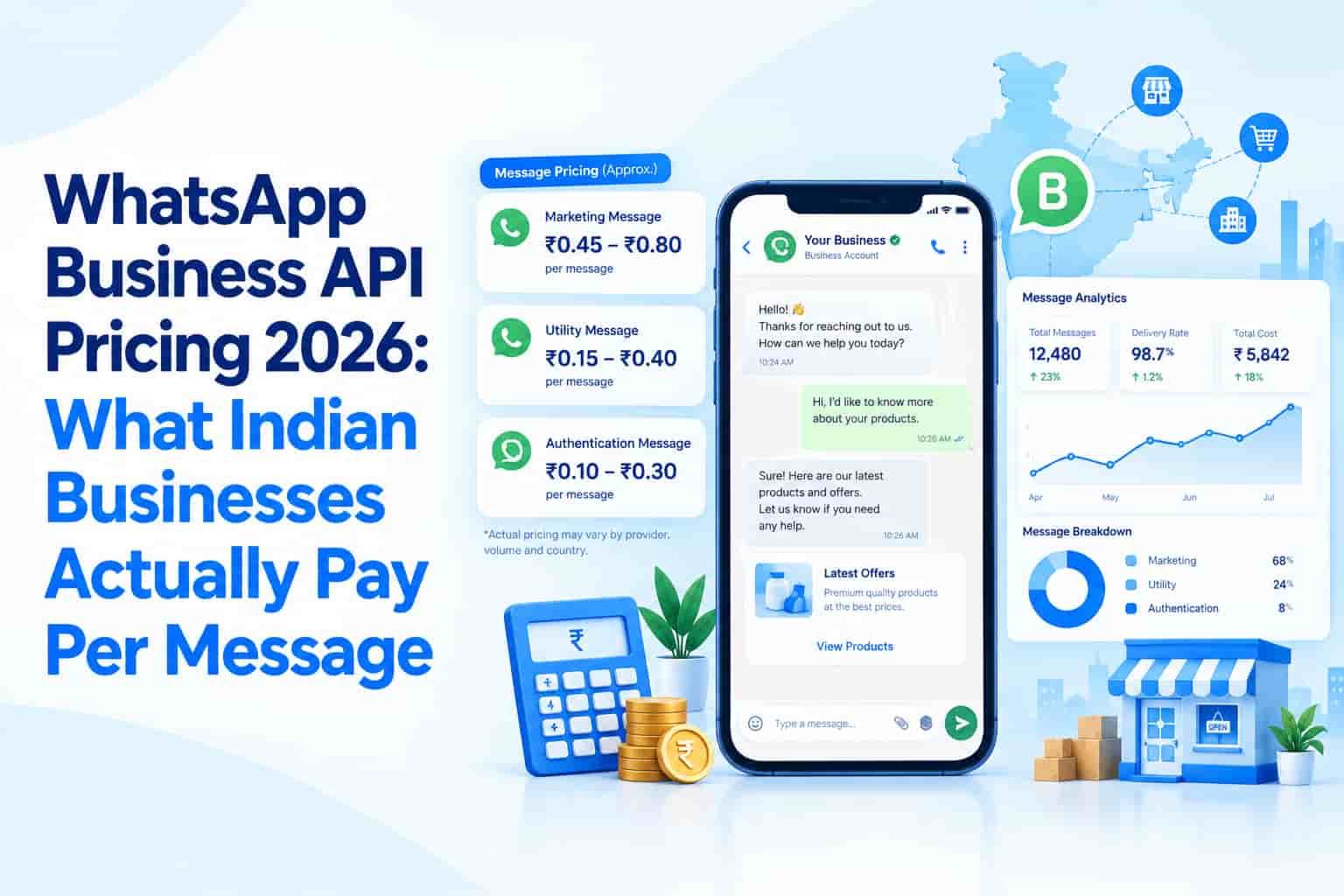
A business budgets for WhatsApp campaigns using pricing information from an old blog post, launches a festive promotional push, and is surprised by the actual bill — because WhatsApp's pricing model changed in 2025 from per-conversation to per-message, and a lot of still-circulating guidance hasn't caught up. Getting the current model right matters directly for campaign budgeting, not just as a technical detail.
The Shift to Per-Message Pricing
Meta moved WhatsApp Business Platform pricing from a per-conversation model to per-message pricing, meaning businesses are charged for each individual template message sent, rather than paying once for a 24-hour conversation window regardless of how many messages were exchanged within it. This changes the economics of high-frequency messaging specifically — sending several separate template messages within a short window now costs more proportionally than it would have under the old conversation-based model.
The Three Template Categories
Every business-initiated template message falls into one of three categories, each priced differently by Meta and passed through by the messaging provider: Marketing templates (promotions, offers, announcements) generally carry the highest per-message rate; Utility templates (order updates, appointment reminders, account notifications tied to an existing transaction) are typically priced lower; and Authentication templates (OTPs) usually carry their own distinct, often lower, rate given their high volume and low-margin nature for providers.
What's Still Free
Messages sent within an open 24-hour customer service window — triggered when a customer messages the business first — remain free for standard replies, and Utility template messages sent within that same open window are also typically free or reduced. This makes conversations initiated by the customer (a support query, a product question) meaningfully cheaper to respond within than a business-initiated broadcast, which is worth factoring into how support and marketing teams plan their WhatsApp usage differently.
Rates Vary by Recipient Country and Category
Per-message rates are set per recipient country and category combination, meaning a Marketing template sent to a customer in India is priced differently from the same template sent to a customer elsewhere — businesses running WhatsApp campaigns to audiences across multiple countries need to budget per-market rather than assuming a flat global rate.
Budgeting Practically for Festive Campaigns
Given per-message pricing, a festive WhatsApp campaign's real cost depends heavily on template category mix — a campaign built mostly around Utility-style order and offer-status updates within open service windows costs meaningfully less than one relying on repeated cold Marketing template blasts to a full customer list. Segmenting the send list (customers who've engaged recently vs. a cold list) and favoring genuinely useful, well-timed messages over frequency both help control cost while likely improving engagement.
Frequently Asked Questions
Is WhatsApp still free for basic customer support replies?
Yes — standard replies within an open 24-hour customer service window, triggered by the customer messaging first, remain free under the current model.
Does the same WhatsApp template cost the same everywhere?
No — per-message rates vary by recipient country as well as by template category, so campaigns targeting multiple markets should budget per-market rather than assuming a single flat rate.
Budgeting WhatsApp Campaigns Correctly From the Start
Getting the current per-message, per-category pricing model right at the planning stage avoids the kind of budget surprise that derails a campaign mid-flight. OM Enterprises sets up and manages WhatsApp Business API campaigns for Indian businesses with pricing modeled accurately against the current per-message structure, not outdated conversation-based assumptions.