

Website Security and SEO: Why HTTPS, SSL, and Malware Scans Affect Rankings

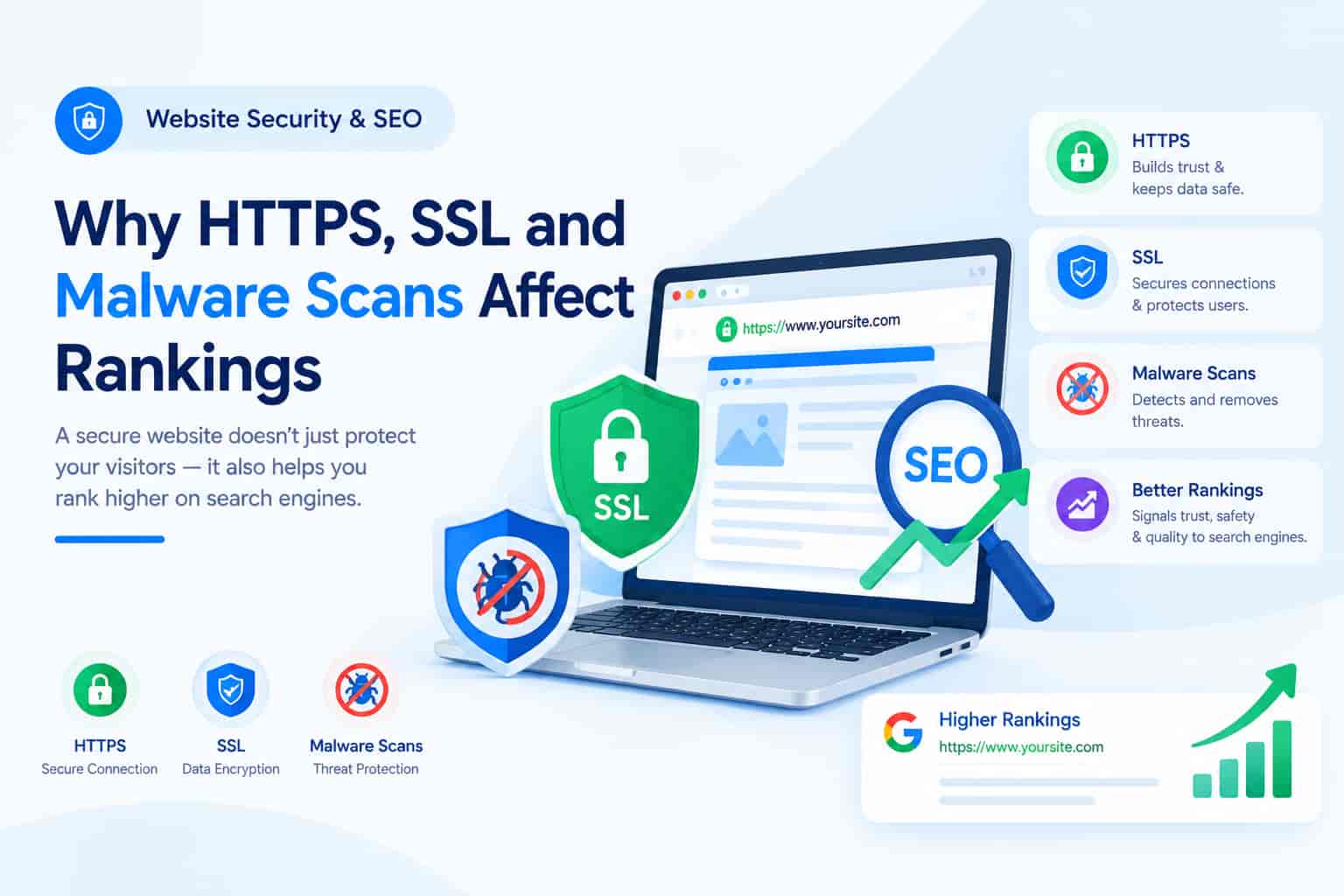
A business's organic traffic drops sharply overnight, and the marketing team spends a week investigating content and backlinks before discovering the real cause: the site was flagged by Google as having malware, and Chrome has been showing visitors a full-page security warning before they can even reach the homepage. Security issues are one of the few problems that can undo months of SEO progress within days, and they're often caught late precisely because they don't look like a typical SEO problem.
HTTPS as a Baseline, Not a Bonus
An SSL certificate and HTTPS (rather than plain HTTP) have been a baseline expectation for years, not a competitive advantage — browsers actively warn visitors when a site lacks HTTPS, which damages trust and conversion regardless of any direct ranking effect. What catches businesses out isn't usually the initial HTTPS setup but expired certificates: a certificate that lapses without renewal triggers browser security warnings immediately, and depending on how quickly it's caught, can meaningfully dent both traffic and trust before anyone notices the cause.
How Malware and Hacks Directly Damage SEO
When Google's Safe Browsing systems detect malware, injected spam content, or phishing behavior on a site, it can trigger warning interstitials in Chrome and a manual action or security notice in Search Console, both of which actively discourage visitors and can suppress rankings until the issue is resolved and a review is requested. A common and often unnoticed attack pattern is injected spam content — hidden text or links inserted into existing pages, invisible to a casual visitor but visible to search engines — which can both damage rankings for the affected pages and associate the site with spam link networks.
What Regular Monitoring Should Include
Google Search Console's Security Issues report flags known malware, hacked content, and social engineering detections directly, and should be checked regularly rather than only when traffic drops. Keeping CMS platforms, plugins, and themes updated closes the most common entry points attackers use, since outdated plugin vulnerabilities are a frequent cause of e-commerce and WordPress site compromises specifically. A basic uptime and file-integrity monitoring service that alerts on unexpected changes to core site files can catch an intrusion far earlier than waiting for a visible symptom or a ranking drop.
Recovering From a Security Incident
If a site is compromised, the sequence matters: identify and remove the malicious code or content first, patch the vulnerability that allowed the intrusion (not just the visible symptom), then request a review through Search Console once the site is genuinely clean — requesting a review before the underlying issue is fixed typically results in a repeat flag once Google re-crawls the site. Recovery time varies, but the ranking and trust impact of a security incident often outlasts the technical fix itself, since some of the traffic lost during a warning period doesn't fully return even after the warning is cleared.
Frequently Asked Questions
Does HTTPS directly boost search rankings?
Google has confirmed HTTPS is a lightweight ranking signal, but its bigger practical impact is on visitor trust and avoiding browser security warnings that actively drive visitors away.
How quickly does Google detect a hacked or malware-infected site?
Detection timing varies, but Search Console's Security Issues report and Chrome's Safe Browsing warnings are usually the fastest way a business finds out, often before the business notices any other symptom.
Treating Security as an SEO Responsibility
Website security isn't a separate IT concern from SEO — an undetected compromise can undo far more ranking progress in days than most content or link-building efforts can rebuild in months. OM Enterprises includes security monitoring and Core Web Vitals checks as part of ongoing technical SEO management for Indian businesses, rather than treating them as unrelated concerns.