

Website Redesign and SEO: How to Avoid Losing Rankings During a Relaunch

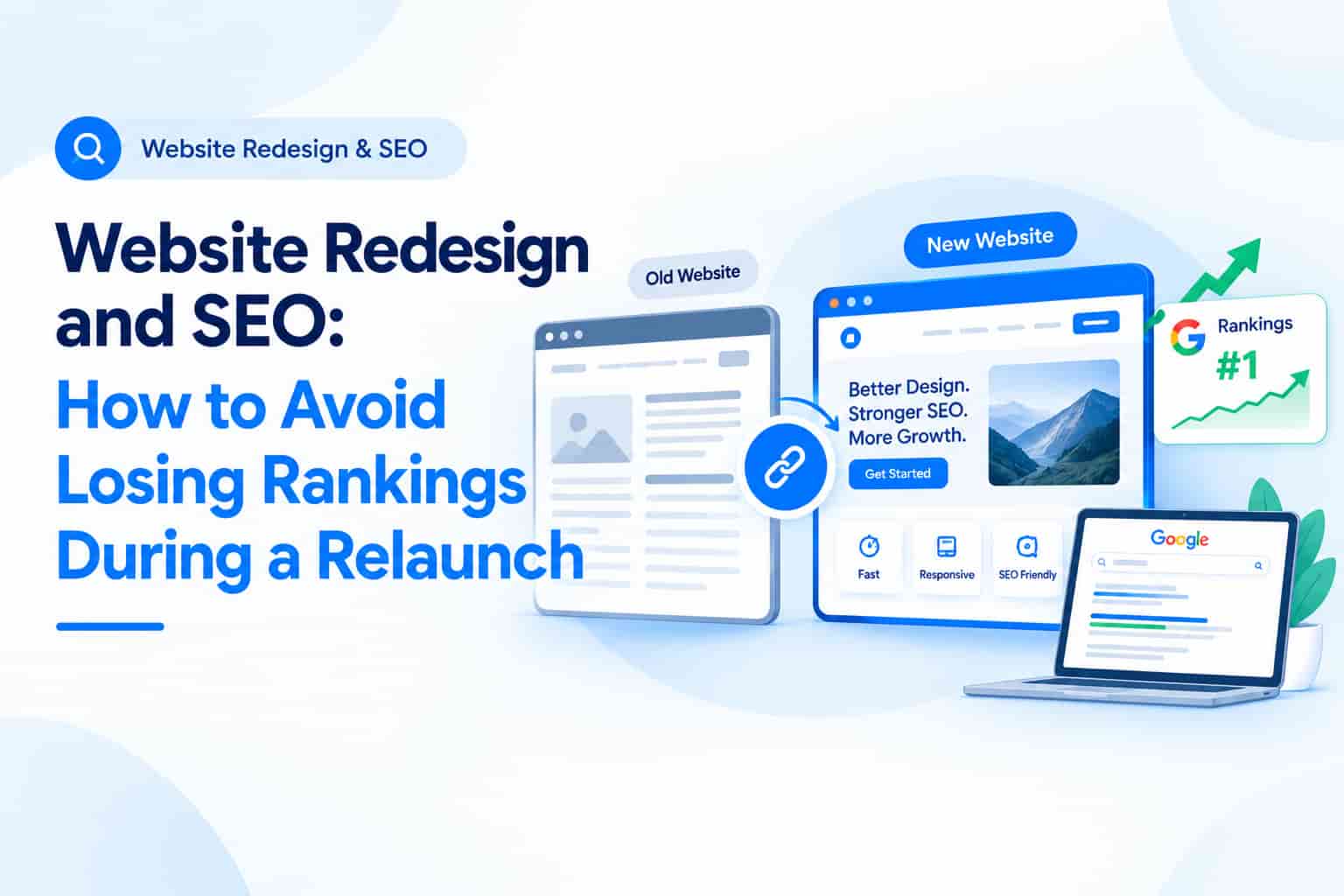
A business relaunches a beautifully redesigned website, celebrates the new look for a week, and then watches organic traffic drop by half over the following month — not because the new design is worse, but because dozens of ranking pages either changed URLs without redirects or lost content that was quietly holding their rankings together. Website redesigns are one of the most common, and most avoidable, causes of a sudden SEO traffic collapse.
Why Redesigns Are So Risky for SEO
A redesign often touches everything at once — URL structure, page content, internal linking, page templates, and sometimes the underlying platform itself — and any one of these changes alone can affect rankings; changing several simultaneously, without a plan to preserve what was working, multiplies the risk. The team building the new design is usually focused on visual and user experience goals, while the SEO impact of structural changes goes unchecked until traffic has already dropped.
The Non-Negotiable First Step: A Complete URL Inventory
Before any redesign work begins, every existing URL that receives organic traffic or holds backlinks needs to be documented, along with its current ranking keywords and traffic level. This inventory becomes the reference point for the single most important technical requirement of any redesign: a complete 301 redirect map from every old URL to its new equivalent, with no old URL left returning a 404 after launch.
Preserving Content That's Already Ranking
A redesign frequently comes with a content refresh, and it's tempting to significantly shorten or rewrite pages that are already ranking well in the name of a cleaner new design — but content that took months or years to earn its ranking signals can lose that standing if substantially rewritten or shortened without a clear reason tied to genuinely improving the page, not just aesthetics. Preserving the core ranking content while updating design and layout around it is safer than a wholesale content rewrite during the same launch.
Internal Linking Structure Often Breaks Silently
A new site architecture frequently changes navigation menus, footer links, and related-content modules — and if this isn't mapped carefully, previously well-linked, high-authority pages can end up with far fewer internal links pointing to them post-launch, quietly weakening the internal signals that helped them rank. Auditing internal link counts to key pages before and after launch catches this before it shows up as a ranking drop weeks later.
Testing and Monitoring Before and After Launch
Before going live, crawling the staging site with an SEO crawler tool catches broken redirects, missing meta tags, and accidental noindex tags left over from development — these are cheap to fix before launch and expensive to discover after. After launch, close monitoring of Search Console's Coverage and Performance reports for the first several weeks catches any issues the pre-launch check missed, while there's still time to fix them before real ranking damage accumulates.
A Realistic Timeline Expectation
Even a well-executed redesign typically sees a brief dip in rankings as Google re-crawls and re-evaluates the new site structure — this is normal and usually recovers within a few weeks if the redirect map and content preservation were handled correctly. A dip that doesn't recover, or that gets progressively worse, signals an unresolved technical issue rather than a normal transition period.
Frequently Asked Questions
Is some ranking drop during a redesign always expected?
A brief, temporary dip while Google re-crawls the new site is common and usually recovers within weeks; a drop that persists or worsens signals an unaddressed technical problem like missing redirects.
Should ranking content be rewritten during a redesign?
Not by default — content that's already ranking well should generally be preserved and updated incrementally rather than substantially rewritten purely to match a new design aesthetic.
Redesigning Without Starting SEO Over
A website redesign doesn't have to mean rebuilding search visibility from zero — with a proper URL inventory, redirect map, and content preservation plan, a new design and strong SEO aren't in conflict. OM Enterprises manages the SEO side of website redesigns and migrations for Indian businesses, so a visual relaunch doesn't come at the cost of years of earned rankings.