

Voice Search Optimization: Is It Still Relevant for Businesses in 2026?

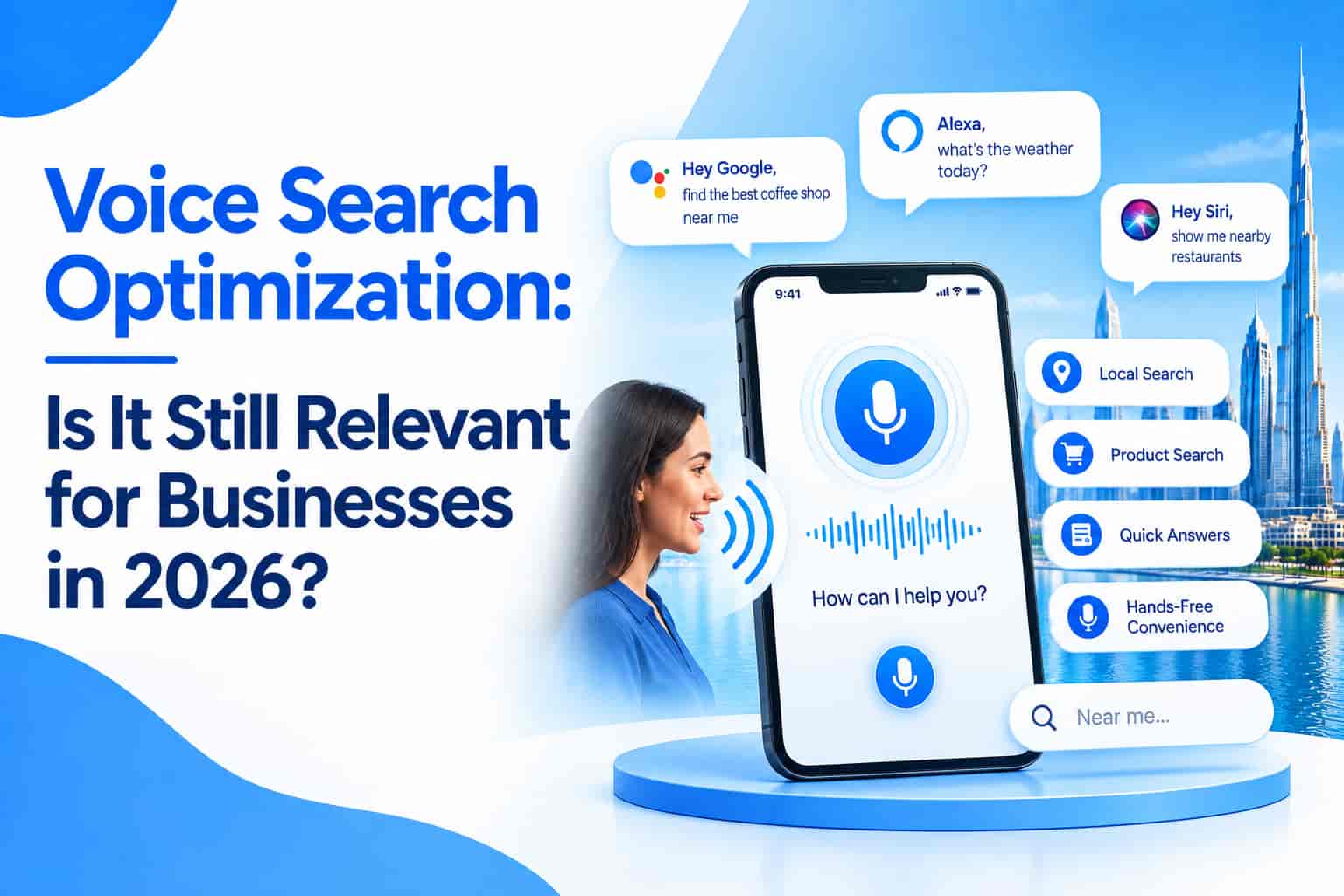
A business owner asks whether they need a "voice search strategy" after reading a five-year-old article predicting half of all searches would be voice-based by now. That specific prediction never quite materialized the way it was framed, but the underlying question — how do people phrase questions when speaking rather than typing, and does content need to account for that — is more relevant now than when the original prediction was made, just not for the reasons most articles from that era assumed.
Why the Original Voice Search Hype Overstated Itself
Early voice search predictions imagined a future where typed search was largely replaced by spoken queries to smart speakers and phone assistants. That shift happened only partially — voice search is genuinely common for simple, quick tasks (weather, timers, playing music, quick facts) but hasn't replaced typed search for research-heavy or comparison-based queries, where seeing multiple results side by side still has clear advantages over a single spoken answer.
What's Actually Changed: Conversational Query Patterns
The more durable shift isn't about voice specifically — it's that both voice assistants and AI chatbots have normalized longer, more conversational, question-phrased queries ("what's the best CRM for a 10-person sales team" rather than "best CRM small business"). Content written to directly answer specific, naturally phrased questions performs well for this pattern regardless of whether the query arrived by typing or speaking, which is why voice search optimization and AI/conversational search optimization have largely converged into the same practical approach.
Where Voice Search Still Has a Distinct, Practical Use Case
Local, action-oriented queries remain a genuine voice search stronghold — "call the nearest pharmacy," "directions to [business name]," "is [restaurant] open right now" — because these are hands-free, quick-answer use cases well suited to speaking rather than typing, particularly while driving or multitasking. For local businesses, this means the standard local SEO fundamentals (accurate, complete Google Business Profile, correct hours, phone number that matches everywhere) matter for voice-triggered actions specifically, since a wrong phone number in a voice-assisted call attempt fails immediately and visibly.
What a Practical Approach Looks Like Now
Rather than building a separate "voice search strategy," the more useful framing is writing content that directly and conversationally answers specific questions a real person would ask out loud — clear, complete answers near the top of relevant sections, natural question-based subheadings, and accurate, consistent local business information. This serves voice queries, AI chatbot queries, and increasingly AI Overview citations simultaneously, rather than treating each as a separate optimization target.
Frequently Asked Questions
Do businesses need separate content specifically for voice search in 2026?
Not as a distinct strategy — content written to clearly and directly answer specific, naturally phrased questions serves voice search, AI chatbots, and AI Overviews together.
Does voice search still matter for local businesses specifically?
Yes — action-oriented local queries (calling, directions, hours) remain a strong voice search use case, making accurate Google Business Profile information particularly important.
Optimizing for How People Actually Ask Questions
The businesses getting this right aren't chasing "voice search" as a separate checklist item — they're writing content that answers real questions clearly, which happens to serve voice, chat, and traditional search all at once. OM Enterprises builds content and local SEO strategies for Indian businesses around this convergence, rather than treating each search mode as a separate project.