

The Psychology Behind Viral Content

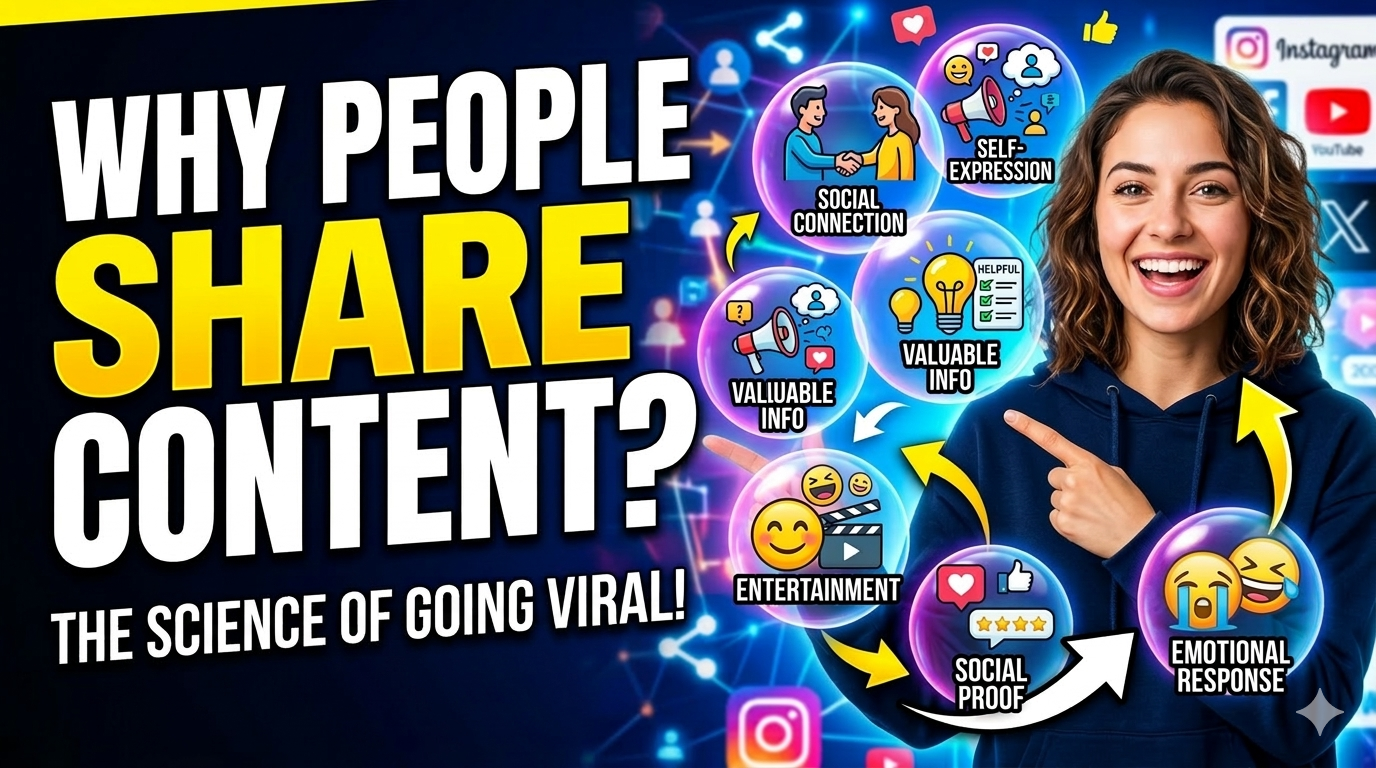
Every viral post, video, or tweet that swept the internet shares something deeper than luck or timing — it tapped into the raw, wired instincts of the human mind. Understanding why people share is understanding human nature itself.
Why People Share Content
Sharing is a social act before it's a digital one. When someone reposts an article or forwards a meme, they're communicating something about who they are, what they value, and how they see the world. Research from The New York Times suggests people share to bring value to others, to define themselves, and to maintain relationships. Viral content doesn't just spread — it gives people a reason to reach out, connect, and say "this is me."
The Role of Emotions
Emotion is the engine of virality. Content that triggers a strong emotional response — whether positive or negative — is dramatically more likely to be shared than content that leaves people neutral. Jonah Berger's landmark research found that high-arousal emotions like awe, excitement, anxiety, and anger drive sharing far more effectively than low-arousal emotions like sadness or contentment.
The most shareable emotional cocktails tend to be:
Joy & DelightAwe & WonderRighteous AngerAnxiety & FearDeep Empathy
Surprise Grabs Attention
The human brain is a prediction machine, constantly anticipating what comes next. Surprise — the moment reality diverges from expectation — triggers a neurological spike that forces attention. Content that subverts expectations, delivers an unexpected twist, or challenges assumed wisdom gets stored differently in memory. It gets talked about. Surprise is the biological equivalent of a share button built into our brains.
"The brain's reward circuitry lights up most intensely not when something predictable happens — but in the electric moment just before the unexpected."
Stories That Connect
Narrative is the oldest technology humans possess. Stories activate more regions of the brain than raw information — listeners experience a phenomenon called neural coupling, where their brain activity mirrors the storyteller's. Viral content frequently follows a simple arc: a relatable struggle, a turning point, a satisfying resolution. Whether it's a 30-second TikTok or a 3,000-word essay, the story structure is what makes people lean in — and share on.
Humor as a Viral Spark
Laughter is social glue. A well-timed joke or absurdist meme creates an in-group signal — sharing it says "we both get this." Humor reduces psychological distance, which is why brands that can make audiences laugh often see outsized engagement. The key is specificity: humor that speaks to a niche feels more intimate and shareable than broad comedy that tries to appeal to everyone.
The Power of Relatability
When people encounter content and think "this is exactly me" or "I've never seen this articulated before but I've felt it my whole life," they become evangelists. Relatability creates the sensation of being understood — one of the deepest human needs. The viral tweet that captures a universal Monday morning feeling, the video that perfectly depicts parenting frustration — these spread because sharing them is a way of saying "someone finally gets it."
Social Proof and FOMO
Humans are deeply tribal. When content is already popular — already racking up comments, shares, and reactions — it becomes more compelling to join. Social proof tells the brain that engagement is safe, worthwhile, and socially rewarded. FOMO (Fear of Missing Out) amplifies this: time-limited trends, breaking news, and "everyone is talking about this" framing create urgency that bypasses rational deliberation and drives impulsive sharing.
Simplicity Keeps It Shareable
Cognitive ease is shareable; cognitive friction is not. Content that can be understood in seconds, summarized in a sentence, and repeated in casual conversation has a structural advantage. The most viral ideas are ones that feel instantly transmittable — a catchy phrase, a memorable image, a one-liner that contains a universe. Complexity can go viral, but only when it's been compressed into a simple, striking container.
Timing and Trends Matter
Even the most psychologically potent content can fall flat if it arrives at the wrong moment. Viral success often depends on cultural timing — content that rides a news cycle, taps into a trending conversation, or drops at the precise moment an audience is primed to receive it. Algorithms on every major platform reward early momentum, which means posting at peak engagement windows and hitching to trending topics can dramatically amplify organic reach.
Real Examples of Viral Wins
Consider Dove's "Real Beauty" campaign — it blended relatability, emotional resonance, and a challenge to dominant cultural narratives. Or the Ice Bucket Challenge, which fused social proof, FOMO, humor, and personal challenge into one unstoppable format. More recently, quiet TikTok creators with micro-audiences have sparked global trends simply by capturing a hyper-specific, deeply relatable slice of everyday life at exactly the right moment.
Case Snapshot — Ice Bucket Challenge
Combined social proof (friends nominating friends), FOMO (publicly visible participation), humor (the spectacle), and purpose (ALS awareness). Raised $115 million in 8 weeks — a masterclass in layered psychological triggers.
The Downside of Going Viral
Virality is not inherently positive. Content can explode for the wrong reasons — a poorly worded tweet, a misunderstood clip, a campaign that lands differently than intended. Brands and individuals who go viral unexpectedly often face coordinated criticism, out-of-context framing, or the sheer overwhelming velocity of attention they weren't prepared for. Going viral without a strategy for managing the aftermath can be as damaging as never going viral at all.
Ethical Lines in Viral Content
The same psychological mechanisms that make content shareable can be weaponized. Manufactured outrage, clickbait that exploits anxiety, misinformation framed as revelation — these spread using the exact same triggers as legitimate viral content. Ethical content creation means asking not just "will this spread?" but "should this spread?" Audiences are increasingly savvy, and trust — once lost through manipulation — rarely returns.
⚠️ Exploiting fear, manufacturing controversy, and spreading misinformation may generate short-term spikes but cause lasting damage to credibility and audience trust.
How Platforms Shape Virality
Each platform has its own virality grammar. Twitter/X rewards brevity and provocation. Instagram prioritizes aesthetic and aspiration. TikTok's algorithm surfaces novelty and native creativity regardless of follower count. LinkedIn rewards professional insight and vulnerability in equal measure. Understanding platform culture isn't optional — it's the difference between content that fits and content that forces. The same core message needs to be reformatted, re-toned, and re-paced for each environment.
Crafting Viral Content Strategies
Virality can't be manufactured on command, but it can be engineered for probability. Successful content strategies combine consistent emotional targeting, a deep understanding of platform mechanics, and a high volume of quality output — because even the best-crafted content doesn't always land. The goal isn't to create one viral post; it's to build a body of work where multiple pieces have genuine viral potential, so when conditions align, you're ready.
Creativity Drives the Viral Wave
At the intersection of psychology, timing, platform savvy, and genuine creative courage is where viral content lives. No formula guarantees it. But understanding why people share — their hunger for emotion, connection, surprise, laughter, and identity — gives creators a profound advantage. The best viral content doesn't trick people into sharing. It gives them something so true, so funny, so moving, or so surprising that not sharing would feel like a small loss. That's the standard worth aiming for.