

The Importance of a Google Business Profile for Local Businesses

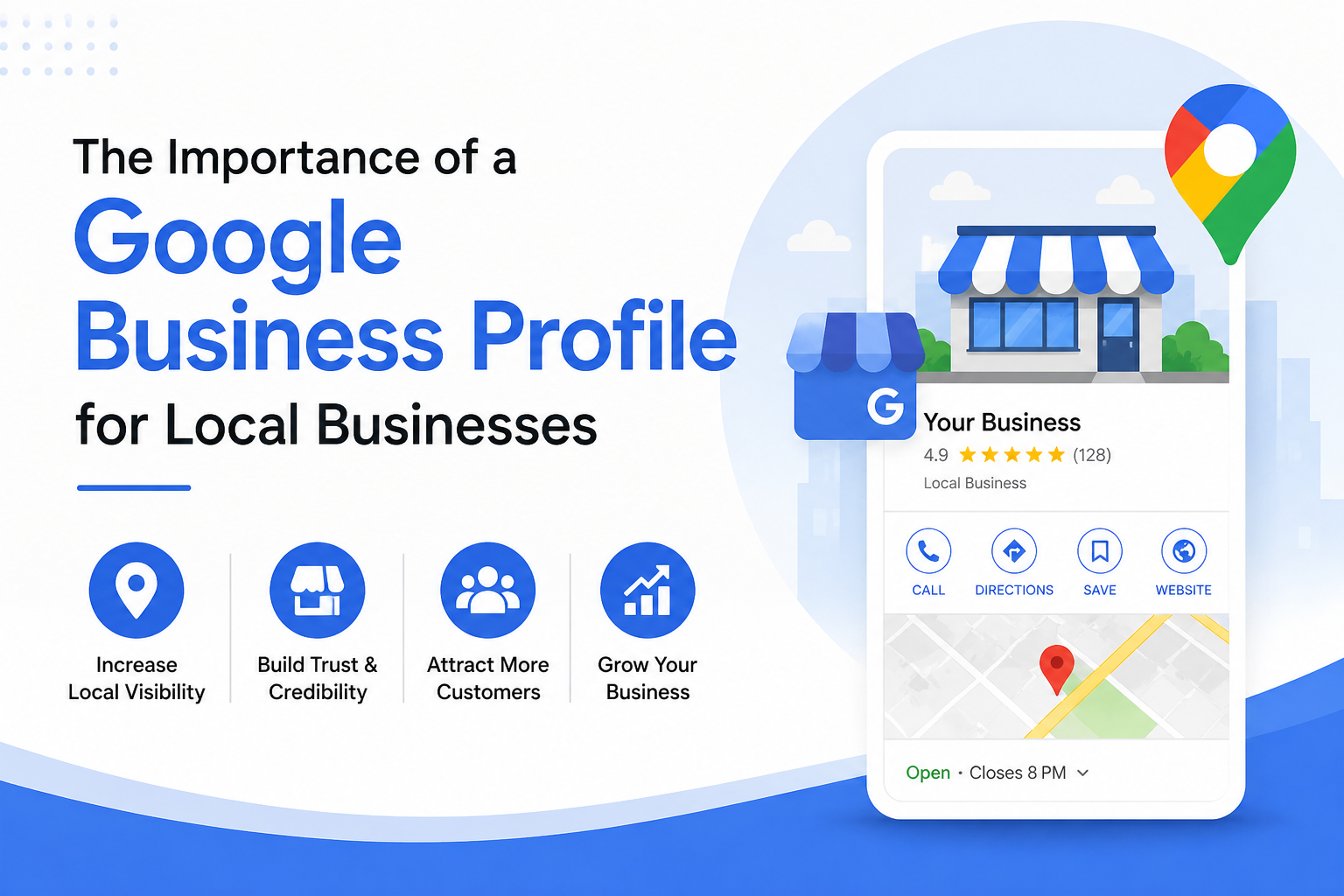
If you run a local business, there's a good chance most of your new customers find you before they ever visit your website. They find you on a map. A quick search for "plumber near me" or "coffee shop open now" pulls up a set of business listings, a star rating, a photo, and a "Directions" button — all before a single website link appears. That listing is your Google Business Profile (GBP), and for local businesses, it has quietly become one of the most valuable pieces of digital real estate you can own.
A Google Business Profile is the free listing that controls how your business shows up in Google Search and Google Maps: your name, address, phone number, hours, reviews, photos, and more. It's often the very first impression a potential customer has of your business, and in many cases, it's the only impression they need before deciding to call, visit, or choose a competitor instead. Below, we'll look at why a well-optimized GBP matters so much, how it connects to your website, and the best practices that will help you get the most out of it.
Why a Visible, Optimized GBP Means Everything
Map Results Are Near the Top of Local Search
When someone searches for a local product or service, Google typically displays a "map pack" — a cluster of three business listings with a map — right at the top of the results page, often above traditional organic listings. This prime placement means your GBP can outrank your own website for the searches that matter most. If your profile isn't claimed, isn't complete, or isn't optimized, you're handing that top-of-page visibility to competitors who took the time to set theirs up properly.
…and Local Search Is Increasingly the Default
It's not just that map results rank well — it's that local intent is baked into more searches than ever. People don't type "best Italian restaurant in [city]" as often anymore; they just search "Italian restaurant" and let Google infer their location. Voice search, mobile search, and "near me" queries have made location-aware results the norm rather than the exception. For a local business, this means nearly every relevant search is, in effect, a local search — and your GBP is what determines whether you show up in it.
Grow Visibility, Not Just Traffic
It's tempting to measure digital marketing success purely by website clicks, but a GBP often creates value without ever sending someone to your site. A customer might see your listing, check your hours, read your reviews, get directions, and walk through your door — all without a single website visit. That's still a conversion. An optimized GBP grows your overall visibility and generates calls, direction requests, and foot traffic that traditional website analytics won't capture, but that matter just as much to your bottom line.
Yes, It Matters for AI Too
As AI-powered search and assistants become part of how people find local businesses, the structured, verified data in your GBP — categories, hours, services, reviews — is exactly the kind of information these systems pull from to answer questions like "is this pharmacy open right now" or "which hardware store has the best reviews nearby." A thin or outdated profile gives AI tools less to work with, and less reason to recommend you. Keeping your GBP accurate and detailed helps ensure you're represented correctly as search continues to evolve beyond the traditional results page.
Your GBP Even Supports Ads
Your Business Profile isn't just an organic asset — it also feeds into paid efforts. Local service ads, Google Ads location extensions, and Performance Max campaigns can all draw on your GBP data to show searchers your address, hours, and rating alongside a paid listing. A strong, accurate profile makes your ad spend work harder, since the same trust signals that help organic visibility also improve the credibility of your paid placements.
Your Website Ties In
Your GBP and your website aren't separate channels competing for attention — they work best as a team. Your Business Profile is often the first touchpoint, but your website is where a customer goes to learn more, browse your full range of services, or make a purchase. A "Website" button on your GBP should lead somewhere that reinforces what the customer just saw: consistent branding, matching contact information, and content that answers the questions your listing only touched on. Meanwhile, a well-built website with local landing pages, schema markup, and location-specific content can strengthen the local signals that help your GBP rank in the first place. Treat the two as connected parts of the same local SEO strategy, not separate projects.
Best Practices for Optimizing Your Google Business Profile
Create or Claim Your GBP
The starting point is simple: make sure your business has a profile, and that you control it. Search for your business name on Google or through the Google Business Profile Manager. If a listing already exists — sometimes created automatically by Google — claim it. If not, create one and complete the verification process, which usually involves a postcard, phone call, or email confirmation.
Ensure Consistent Name, Address, Phone Number (NAP)
Your business name, address, and phone number should match exactly across your GBP, your website, and any other online directories (Yelp, Facebook, industry-specific listings, etc.). Inconsistent NAP information confuses both customers and Google's ranking algorithms, and it can quietly undermine your local search performance even if everything else on your profile is well done.
Fill Out Secondary Information
Once the basics are in place, the details are what separate an average profile from a great one.
Categories
Choose a primary category that reflects your core business as precisely as possible, and add secondary categories for other services you offer. Categories are one of the strongest ranking signals for local search, so accuracy here matters more than it might seem.
Services
List out the specific services or products you offer, with short descriptions where possible. This helps Google match your listing to more specific searches and gives potential customers a clearer sense of what you do before they even click through.
Description
Use your business description to explain who you are, what you offer, and what makes you different — in plain, natural language rather than keyword-stuffed copy. This is your chance to speak directly to potential customers browsing your listing.
Images
Profiles with high-quality, regularly updated photos consistently earn more clicks and engagement than those without. Add photos of your storefront, team, products, and work in action. Encourage customers to add their own photos as well, since user-generated images add authenticity and freshness.
Create a System for Reviews
Reviews are one of the most influential factors in both local rankings and customer decision-making, so treat them as an ongoing process rather than something to think about occasionally.
Request Reviews
Make it easy and routine to ask satisfied customers for a review — whether that's a follow-up email, a text with a direct link, or a simple ask at the point of service. The businesses with the strongest review profiles are usually the ones that ask consistently, not just the ones with the best service.
Respond to Reviews
Reply to reviews, both positive and negative. Thoughtful responses show potential customers that you're attentive and engaged, and they give you a chance to address concerns publicly and professionally when a review isn't glowing. Google also treats review responses as a sign of an active, well-managed profile.
Conclusion
A Google Business Profile is no longer a "nice to have" for local businesses — it's often the single most important piece of your online presence. It determines whether you show up in map results, how you're represented in an increasingly local- and AI-driven search landscape, and how much trust a potential customer places in you before they've even visited your website. By claiming your profile, keeping your information consistent and complete, and building a genuine system around reviews, you give your business the best possible chance of being found, chosen, and trusted by the customers searching for exactly what you offer.