

The Future of Conversational Commerce: RCS, Chatbots & Messaging Apps

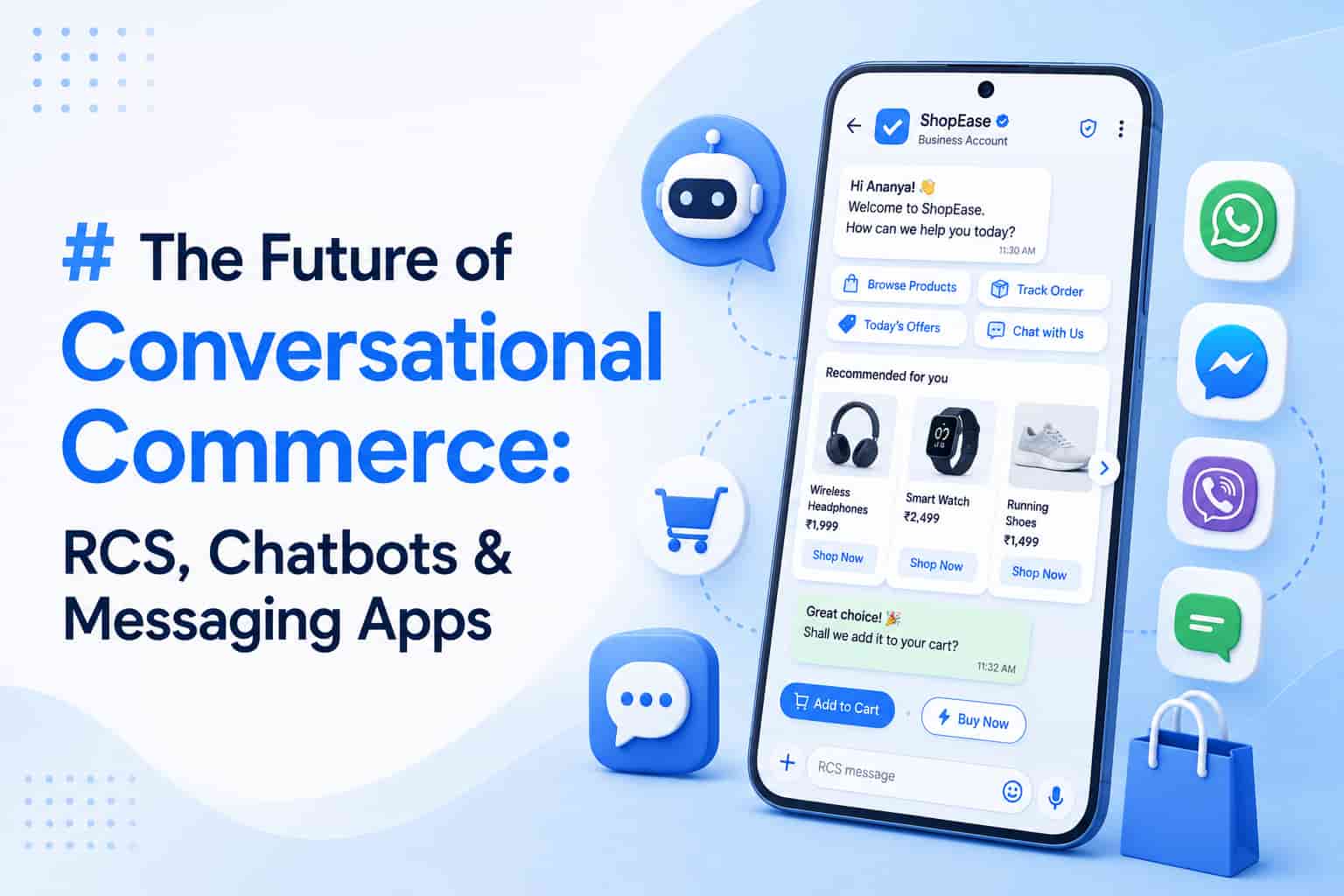
Shopping Is Moving Into the Chat Window
Conversational commerce lets customers browse, ask questions, and complete purchases inside the messaging apps they already use daily — RCS, WhatsApp, and AI chatbots are the technologies driving this shift in 2026.
Why Conversational Commerce Is Growing
Customers increasingly prefer quick, direct interactions over navigating a full website or app. A chat-based purchase path removes steps and friction, which directly improves conversion rates.
RCS: Rich Shopping Experiences in Native Messaging
RCS enables product carousels, quick-reply buttons, and secure payment links directly inside a customer's default messaging app, combining the reach of SMS with the richness of a shopping app.
AI Chatbots as Personal Shoppers
Modern AI chatbots can answer product questions, compare options, and recommend items based on stated preferences, functioning much like an in-store sales assistant available around the clock.
Messaging Apps as a Full Sales Channel
Beyond individual features, entire storefronts are now being built inside messaging platforms, letting customers complete an entire purchase journey — discovery to payment — without leaving the chat.
A Typical Conversational Commerce Journey
A customer messages a brand's RCS or WhatsApp number with a product question; an AI chatbot answers instantly and shows a small carousel of matching products; the customer taps to see more details, asks a follow-up question about sizing or delivery, then completes payment through an in-chat link — all without opening a browser or app.
Key Building Blocks You'll Need
- A verified business messaging channel — RCS or WhatsApp Business API with a trusted brand profile
- A product catalog integration that the chatbot can query in real time for accurate stock and pricing
- Secure in-chat payment support so customers never have to leave the conversation to complete a purchase
- A clear human handoff for questions the chatbot can't resolve
Conversational Commerce Across the Customer Lifecycle
Discovery: A chatbot can act as a guided shopping assistant, narrowing down options through a few quick questions rather than requiring the customer to filter a full catalog themselves. Purchase: Secure in-chat checkout removes the drop-off point where customers abandon a purchase after being redirected to an external website. Post-purchase: Order tracking, delivery updates, and easy reordering all happen in the same thread, keeping the entire relationship in one continuous conversation rather than scattered across email, SMS, and a separate account portal.
Measuring Conversational Commerce Performance
Track conversation-to-purchase conversion rate, average order value from chat-based purchases versus traditional web checkout, and time-to-purchase from first message to completed payment. Comparing these figures against your standard e-commerce funnel reveals whether conversational commerce is genuinely reducing friction or simply shifting activity from one channel to another without a real conversion lift.
What Businesses Should Do Now
Start by identifying one high-friction step in your current sales funnel — like cart abandonment or repetitive pre-sale questions — and pilot a conversational commerce solution there before expanding further.
Looking Ahead
As RCS adoption grows and AI chatbots get more capable, conversational commerce will shift from an experimental channel to a core part of the standard customer journey.
Conclusion
Conversational commerce is turning RCS, WhatsApp, and AI chatbots into full sales channels, not just support tools. By combining a verified business messaging profile, real-time product catalog integration, and secure in-chat payments, brands can remove friction from the buying journey and meet customers exactly where they already spend their time. Pilot conversational commerce on your highest-friction funnel step first, then scale it as adoption of RCS and AI-powered messaging continues to grow through 2026 and beyond.