

The Best Content Formats for SCO Success

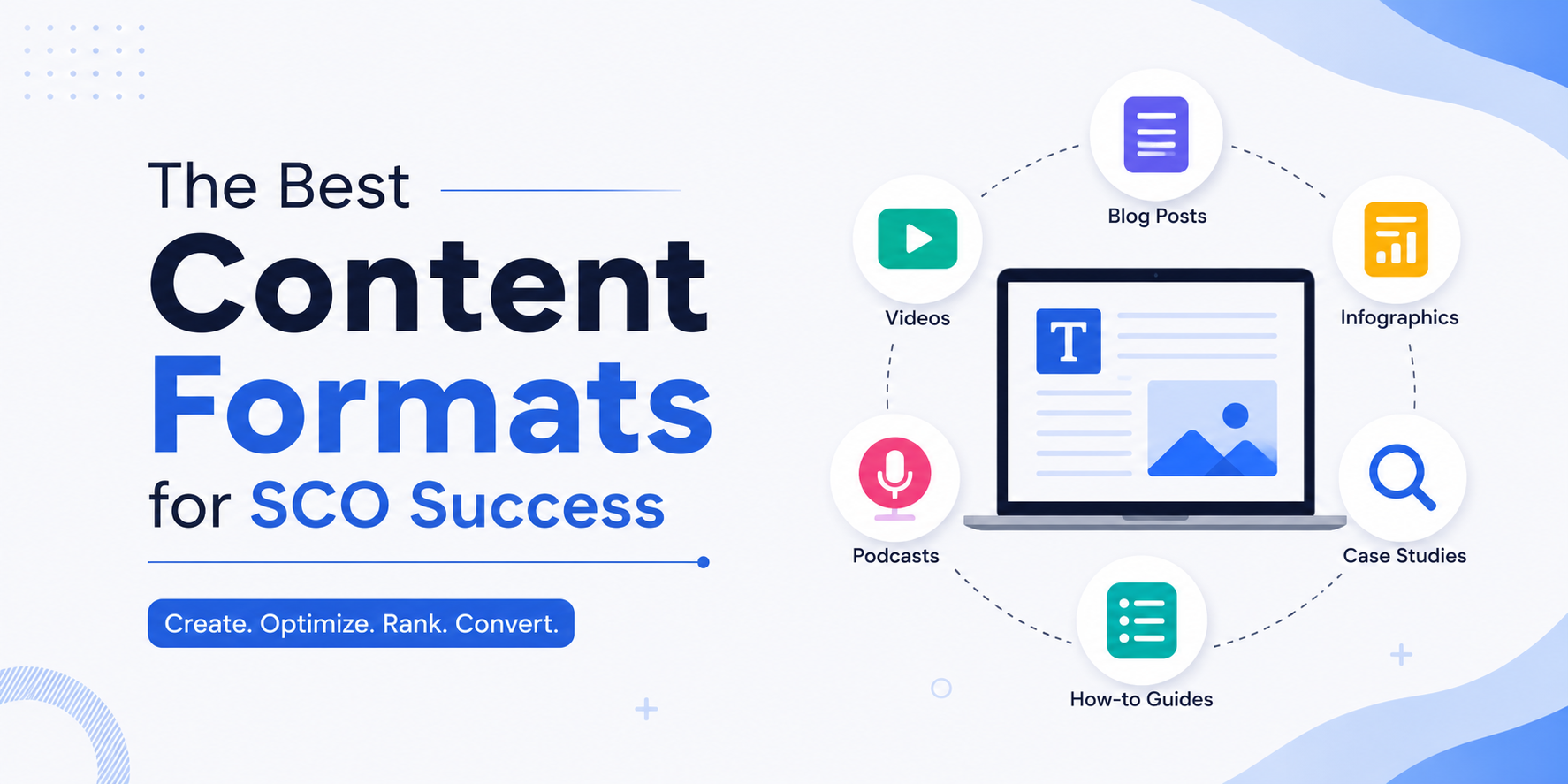
Search Content Optimization (SCO) has evolved far beyond stuffing keywords into a blog post and hoping for the best. Today's search landscape rewards content that is genuinely useful, well-structured, and matched to how people actually search — whether that's typing into Google, asking a voice assistant, or prompting an AI chatbot. One of the most overlooked levers in this new environment is content format. The same information, packaged differently, can perform dramatically better or worse depending on what searchers and search algorithms are looking for.
Choosing the right format isn't about following trends. It's about understanding search intent, matching content structure to that intent, and making your content easy for both humans and machines to parse. Below, we break down the content formats that consistently drive SCO success and explain why each one works.
1. How-To Guides and Tutorials
Step-by-step guides remain one of the most reliable formats for SCO because they align perfectly with a specific, high-value search intent: "how do I do X?" These searches are common, frequent, and often show clear commercial or informational intent.
What makes how-to content perform well is structure. Numbered steps, clear headers, and short paragraphs make it easy for search engines to extract featured snippets, and just as easy for AI-driven search tools to summarize and cite. Adding images, screenshots, or embedded video further increases dwell time and signals content quality. The key is specificity — a guide titled "How to Set Up Email Forwarding in Gmail" will consistently outperform a vague post like "Email Tips" because it maps directly onto a real search query.
2. Listicles and Comparison Posts
List-based content — "10 Best Tools for X" or "Top 7 Strategies for Y" — continues to be a top-performing format, and for good reason. Lists are scannable, easy to skim, and naturally break content into digestible chunks. This structure benefits both readers with short attention spans and search algorithms trying to identify distinct, extractable points.
Comparison posts ("X vs. Y") deserve special mention because they capture a very specific and high-intent search moment: someone deciding between two options. These posts perform best when they include comparison tables, clear criteria, and an honest verdict — vague comparisons that avoid taking a position tend to underperform because they don't resolve the reader's actual question.
3. In-Depth Guides and Pillar Content
While shorter content has its place, comprehensive "pillar" content — long-form guides that thoroughly cover a topic — plays a distinct and powerful role in SCO. These pieces work well for broad, high-competition topics where searchers want a single authoritative resource rather than fragments of information across multiple sites.
Pillar content succeeds when it's organized with a clear table of contents, jump links, and well-labeled sections, because this allows both users and search crawlers to navigate directly to the relevant portion. This format also tends to earn more backlinks, since other sites prefer linking to a single comprehensive resource over scattered short posts.
4. FAQ and Q&A Formats
As voice search and AI chat interfaces have grown, question-and-answer content has become increasingly valuable. People don't search in keywords anymore — they ask full questions. Structuring content around real questions, with direct and concise answers immediately following each one, makes it far easier for search engines to lift your answer into a featured snippet or for an AI assistant to quote your content as a source.
The best FAQ content avoids marketing fluff in the answer itself. Lead with a direct, factual response in the first sentence or two, then elaborate afterward. This "answer-first" structure is one of the single most effective techniques for SCO in an AI-search-dominated world.
5. Original Data and Research Reports
Original research, surveys, and data-driven reports are a format that's difficult to replicate — which is exactly why they perform so well. When your content contains unique statistics, proprietary data, or original analysis, it becomes a natural citation source for journalists, bloggers, and AI models alike, generating both backlinks and long-term authority.
This format requires more upfront investment than other formats on this list, but the payoff compounds over time: a single well-promoted data report can earn links and citations for years after publication, something that's rare for more generic content.
6. Video and Visual Content
Search engines increasingly display video results directly in search pages, and demonstrations, product walkthroughs, and explainer videos capture attention that text alone cannot. Pairing video with a written transcript or summary is particularly effective for SCO, since it gives search engines crawlable text while still delivering the visual experience many users prefer.
Infographics and other visual formats work similarly — they're highly shareable, which indirectly supports SCO through increased backlinks and social signals, even though search engines can't "read" images directly without proper alt text and surrounding context.
7. Case Studies
Case studies combine storytelling with proof, making them uniquely persuasive for bottom-of-funnel searches like "[product/strategy] results" or "[company] case study." They work best when structured around a clear problem-solution-result framework, with specific numbers and outcomes rather than vague claims of success.
Bringing It All Together
There's no single "best" format for SCO — the right choice depends entirely on the search intent behind a given query. Someone looking for quick instructions wants a how-to guide, not a 4,000-word pillar page. Someone comparing options wants a table, not a listicle padded with filler. The strongest content strategies mix formats deliberately: how-to guides and FAQs to capture direct-answer searches, pillar content and original research to build topical authority, and case studies or comparisons to convert high-intent visitors.
The common thread across every high-performing format is structure. Clear headers, scannable sections, answer-first writing, and logical organization aren't just good writing practices — they're what allow search engines and AI systems to actually understand, extract, and surface your content. As search continues to shift toward AI-driven summaries and conversational interfaces, that structural clarity will only become more important. Get the format right, and the rest of your SCO strategy has a real foundation to build on.