

Startup Growth Marketing on a Tight Budget: What to Do Before You Can Afford Paid Ads

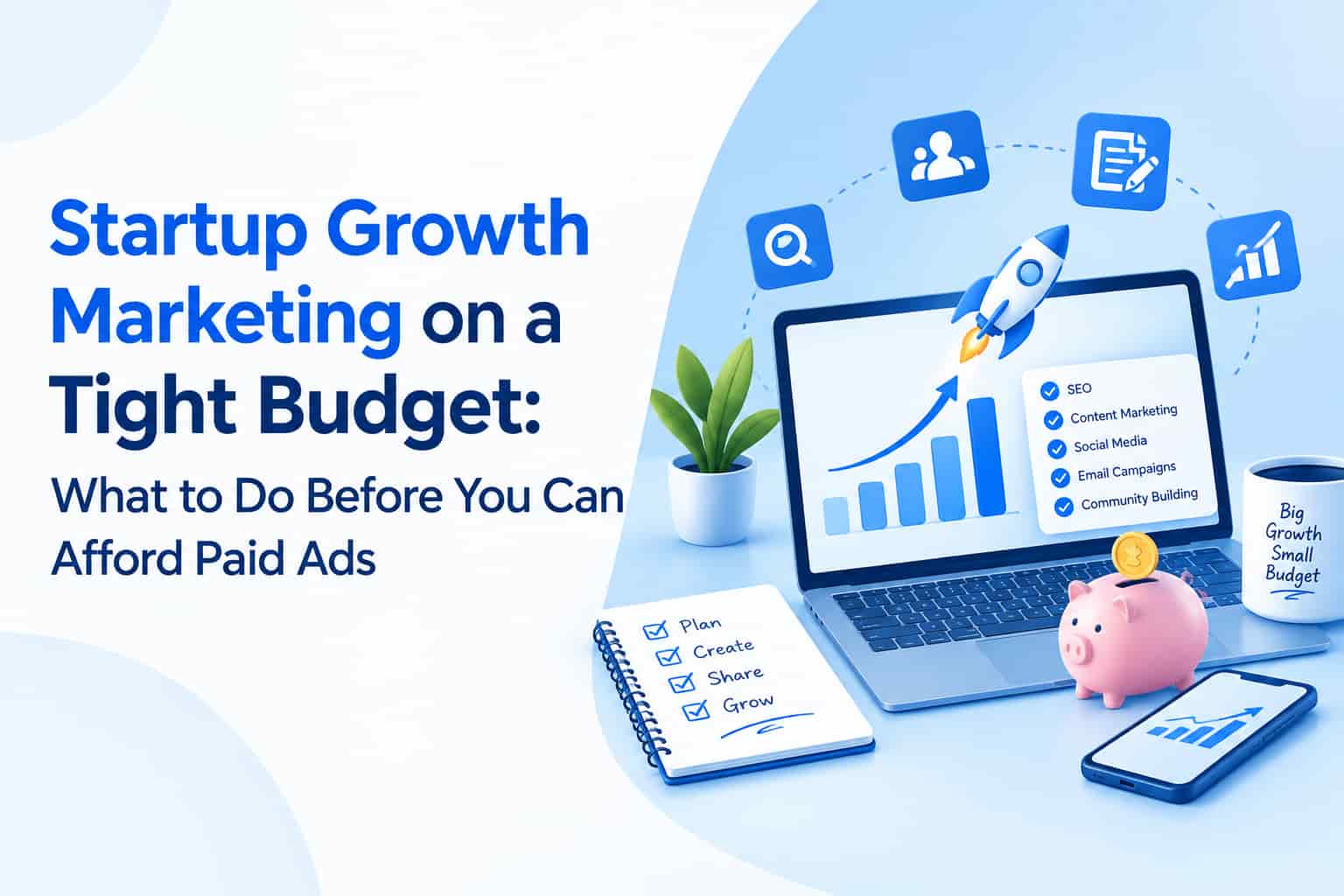
A founder with a working product and a nearly empty marketing budget watches a well-funded competitor spend more on Google Ads in a week than the entire startup has raised so far. Trying to outspend that competitor is a losing game before it starts — but plenty of startups have built real early traction without matching a competitor's ad budget at all, by spending founder time on channels money can't easily shortcut anyway.
The sequence that actually works before you can afford ads
1. Talk to customers directly, relentlessly
Early traction almost always comes from founders personally reaching out — in relevant communities, direct outreach, warm introductions — rather than from any scalable channel. This feels inefficient compared to an ad campaign, but it's how nearly every successful early-stage company actually found its first real customers, and it generates the specific language and objections that later marketing content should be built around.
2. Build one genuinely useful piece of content, not ten mediocre ones
A single deeply useful guide, tool, or resource that solves a real problem your target customer has — something worth bookmarking and sharing — earns organic traffic and backlinks far more reliably than a high volume of thin, generic blog posts published purely to "have content."
3. Get featured, don't just post
Relevant online communities, niche newsletters, podcasts, and journalists covering your specific space reach a concentrated, relevant audience for the cost of outreach time rather than ad spend — a single well-placed mention in a community your ideal customer already trusts often outperforms a broad, unfocused ad campaign at this stage.
4. Turn early customers into a visible growth engine
A simple referral incentive, genuine case studies from early customers, and making it easy for happy users to share their results publicly compounds far more cheaply than paid acquisition — and the resulting word-of-mouth is exactly the kind of signal a Performance Max or Meta Advantage+ campaign will eventually need as a data foundation once there is a budget to actually run one.
When to actually start paid ads
Paid channels perform best once there's a working conversion funnel and at least some existing data to learn from — running ads to a page with a broken conversion story mostly wastes the modest budget an early startup has. The organic groundwork above tends to naturally produce that conversion clarity, which is exactly why it belongs first, not because paid ads are a bad channel.
What to skip entirely at this stage
Broad brand-awareness campaigns, expensive design-heavy rebrands, and platforms with a large upfront learning curve relative to the audience size they'll actually reach for an unknown, early-stage brand all tend to burn scarce time and money without a clear return at this size.
FAQ
Should an early-stage startup hire a marketing agency?
Usually not yet — the direct, personal work of early customer development is something founders are typically best positioned to do themselves; an agency becomes more valuable once there's a repeatable process and budget to scale it.
How long does organic growth realistically take to show traction?
It varies enormously by market and product, but meaningful organic traction is usually measured in months of consistent effort, not weeks — patience and consistency matter more than any single tactic.
Is social media worth the time investment at this stage?
Selectively — one or two platforms where your specific target customer is genuinely active, used consistently, beat a thin presence spread across five platforms with no real audience on any of them.
Conclusion
A tight budget isn't actually the disadvantage it feels like early on — it forces a founder toward the direct customer conversations, genuinely useful content, and real community presence that build the foundation paid advertising later depends on anyway. The startups that skip straight to ad spend without that foundation usually end up paying to send traffic into a funnel that was never actually tested.