

SCO vs SEO for E-commerce: Building a Combined Search Visibility Strategy

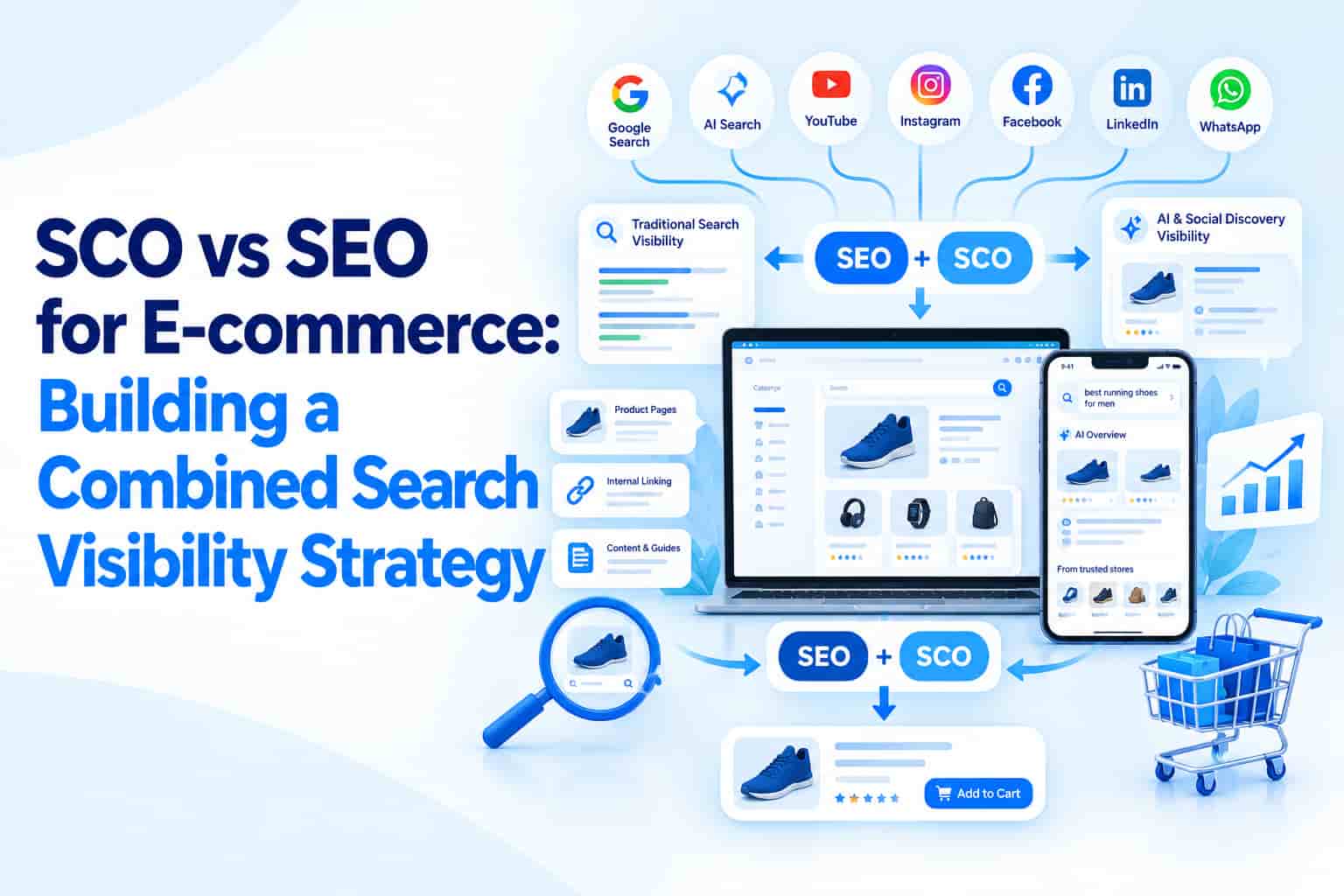
An online store ranks on page one of Google for its main product category and still watches a competitor with weaker SEO outsell it, because that competitor shows up first when the same shoppers search Instagram and YouTube for the same product. For e-commerce specifically, where a meaningful share of product discovery now happens outside Google entirely, treating SEO as the whole visibility strategy leaves real revenue on the table.
Why E-commerce Discovery Has Spread Beyond Google
A shopper researching a purchase might search Google for informational comparisons, watch an unboxing or review video on YouTube, browse a hashtag or Explore page on Instagram, and increasingly ask an AI assistant for a quick recommendation — sometimes within the same shopping session. Each of these is a genuine discovery moment a purely Google-focused SEO strategy doesn't touch, and for visually driven or considered-purchase products, these non-Google channels can influence buying decisions as much as or more than traditional search.
Where SEO Still Does the Heaviest Lifting
None of this makes SEO less important — a fast, well-structured, technically sound website with clean product pages, working structured data, and solid category-page architecture remains the foundation, because it's what actually converts the traffic that other channels drive toward it, and it's still how a large share of purchase-ready, high-intent searches ("buy [product] online," "[product] price") get satisfied. SCO doesn't replace this work; it extends visibility efforts to the channels where earlier-stage product discovery happens, feeding qualified traffic back to that same well-optimized website.
Practical SCO Additions for an Online Store
For most e-commerce businesses, the highest-value non-Google channels to invest in are the ones matching how the specific product category gets researched: YouTube for products people research via reviews or demonstrations before buying (electronics, appliances, beauty tools), Instagram and Pinterest for visually driven categories (fashion, home décor, food), and increasingly, ensuring product and brand information is structured clearly enough (accurate, detailed product descriptions, FAQ content, comparison pages) to be picked up and cited correctly by AI shopping assistants and AI Overviews when shoppers ask comparison questions.
Keeping Channels Connected, Not Siloed
The biggest practical risk in expanding beyond SEO is running each channel as its own disconnected effort — a social media team posting Reels with no link back to specific product pages, a YouTube channel with outdated pricing in video descriptions, an SEO team unaware of which products are currently being promoted elsewhere. Consistent product information, working links from every channel back to the actual current product page, and a shared calendar across SEO and social content prevents these channels from working against each other.
Measuring the Combined Effort
Attribution across this many channels is genuinely harder than single-channel SEO reporting, but even directional tracking — which channel a customer says brought them, UTM-tagged links from video descriptions and social bios, assisted-conversion data in analytics — is more useful than assuming all traffic that eventually converts through organic search "came from SEO" when a YouTube video actually started the research.
Frequently Asked Questions
Should an e-commerce business invest equally in SEO and every social/AI channel?
No — SEO remains the foundation for most stores, and non-Google channels should be prioritized based on how the specific product category is actually researched, not spread evenly by default.
Does strong SEO automatically help with AI shopping assistant visibility?
It helps — clear, accurate, well-structured product content is easier for AI systems to cite correctly — but it's not automatic, since some AI shopping features draw on structured product feeds and reviews beyond what standard SEO covers.
Combining SEO and SCO for Real Revenue
The goal isn't visibility for its own sake on every channel — it's making sure the specific channels a store's shoppers actually use for research are working together and feeding a well-optimized, conversion-ready website. OM Enterprises builds combined SEO and SCO strategies for Indian e-commerce businesses based on where their specific shoppers actually research before buying.