

SCO for Instagram: How Businesses Get Discovered Inside the App, Not Just on Google

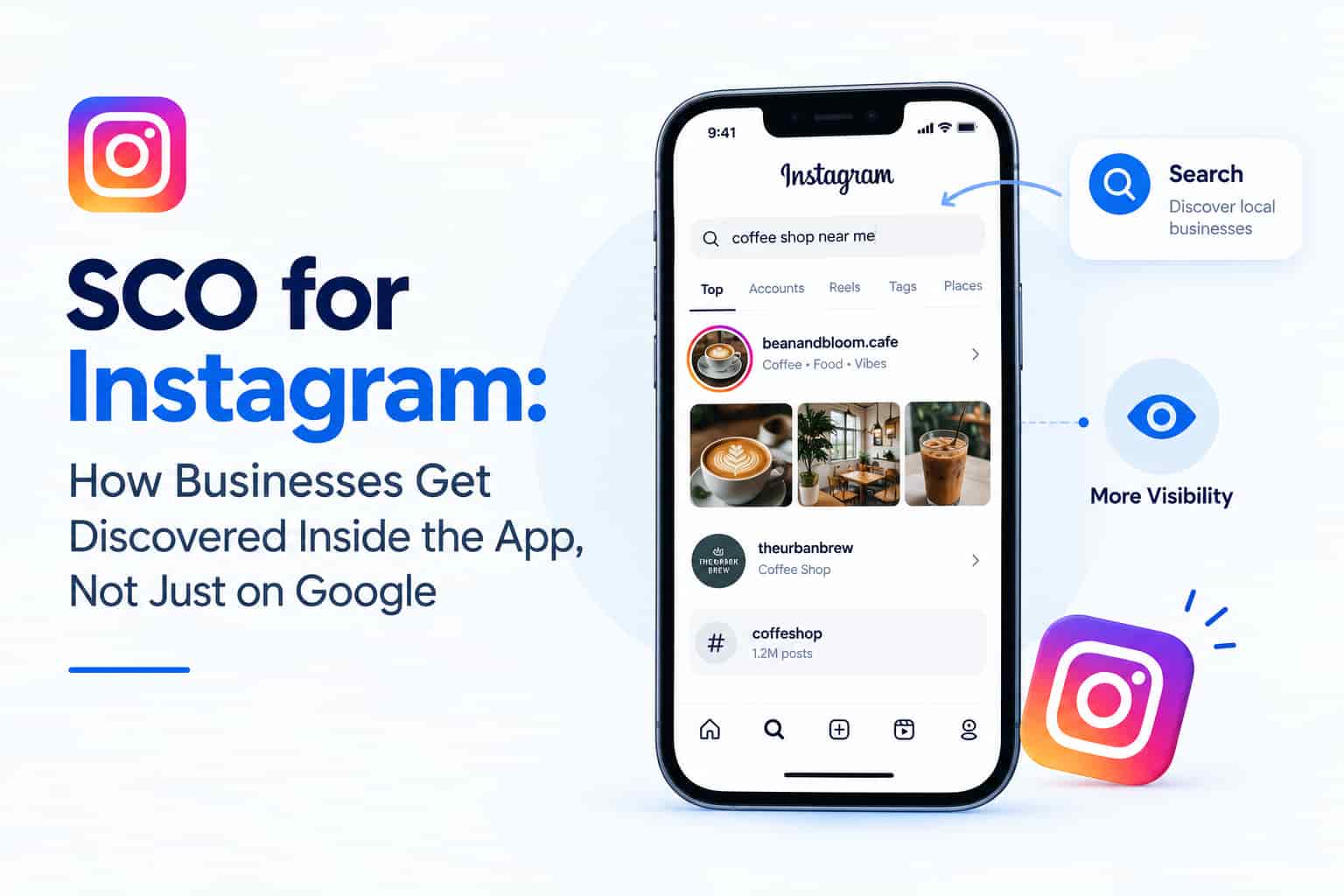
A brand ranks on page one of Google for its product category and still gets outsold by a competitor with a mediocre website, because that competitor shows up first when the same shoppers search directly inside Instagram — for a product type, a location, or a hashtag — without ever opening Google. Instagram has its own internal search and discovery system, and optimizing for it is a distinct discipline from optimizing a website for Google.
Instagram Is a Search Engine Now, Not Just a Feed
A growing share of Instagram usage involves the search bar directly — users typing a product category, a location, or a specific need rather than only scrolling a following-based feed. This search function surfaces accounts and posts based on caption text, alt text, hashtags, and how closely a profile's content and bio match the query, in a manner structurally closer to a search engine than a purely algorithmic feed.
What Actually Makes a Business Discoverable in Instagram Search
A business name and username that include what the business actually does (not just a brand name unfamiliar to new searchers) helps match against category-based searches. Captions written with the same clarity as a webpage's opening paragraph — stating what the post is about in plain language, not just a caption full of emojis and hashtags — feed Instagram's own understanding of what content to surface for a given query. Location tags matter meaningfully for any business with a physical presence, since location-based Instagram search is a common discovery path for "near me"-style intent inside the app.
Explore and Reels Discovery Work Differently From Search
Instagram's Explore page and Reels recommendations run on a separate discovery mechanism from search — driven by watch time, completion rate, shares, and how closely content resembles what a specific viewer has previously engaged with, rather than keyword matching. A business pursuing SCO on Instagram needs both: content and profile information structured to be found by search, and content designed to perform well in the algorithmic discovery feed, since these serve different discovery moments.
Hashtags: Still Useful, Differently
Hashtags function today more as a categorization signal than a primary discovery driver the way they once did — a handful of specific, genuinely relevant hashtags help Instagram's systems understand and categorize content correctly, while a long list of generic, high-volume tags adds little and can look like spam to both the algorithm and human viewers.
Connecting Instagram Discovery Back to the Business
Being discovered inside Instagram only creates value if the next step is clear — a link in bio that goes somewhere specific and relevant to what was just searched, a WhatsApp contact button for service businesses, or a shoppable product tag for retail. A business optimized for Instagram discovery but with a generic, outdated bio link loses much of the value of getting found in the first place.
Frequently Asked Questions
Is Instagram SCO the same as Instagram SEO?
They describe largely the same practical work — optimizing profile information, captions, and content for Instagram's own search and discovery systems — SCO frames it as one channel within a broader multi-channel search visibility strategy.
Do hashtags still help Instagram discovery in 2026?
They still help, mainly as a categorization signal for a small number of specific, relevant tags, rather than as the primary driver of reach they once were.
Being Found Where Customers Actually Search
For many businesses, Instagram is now a genuine discovery destination in its own right, not just a place to post after ranking on Google. OM Enterprises builds Instagram discoverability into its broader SCO strategy for Indian businesses, treating in-app search as seriously as traditional SEO.