

SCO for E-commerce: Getting Found Across Google, YouTube, and AI Search in India

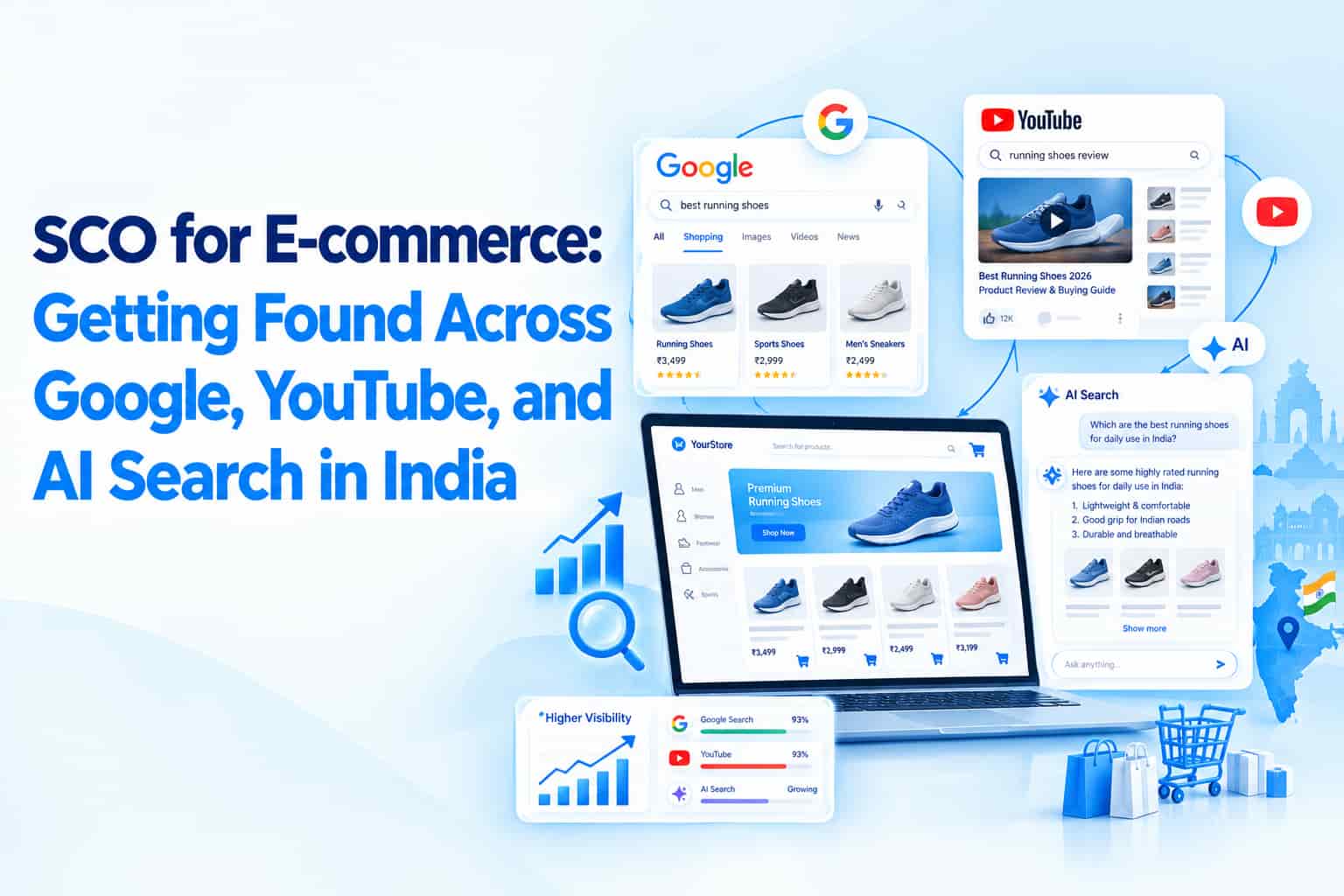
An Indian D2C brand can rank on page one for its core product keyword and still lose the sale to a competitor who shows up in the same shopper's YouTube "unboxing" search, their Instagram explore feed, and the ChatGPT answer they asked for a product recommendation. E-commerce discovery in India rarely happens on one channel anymore — which is exactly the gap that thinking in terms of SCO (Search Channel Optimization), rather than SEO alone, is meant to address.
Why E-commerce Discovery Is Especially Fragmented
A typical purchase journey for a considered product — skincare, electronics, home appliances — now often includes a YouTube review search, an Instagram or Pinterest visual discovery moment, a Google Search price/comparison check, and increasingly a direct question to an AI assistant like "what's the best budget air fryer in India." A brand optimized only for the Google Search step is invisible for the rest of that journey, even with excellent SEO.
Google Search: Still the Highest-Intent Channel
Classic SEO fundamentals remain the foundation — product pages need to be fast, well-structured, and genuinely useful, with schema markup for pricing, availability, and reviews so search results can display rich product information directly. This is the highest-converting channel precisely because searchers here have already decided to look for the product specifically.
YouTube: India's Underused Product Search Engine
For considered purchases, "review," "unboxing," and "vs" comparison searches on YouTube function as a second search engine that many e-commerce brands never optimize for at all. A brand supplying honest product demo content, or partnering with creators who make genuine comparison videos, captures demand that a product page alone never reaches.
AI Answer Engines: The Newest, Fastest-Growing Channel
Urban, English-speaking Indian shoppers increasingly ask AI assistants directly for product recommendations rather than browsing search results themselves. Getting cited in these answers depends on the same signals that help broader search visibility: clear, well-structured product and comparison content, consistent brand information across the web, and genuine reviews that build a citable reputation — not paid placement, since none of the major AI tools currently sell that.
Social Discovery: Where the Journey Often Starts
Instagram and short-form video remain where many Indian shoppers first encounter a product, well before they search for it by name. Consistent, high-quality visual content and accurate product tagging make that discovery moment more likely to lead into a direct search later, rather than being forgotten in a feed.
A Practical Starting Framework for E-commerce SCO
- Get product page SEO fundamentals right first — fast loading, schema markup, genuine reviews, clear specifications.
- Create or enable genuine YouTube content — product demos, comparison videos, either in-house or through honest creator partnerships.
- Keep product and brand information consistent everywhere — pricing, specifications, and claims should match across the website, marketplaces, and social profiles.
- Monitor AI answer engine citations for key product categories to see whether the brand appears at all when a customer asks a direct question.
- Track where actual orders originate, using UTM parameters and post-purchase surveys, to see which channels are genuinely contributing before investing further in any one of them.
Frequently Asked Questions
Should a small e-commerce brand try to be present on every channel at once?
No — start with Google Search fundamentals, since that's still the highest-converting channel, and expand into YouTube or AI-search visibility only once the foundation is solid and there's evidence customers are searching those channels too.
Can paid ads substitute for this kind of multi-channel visibility?
Partially, and only for as long as the budget runs — SCO-style organic visibility keeps working after the ad spend stops, which is why it's worth building alongside paid campaigns rather than instead of organic fundamentals.
How would a brand know if it's being cited in AI search answers?
By directly testing common product questions in tools like ChatGPT, Gemini, and Perplexity and noting whether the brand appears — there's no dashboard yet that reliably tracks this at scale.
Building E-commerce Visibility That Matches How Shoppers Actually Buy
E-commerce brands winning in India right now aren't necessarily the ones with the single highest Google ranking — they're the ones showing up consistently across the actual, fragmented path a shopper takes before buying. OM Enterprises helps Indian e-commerce brands build this kind of connected search, video, and AI-visibility strategy on top of solid SEO fundamentals.