

Retargeting Strategy for Indian D2C Brands: Turning Website Visitors Into Repeat Buyers

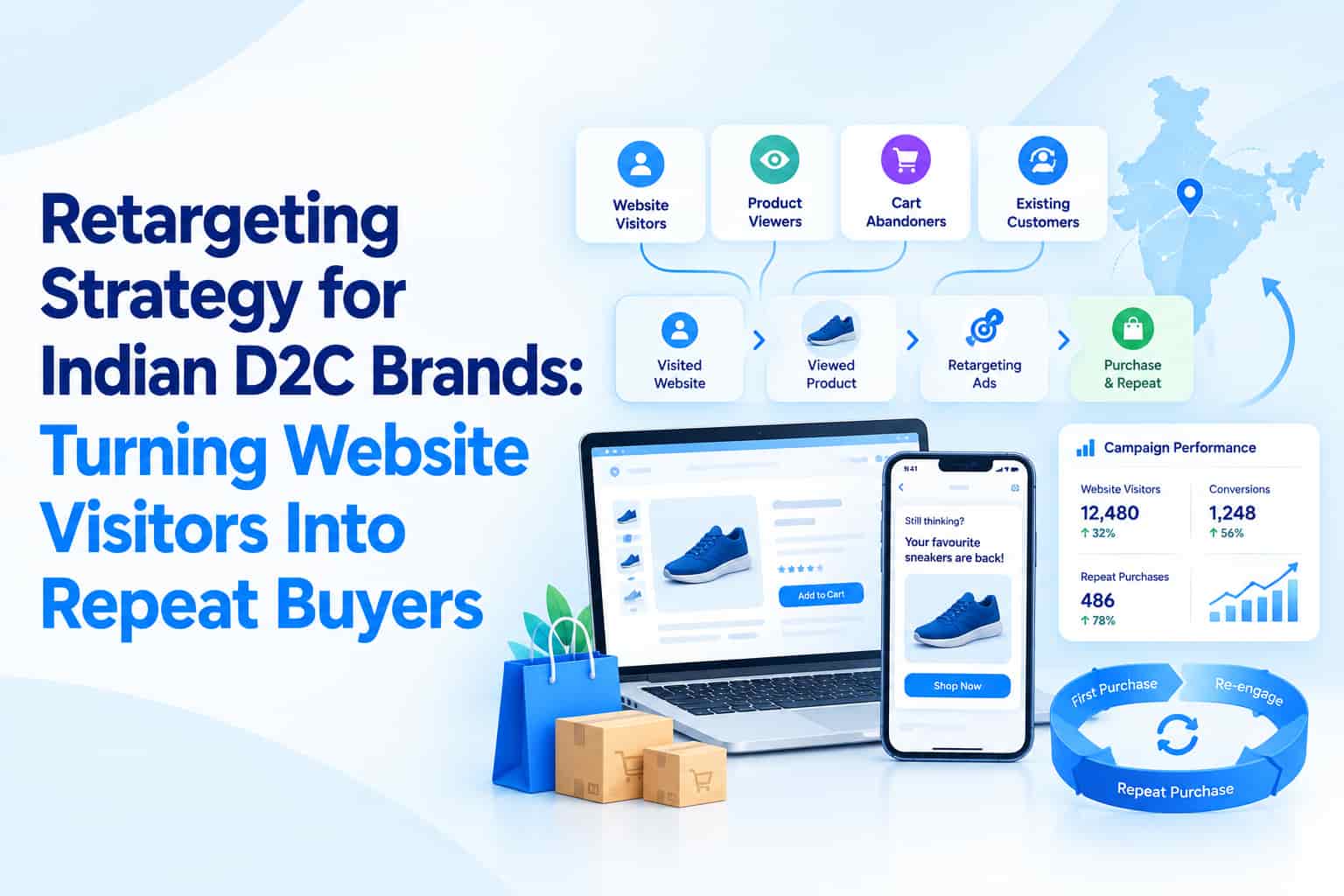
A D2C brand spends heavily on acquisition ads, watches most first-time visitors leave without buying, and treats that traffic as lost rather than as the highest-value audience it will ever get to retarget — people who already know the brand exists and have shown real interest, just not enough to convert on the first visit. Most D2C growth actually comes from converting this already-warm audience over time, not from constantly finding new cold traffic.
Segmenting Retargeting Audiences by Intent, Not Treating Them as One Group
A visitor who browsed the homepage briefly, one who viewed a specific product page multiple times, and one who added to cart but didn't check out are at meaningfully different points in their decision — showing all three the same generic "come back" ad wastes the higher intent of the cart-abandoner and annoys the low-intent browser with premature sales pressure. Segmenting retargeting audiences by these behavior signals and matching message intensity to actual intent produces better conversion than a single undifferentiated retargeting campaign.
Cart Abandonment: The Highest-Intent Segment
Customers who added a product to cart but didn't complete checkout represent the clearest near-conversion opportunity, and are best served by specific, timely messaging — showing the actual product they left behind, addressing common last-step hesitations (shipping cost, return policy, payment options), and reaching them within hours rather than days, since purchase intent decays quickly after someone leaves a cart.
Sequencing Retargeting Messages Over Time
A single retargeting ad shown repeatedly for weeks fatigues quickly and starts to feel like nagging rather than a helpful reminder. A sequenced approach — an early reminder focused on the product itself, a middle message addressing objections or adding social proof (reviews, a specific use case), and a later message with a genuine incentive if the customer still hasn't converted — respects the customer's decision process better than repeating the same message indefinitely.
Cross-Channel Retargeting
Retargeting isn't limited to the platform where the original visit happened — a visitor who came from a Google ad can be retargeted on Meta, and vice versa, and WhatsApp retargeting (for customers who've previously messaged or opted in) often achieves higher visibility than a display ad the customer may simply scroll past. Using multiple channels for the same retargeting sequence increases the chance of actually reaching the customer at a moment they're paying attention.
Balancing Retargeting Spend Against Acquisition
Retargeting audiences are finite — they only grow as fast as new traffic arrives — so an account spending disproportionately on retargeting relative to acquisition will eventually run out of warm audience to retarget. The healthiest structure treats acquisition and retargeting as connected: enough top-of-funnel spend to keep feeding the retargeting pool, and disciplined retargeting spend that converts that pool efficiently rather than showing the same ad indefinitely to people who've already decided not to buy.
Frequently Asked Questions
How long should a retargeting sequence run before giving up on a visitor?
There's no universal answer, but most effective sequences taper off after two to three weeks of no engagement, since continuing to show ads to someone who's consistently ignored them wastes budget with diminishing returns.
Is cart abandonment retargeting worth prioritizing over broader website retargeting?
Generally yes — cart abandoners represent the highest-intent, closest-to-conversion segment, and typically deserve faster, more specific messaging than general website visitors.
Converting the Traffic Already Interested
The visitors who already clicked, browsed, or added to cart are consistently a D2C brand's highest-return audience — retargeting well means treating them as distinct segments with different needs, not one generic remarketing pool. OM Enterprises builds segmented, sequenced retargeting strategies across Meta, Google, and WhatsApp for Indian D2C brands.