

Retargeting Done Right: How to Bring Back Website Visitors Without Annoying Them

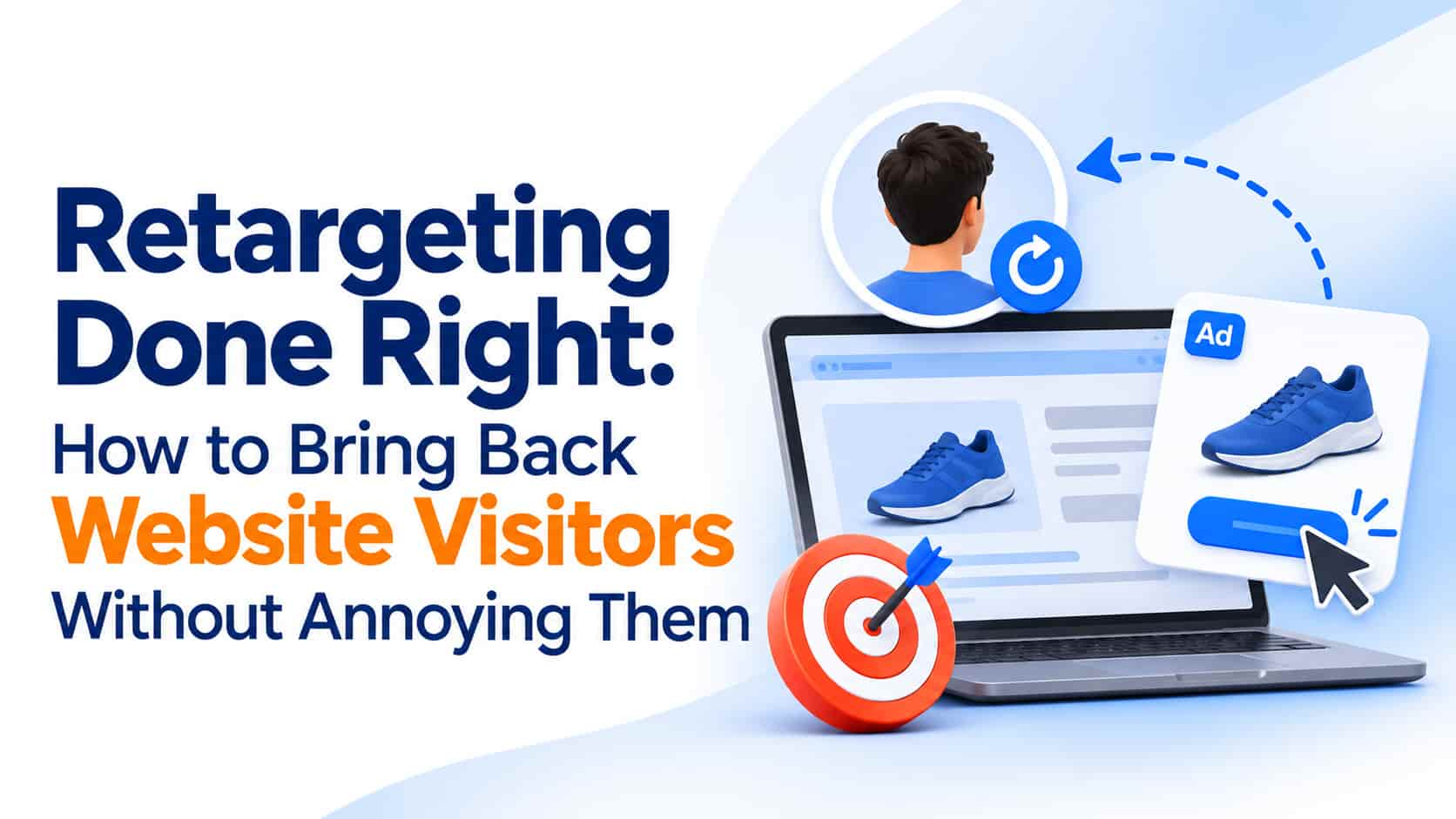
Most people who visit a website do not buy on the first visit. They compare prices, wait for a salary, ask a family member or simply get distracted. Marketers sometimes treat this as a failure, but it is also an opportunity: these visitors already know you and showed interest. Retargeting, also called remarketing, is the practice of showing ads or sending messages to people who have previously interacted with your business, nudging them to return. Done well, it recovers sales that would otherwise be lost. Done badly, it follows people around the internet and irritates them. This guide covers retargeting in a practical, privacy-aware way.
What retargeting is
Retargeting means reaching people who have already shown some interest. They may have visited your website, viewed a product, added something to the cart, watched your video, engaged with your social profile, opened a message or submitted a form without finishing. You build audiences from these actions and show them tailored ads or messages. Because the audience is warm, retargeting usually costs less per conversion than cold prospecting, though results vary by industry and execution.
Where you can retarget
Google Ads. Audiences based on website visitors, app users, YouTube viewers and customer lists can be targeted across Search, Display, YouTube and Demand Gen campaigns, with some options depending on campaign type.
Meta ads. Facebook and Instagram let you build custom audiences from website activity via the Meta Pixel and Conversions API, from people who engaged with your profile, videos, lead forms or events, and from customer lists.
YouTube. Remarket to people who watched your videos or visited your channel.
LinkedIn. For B2B, retarget website visitors, video viewers and form openers, or match company and contact lists.
Email, SMS and WhatsApp. Messages to known contacts who gave consent, such as cart reminders or follow-ups after an enquiry. These owned channels do not depend on advertising platforms and often perform best.
Step one: set up tracking and audiences
You need proper tracking before you can retarget. Install the Meta Pixel, the Google tag and, where useful, server-side tracking. Define events such as page view, product view, add to cart, begin checkout and lead form start. Build audiences from these events with defined time windows, for example visitors in the last seven days, last thirty days and last ninety days. Audience size matters. Platforms require minimum numbers to serve ads, and tiny audiences can be exhausted quickly.
Step two: segment by intent
Not all visitors are equal. Someone who added a product to the cart is much closer to buying than someone who read a blog post. Create tiers. A warm tier includes recent cart abandoners and checkout starters. A middle tier includes product viewers and repeat visitors. A cold tier includes blog readers and one-page visitors. Use different messages and budgets for each. Exclude people who already purchased, so you do not waste money or annoy customers.
Step three: match message to stage
Cart abandoners. Remind them of the exact product, show reviews, delivery details, return policy or an incentive if margin allows. Address common objections, such as price, trust and shipping.
Product viewers. Show the viewed product and related alternatives, with social proof and a clear benefit.
Content readers. Offer the next helpful step, such as a guide, a comparison, a free consultation or a demo, rather than a hard sell.
Lead form starters. Reassure about the process, privacy and what happens next, and offer a simpler way to enquire, such as WhatsApp chat.
Past customers. Suggest complementary products, replenishment, upgrades or loyalty benefits.
Step four: control frequency and duration
Too many impressions create fatigue and negative feelings. Set frequency caps where the platform allows and monitor average frequency. Match the time window to your sales cycle. A low-priced consumer product may need a short window of a few days, while a B2B service or a car may need weeks or months. Rotate creative so people do not see the same ad repeatedly. Stop showing ads after a defined period if there is no response.
Step five: creative that works
Retargeting ads should feel relevant, not creepy. Use dynamic product ads where available to show the exact items viewed. Use clear visuals and one main message. Avoid language that makes people feel watched, such as "we saw you looking at this". Focus on helpful reminders and benefits. Test formats such as carousel, short video and static images. Include a clear call to action and ensure that the landing page continues the story, restoring the cart or showing the product immediately.
Step six: combine with owned channels
Retargeting through ads is only one route. For people who gave contact details and consent, direct messages are often more effective. Use WhatsApp for cart reminders with approved templates, SMS for short time-sensitive nudges and email for longer content. Coordinate so that a customer does not receive an ad, SMS, WhatsApp and email about the same product within an hour. Set priority rules, such as sending a message first and starting ads only if there is no response.
Privacy, consent and trust
Privacy rules are central to retargeting. Browsers and mobile systems have reduced third-party tracking, and users can decline cookies or opt out of personalised ads. Use consent banners where required, respect choices and explain tracking in your privacy policy. India's data protection law emphasises consent and purpose, and visitors from other regions may be covered by additional rules. Do not retarget based on sensitive categories such as health conditions, finances in trouble or other restricted topics, which platforms also restrict. Make it easy for people to stop seeing your ads.
Measure the true impact
Retargeting often claims credit for sales that would have happened anyway, because the people targeted were already likely to buy. Look beyond attributed conversions. Run holdout tests where a share of the audience does not see ads, and compare conversion rates. Track incremental sales, cost per incremental purchase, return on ad spend and frequency. Check that your retargeting does not cannibalise organic and email conversions. Compare blended results across channels.
Common mistakes
Common errors include retargeting everyone the same way, not excluding purchasers, endless frequency, using one generic ad, tiny audiences, ignoring consent, neglecting landing page continuity and trusting platform-reported numbers without testing.
Frequently asked questions
Is retargeting only for online stores?
No. Service businesses, education, real estate and B2B can use it to follow up on interest.
How long should I retarget?
Match your sales cycle. Days for quick purchases, weeks or months for considered ones.
Is retargeting still effective with privacy changes?
It still works, but first-party data, consent and server-side tracking matter more.
Bring interested visitors back
OM Enterprises builds retargeting audiences, creatives and WhatsApp follow-up journeys that recover lost sales. Talk to our performance marketing team.