

RCS vs SMS vs WhatsApp: A Cost and Reach Comparison for High-Volume Indian Campaigns

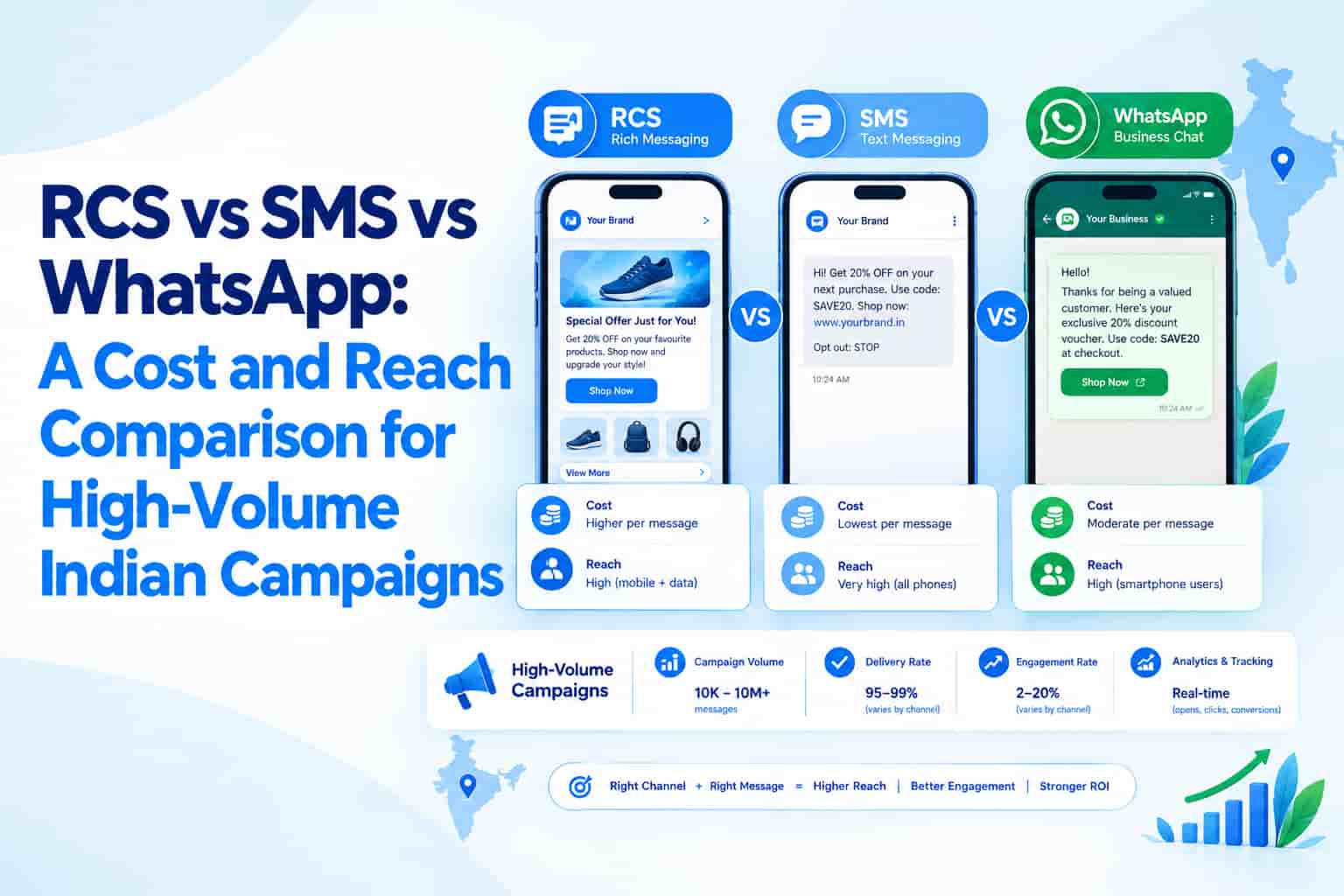
A business running a high-volume seasonal campaign has to choose between three messaging channels that all claim to reach customers effectively, each with a different pricing model, different reach characteristics, and different compliance requirements — and picking based on a single channel's marketing pitch, rather than an honest side-by-side comparison, routinely leads to overspending on the wrong mix.
Reach: Who Each Channel Can Actually Deliver To
SMS reaches any mobile number with network coverage, regardless of smartphone ownership, app installation, or internet connectivity — the closest thing to universal reach among the three. RCS reaches devices and carriers that support the protocol, which covers a large and growing share of Android users but isn't universal, and typically falls back to SMS automatically when it isn't supported. WhatsApp reaches only users who have the app installed and, for business-initiated messages, requires either an existing opted-in relationship or a pre-approved template — meaning its reach is bounded by app adoption and consent status, not device or carrier support.
Format and Engagement
SMS is limited to 160-character plain text per segment, with no native rich media. RCS supports images, carousels, suggested replies, and action buttons delivered through the native messaging app, with the added advantage of verified sender branding for registered businesses. WhatsApp supports similar rich media and interactive elements, plus a more mature catalog and structured commerce layer, delivered within the WhatsApp app itself rather than the phone's default messaging app.
Pricing Structure Differences
SMS pricing is straightforward per-message cost through DLT-registered headers, generally the cheapest per-message option at scale. RCS is typically priced per message through the same aggregator/carrier relationships used for SMS, without a free-conversation-window model. WhatsApp uses per-message pricing by template category (Marketing, Utility, Authentication) with free messaging within an open 24-hour customer-initiated service window — meaning its effective cost depends heavily on how much of the conversation happens within that free window versus through paid template sends.
Compliance Requirements by Channel
SMS requires DLT Principal Entity registration, correctly classified sender headers (transactional, promotional, service), and adherence to TRAI's DND and timing rules for promotional content. RCS registration runs through similar carrier/aggregator relationships with its own business verification process. WhatsApp requires Meta Business verification, pre-approved message templates, and — critically — a documented, genuine opt-in for any Marketing template sends, since unsolicited marketing messages risk the business number being restricted.
Choosing a Mix, Not a Single Winner
For high-volume campaigns needing guaranteed universal reach — OTPs, critical transactional alerts — SMS with RCS enhancement (rich formatting where supported, automatic SMS fallback where not) covers the broadest audience reliably. For higher-engagement, richer-format campaigns to an audience known to be active on WhatsApp, WhatsApp typically delivers better response despite higher per-message cost. Most large-scale Indian campaigns get the best overall result blending these — universal-reach SMS/RCS for critical or broad-audience messages, WhatsApp for higher-touch engagement with a known, opted-in segment.
Frequently Asked Questions
Which channel is cheapest for high-volume campaigns?
SMS is generally the cheapest per message at scale, though WhatsApp's free service-window messaging can lower effective cost for conversations that stay active within that window.
Does RCS replace the need for SMS entirely?
No — RCS typically falls back to SMS automatically for unsupported devices or carriers, functioning as an enhancement layer over SMS rather than a full replacement.
Building the Right Channel Mix for Scale
The right combination of SMS, RCS, and WhatsApp depends on what a specific campaign actually needs — universal reach, rich engagement, or both at different stages. OM Enterprises plans and manages multi-channel SMS, RCS, and WhatsApp campaigns for Indian businesses running high-volume seasonal and always-on messaging.