

RCS Messaging for Insurance: How Insurers and Agents Can Improve Renewals, Claims Updates and Customer Trust

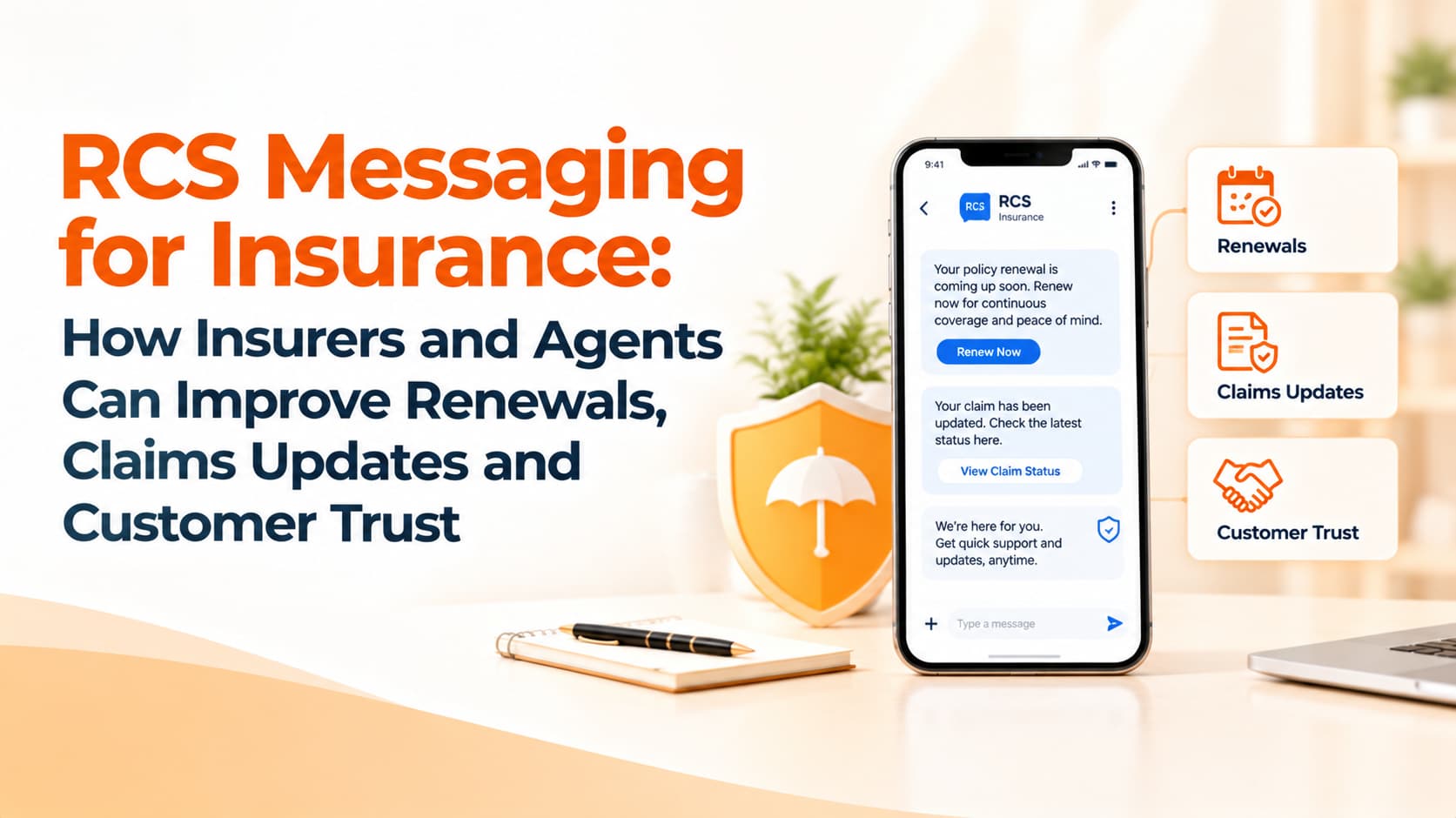
Insurance is built on trust, yet much of the communication customers receive about their policies looks remarkably untrustworthy. A plain text message says a policy is due for renewal and includes a link. The customer has heard about insurance scams and fake renewal links, so they ignore it. A few weeks later, the policy lapses, the customer is uninsured and the insurer has lost a renewal it could easily have kept.
For insurance companies, brokers, aggregators and agents, RCS Business Messaging offers a more trustworthy way to communicate. Messages arrive in the default messaging app on supported Android phones with the insurer's verified brand name and logo, along with rich cards, documents and action buttons. Customers whose phones cannot receive RCS can receive SMS fallback, so important information still reaches them.
Why insurance communication needs an upgrade
Insurance customers interact with their insurer relatively rarely, often only at purchase, renewal and claim time. Each of those moments matters enormously. A missed renewal reminder means a lapsed policy and lost revenue. A confusing claims update creates anxiety and complaints. A suspicious-looking message gets ignored or, worse, a genuine message is confused with fraud.
At the same time, regulators and industry bodies have been pushing for clearer, more trustworthy communication in financial services. TRAI's requirements for registered SMS headers, whitelisted links and dedicated number series for service calls in regulated financial sectors all point in the same direction: customers should be able to recognise genuine communication easily. Verified RCS sender profiles fit naturally into that trend.
Renewal reminders that customers act on
Renewals are where RCS can deliver immediate value. Instead of a cramped text reminder, an RCS message can show a card with the policy type, policy number, renewal due date and premium, along with clear buttons such as "Renew now", "View policy details" or "Talk to an adviser". A verified brand name reassures the customer that the message is genuine, which is particularly important when it includes a payment link.
A sequence works better than a single message. A first reminder a few weeks before expiry, a follow-up closer to the date and a final reminder just before the grace period ends give customers several chances to act. Read receipts and click data help agents identify customers who have seen the reminder but not renewed, so they can follow up personally.
Policy documents and onboarding
After purchase, RCS can deliver a welcome message with key policy details, links to download documents, an explanation of coverage and contact information for support. Short explainer cards can help customers understand what their policy covers and how to make a claim, reducing confusion later. For health insurance, information about network hospitals and cashless claim processes can be shared in a clear, visual format.
Claims updates that reduce anxiety
Customers making a claim are often going through a difficult time, whether a hospital stay, an accident or damage to property. Regular, clear updates make a significant difference to their experience. RCS can confirm when a claim is registered, list the documents required, update customers when documents are received, show the claim's progress and confirm settlement. Buttons to upload documents, call the claims team or view status give customers a sense of control.
Cross-selling and education, done carefully
Insurers and agents can also use RCS to share relevant information with opted-in customers, such as top-up cover for health policies, add-ons for motor insurance or reminders about tax-saving deadlines. These are promotional communications and should only be sent with appropriate consent, in moderation and with honest, compliant claims. Insurance advertising is subject to regulatory standards, so content should be reviewed by compliance teams before sending.
Best practices for insurance brands
Keep transactional and promotional messages clearly separate, with service messages such as renewals, documents and claims updates prioritised. Configure SMS fallback using DLT-registered headers and templates so every customer receives critical information. Use only secure, whitelisted links for payments and document downloads. Personalise messages with policy details, and connect RCS to policy administration and CRM systems so reminders trigger automatically. Offer easy routes to human help, because insurance questions are often complex. Protect customer data carefully in line with India's data protection framework.
Frequently asked questions
Can RCS reduce policy lapses?
Clear, trusted, actionable renewal reminders can help more customers renew on time, especially when combined with personal follow-up.
Is RCS secure enough for insurance communication?
Verified sender profiles build trust, but always use secure links and never request sensitive details such as OTPs or passwords through messages.
Should insurers use WhatsApp as well?
Yes. WhatsApp suits two-way conversations and support, while RCS and SMS are strong for inbox-native notifications.
Communicate with confidence
OM Enterprises sets up verified RCS profiles, renewal and claims journeys, and SMS fallback for insurers, brokers and agents. Request an RCS demo for insurance.