

RCS Messaging for Higher Education: Boosting Admissions and Student Engagement

Why Communication Makes or Breaks the Admission Season
Every admission season, Indian colleges, universities, and coaching or ed-tech institutes go through the same high-pressure cycle: thousands of enquiries pour in within weeks, counselling teams scramble to follow up before a prospective student loses interest, and parents want quick, trustworthy answers about fees, deadlines, and campus facilities. In this rush, plain SMS and generic emails often fail to keep pace. Messages get missed, links look suspicious to cautious parents, and institutes lose admissions simply because a follow-up came too late or felt impersonal.
This is exactly where RCS messaging for education is changing the game. Rich Communication Services (RCS) upgrades the humble text message into a verified, interactive, brand-rich conversation that runs natively inside a student's or parent's default messaging app - no app download required. For institutions competing hard for every admission, that difference in trust and engagement can directly translate into more enrolments.
The Real Communication Challenges Education Institutions Face
1. Lead Follow-Up at Scale
Admission enquiries come from Google ads, education portals, walk-ins, referrals, and social media - often all at once. Counselling teams are expected to respond to every lead with relevant information almost instantly, but manual follow-up simply cannot scale during peak admission weeks. Delayed responses mean prospective students move on to competing institutes that replied faster.
2. Fee Payment Reminders That Actually Get Noticed
Between application fees, semester fees, hostel charges, and exam fees, institutes send a constant stream of payment reminders. Plain SMS reminders are easy to ignore, and many parents hesitate to click unfamiliar payment links sent from unknown numbers.
3. Parent Trust and Scam Concerns
Fee-payment and admission-related scams targeting students and parents are a genuine and growing concern in India. Fraudulent messages impersonating colleges asking for "urgent fee transfers" have made parents understandably cautious about clicking links or trusting messages from unverified senders. If a legitimate institute's official reminders start looking similar to spam, genuine communication suffers too.
4. Engagement Across the Entire Student Lifecycle
Communication needs don't end at admission. Institutes must keep engaging students through onboarding, academic updates, exam results, event invitations, and eventually alumni relations - each stage requiring a different tone and a different type of content, often across a fragmented mix of channels.
How RCS Solves These Problems
RCS directly addresses each of these pain points through two core strengths: verified branding and rich, interactive cards.
With a verified RCS sender profile, every message carries the institute's official name, logo, and verified badge - the same trust signal students and parents already recognise from verified business accounts on other platforms. This alone reduces the "is this a scam?" hesitation that plagues generic SMS and unknown-number communication, which matters enormously when the message is about a fee payment or an admission deadline.
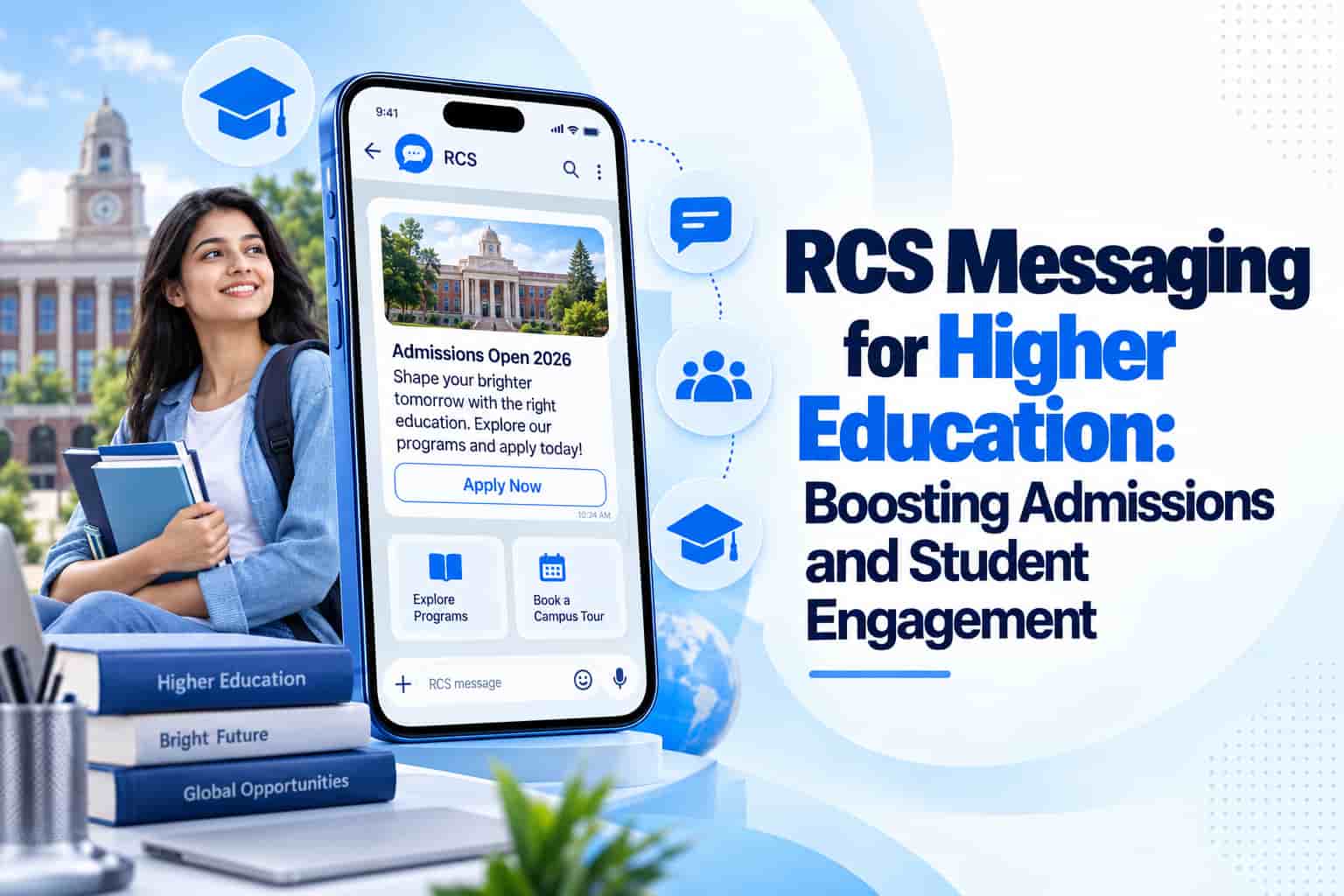
On top of that, RCS supports rich media cards, carousels, and suggested-reply or suggested-action buttons directly inside the message thread. Instead of a wall of text with a plain link, prospective students can browse an interactive course brochure, tap a button to book a counselling slot, or view a campus location card - all without leaving their messaging app. This is a meaningful upgrade for any education sector business messaging strategy, because it turns a one-way notification into a short, guided interaction.
Practical Use Cases for Admissions and Student Engagement
Admission Enquiry Follow-Up with Rich Brochure Carousels
When a prospective student submits an enquiry form, an RCS message can immediately deliver a swipeable carousel showcasing courses, fee structures, and campus highlights, along with a "Talk to a Counsellor" button. This kind of instant, visually engaging response keeps interest high at the exact moment it matters most, addressing the lead follow-up challenge without adding manual workload on the admissions team.
Fee Due and Payment Reminders
Verified RCS messages for fee reminders display the institute's branding clearly, include the exact due amount and deadline, and offer a suggested-reply button such as "Pay Now" or "View Fee Details." Because the sender identity is verified, parents can act on these reminders with far greater confidence, reducing delayed payments caused by suspicion or confusion.
Counseling Session Booking via Suggested-Reply Buttons
Rather than asking a student to call a helpline or fill another form, RCS lets institutes offer simple tap-to-respond options like "Book a Campus Visit," "Schedule a Call," or "Chat with Admissions" directly within the message. This lowers friction at a stage where many prospective students otherwise drop off.
Exam Result and Academic Calendar Notifications
Result announcements, revised timetables, and important academic dates can be shared as clean, branded RCS cards rather than plain text, making critical information easier to spot and trust amid the flood of other notifications students receive.
Webinar and Open-Day Invites
For open houses, orientation sessions, or online webinars, RCS cards can include event details, a calendar-add option, and a registration button - helping institutes drive attendance for events designed to convert interest into applications.
Alumni Engagement
Beyond admissions, RCS keeps the relationship alive with alumni - sharing updates on reunions, placement drives, or continuing education programs through the same verified, professional channel students already trust from their time at the institute.
A Practical Implementation Checklist for Education Businesses
- Get your institute's sender profile verified with correct branding, logo, and official name before launch.
- Map out the student journey - enquiry, counselling, admission, fee payment, academic updates, and alumni - and identify where rich cards add the most value.
- Start with high-impact touchpoints first: admission enquiry follow-up and fee reminders typically show the fastest results.
- Design brochure carousels and cards that are concise, mobile-friendly, and consistent with your institute's visual identity.
- Set up suggested-reply buttons for common actions such as booking a counselling call or registering for an event.
- Keep a fallback plan for devices or networks that don't yet support RCS, so no student is left without information.
- Track response and conversion rates at each stage to refine messaging over time.
Institutes that are serious about improving both admissions and long-term engagement are increasingly exploring our RCS Messaging solutions to bring this verified, interactive experience to their student communication - without needing any technical overhaul of existing systems.
Getting Started the Right Way
Adopting RCS doesn't require replacing your entire communication stack overnight. Most education institutes begin with a focused rollout on one or two use cases - typically admission follow-ups or fee reminders - measure the impact on response and conversion rates, and then expand into counselling bookings, event invites, and alumni communication. Partnering with an experienced business messaging provider that understands the education sector's compliance and trust requirements makes this transition considerably smoother, especially when verified sender registration and content design are involved.
Frequently Asked Questions
Is RCS messaging suitable for smaller coaching institutes, not just large universities?
Yes. RCS for universities and coaching institutes works at any scale. Even a single-branch coaching centre can use verified sender identity and rich cards to make enquiry follow-up and fee reminders more effective, without needing the scale of a large university.
Do students and parents need to install any special app to receive RCS messages?
No separate app is required. RCS messages appear directly inside the recipient's default messaging app on supported Android devices, making it a low-friction channel compared to asking users to download or open a dedicated app.
How does verified messaging for schools help reduce scam concerns?
Verified messaging for schools displays the institute's confirmed name, logo, and a verification badge on every message, helping parents visually distinguish genuine communication from fraudulent messages that impersonate educational institutions during fee payment or admission season.
What happens if a recipient's device doesn't support RCS?
A well-implemented RCS strategy includes automatic fallback to standard SMS, so students and parents on non-RCS-supported devices or networks still receive the essential information, just without the rich interactive elements.