

RCS Messaging for Banks and NBFCs in India: Secure, Verified Customer Communication

Why Financial Communication Needs a Higher Bar
Banks and NBFCs face a communication problem most other industries don't: customers have been trained by years of phishing SMS and fraud calls to be suspicious of any message claiming to be from their bank. That suspicion protects customers, but it also means legitimate account alerts, offers, and service messages often get ignored or deleted along with the scams. RCS Business Messaging gives financial institutions a way to be visibly, verifiably legitimate in every message they send.
What RCS Adds for Banking Communication
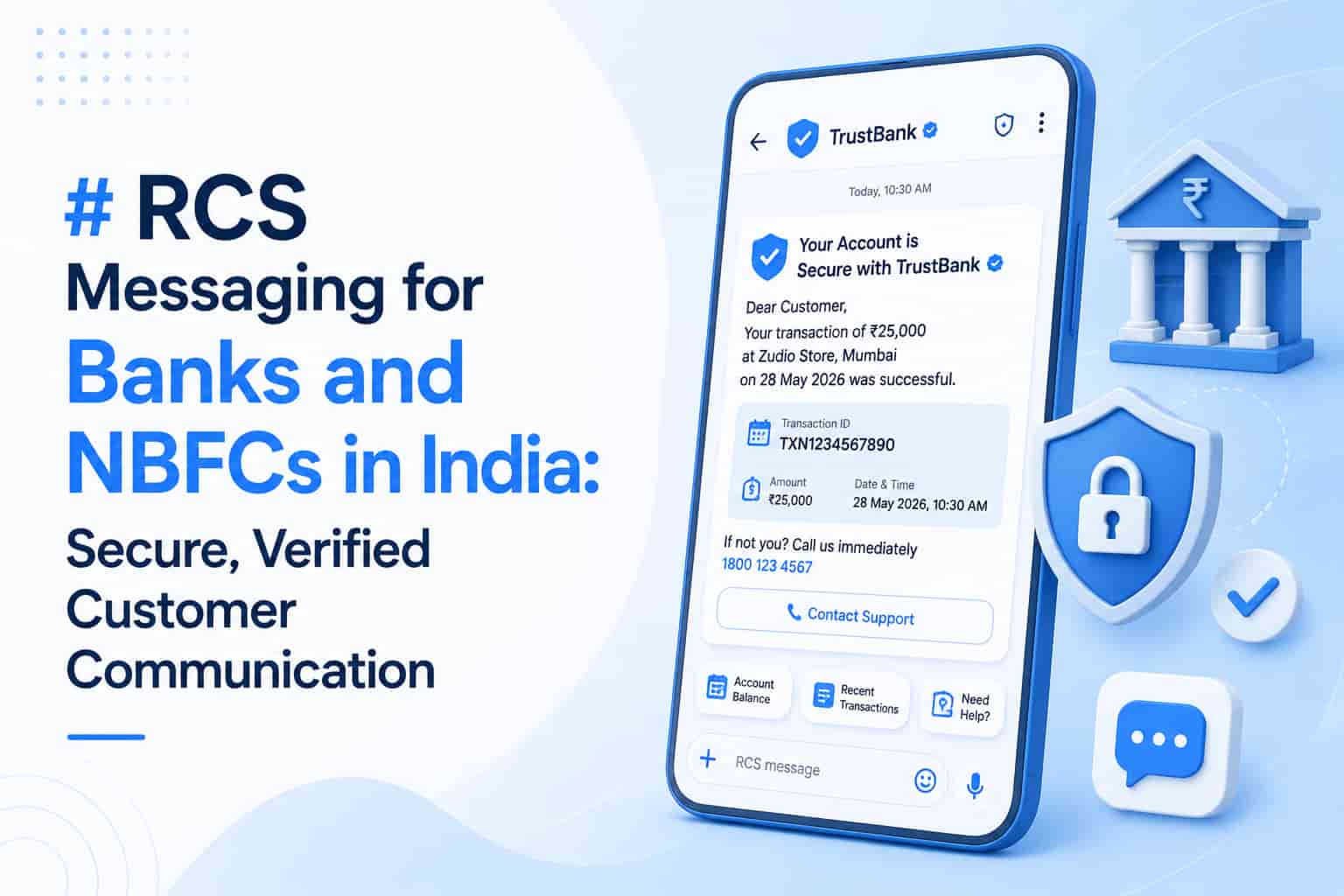
Unlike a standard SMS from an unfamiliar number, an RCS message from a verified financial institution displays the bank or NBFC's official name, logo, and a verification badge directly in the customer's messaging app — the same trust signal customers already look for on official apps and websites, now present in every text conversation.
Key Use Cases for Banks and NBFCs
- Transaction alerts: rich, clearly branded alerts for debits, credits, and account activity that are immediately recognizable as genuine.
- Fraud and security alerts: time-sensitive warnings about suspicious activity, delivered with enough visual trust signal that customers act on them instead of dismissing them as spam.
- Loan and EMI reminders: payment due reminders with a direct, secure link to pay, reducing missed payments caused by overlooked plain-text SMS.
- Statement and document delivery: secure links to account statements or loan documents, sent from a verified, recognizable sender.
- Onboarding and KYC follow-ups: guiding new customers through pending documentation steps with clear instructions and buttons rather than a wall of text.
- Cross-sell and offers: pre-approved loan offers or credit card upgrades presented with the same verified trust that transactional messages carry.
Security and Compliance Considerations
Financial institutions operate under strict regulatory requirements around customer data and communication, and RCS deployments need to be evaluated against those same standards — data handling agreements with the RCS or CPaaS provider, encryption in transit, and alignment with the bank's existing information security policies should all be reviewed before rollout, in consultation with compliance and IT security teams.
Reducing Fraud Through Verified Messaging
One of the most valuable side effects of RCS adoption for banks is customer education by default: once customers become used to seeing their bank's verified badge on legitimate messages, an unverified message claiming to be from the bank becomes easier to spot as suspicious. Over time, this can become a meaningful, low-cost layer in a broader fraud-prevention strategy — though it should complement, not replace, existing customer fraud-awareness programs.
Rollout Approach for Financial Institutions
- Start with a single, well-defined use case — transaction alerts or payment reminders are typically the easiest to pilot and measure.
- Keep an SMS fallback active for customers on devices that don't support RCS, so no one is left without critical alerts.
- Involve compliance and security teams early in vendor selection and data handling review, not after the pilot is already live.
- Monitor customer response — engagement, complaint rate, and fraud-report patterns — before expanding to additional use cases.
FAQs
Is RCS messaging secure enough for sensitive banking information?
RCS Business Messaging supports encrypted transport and verified sender profiles, but institutions should still review the specific security posture of their RCS or CPaaS provider against internal compliance requirements before sending sensitive account information.
What happens for customers whose phones don't support RCS?
A properly configured RCS deployment falls back automatically to standard SMS for those customers, so message delivery isn't interrupted — they simply won't see the rich, verified formatting.
Conclusion
For banks and NBFCs, the core problem RCS solves isn't engagement — it's trust. A verified, richly formatted message is far more likely to be read, believed, and acted on than another anonymous text in a customer's inbox full of scam attempts. Institutions that pilot RCS on a focused use case like transaction alerts, with proper security review and SMS fallback in place, gain a communication channel that's both more effective and more resistant to the fraud patterns plaguing plain SMS today.