

RCS Messaging for Schools, Colleges and Coaching Institutes: An Admissions Playbook

Every admissions season, Indian institutes face the same problem. Hundreds or thousands of enquiries arrive from ads, education portals and walk-ins. Counsellors call; half the calls go unanswered. SMS follow-ups get buried among bank alerts and OTPs. By the time someone replies, the student has booked a counselling session elsewhere.
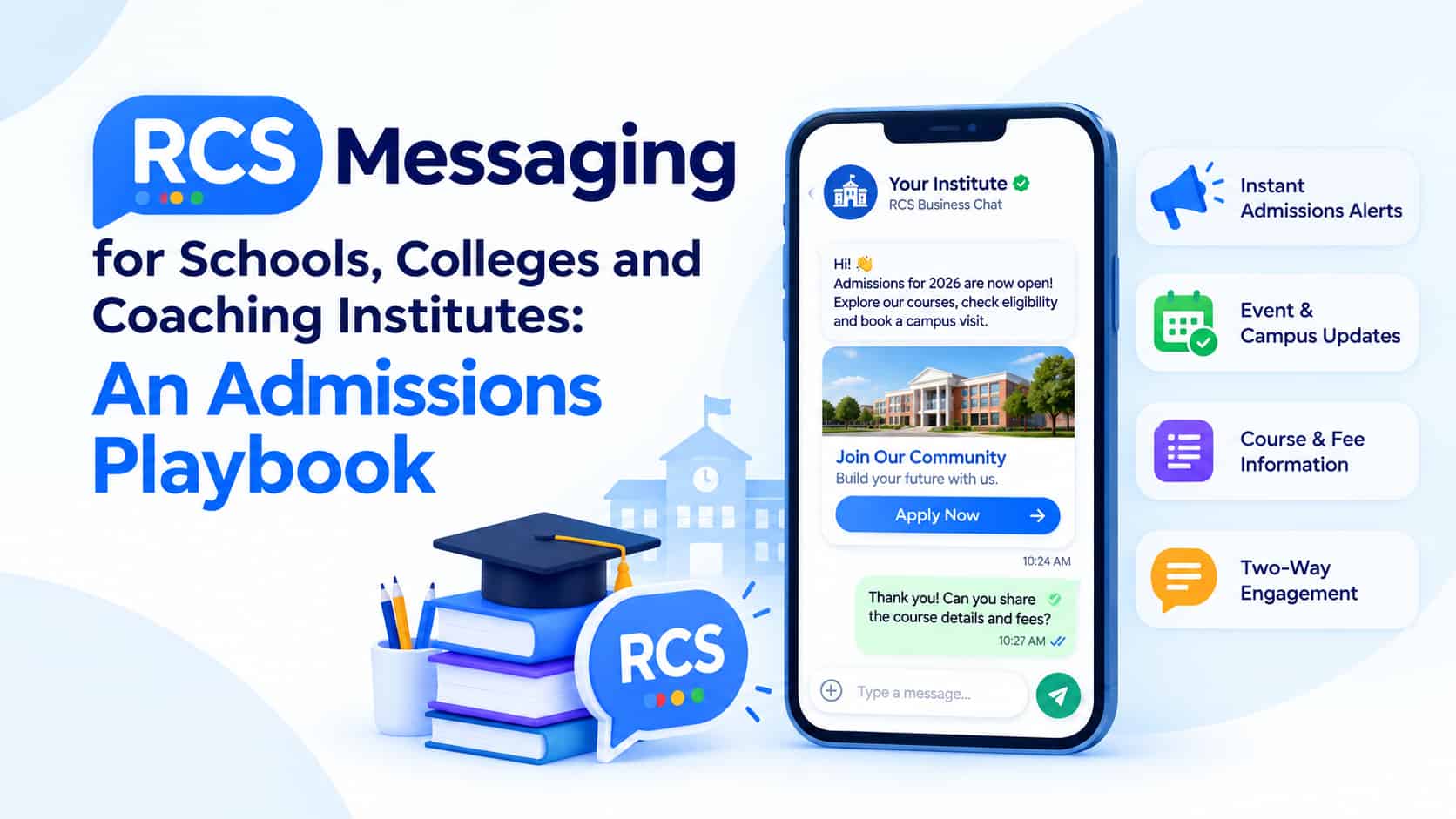
RCS Business Messaging offers a better middle ground between plain SMS and a full app. It arrives in the phone's default messaging inbox, but with your logo, verified name, images, buttons and quick replies — so a parent or student can act in one tap.
What RCS adds over SMS for an institute
| Need | Plain SMS | RCS |
|---|---|---|
| Trust | Alphanumeric header only | Verified brand name and logo |
| Showing courses | Text and a link | Swipeable cards with images, fees and duration |
| Booking counselling | "Reply YES" or call us | Tap a button to pick a slot or open a booking page |
| Campus visuals | Not possible | Images, videos, virtual tour links |
| Read status | Delivery only | Delivery and read receipts |
In India, RCS business messaging is supported on Jio, Airtel and Vi and is delivered through the native messaging app on supported Android devices. Phones that can't receive RCS can be sent an SMS fallback, so nobody is left out.
The admissions journey, message by message
1. Instant enquiry acknowledgement
Within minutes of a form submission, send a branded card: "Thanks for your interest in our B.Com programme." Add buttons for Download brochure, See fees and Book a counselling call. Speed matters — a fast, professional reply signals a well-run institution.
2. Course discovery carousel
For students who haven't decided, a carousel of programmes (image, duration, eligibility, starting fee) lets them browse without visiting the website. Each card can lead to its own landing page.
3. Counselling and campus visit booking
Offer suggested replies such as "Weekday morning", "Weekend" or "Online session". The reply can trigger your team or booking system. Follow up with a reminder the day before, including a map link to the campus.
4. Application deadline reminders
Send timely reminders with a clear deadline and a single "Complete application" button. Use read receipts to identify who hasn't opened the message and follow up through another channel.
5. Scholarship and entrance test updates
Rich cards work well for results, cut-off announcements and scholarship windows, with buttons to check eligibility or download admit cards.
6. Fee reminders and payment links
Once admitted, use RCS for fee schedules and reminders with a direct link to your payment gateway. Keep these transactional in tone and accurate.
7. Parent communication after admission
Attendance alerts, PTM invitations, exam timetables and holiday notices can all be sent as clear, branded messages — reducing calls to the front office.
Coaching institutes: special opportunities
- Demo class invitations with a date picker and location card
- Batch announcements as carousels by subject or timing
- Test result cards with rank, score and a link to detailed analysis
- Referral campaigns with a shareable link for current students
Compliance and good practice
- Get consent. Contact students and parents who enquired or opted in, not purchased lists. India's DPDP framework makes purpose-specific consent increasingly important.
- Separate transactional and promotional messages. Fee and attendance alerts are service messages; new course promotions are marketing.
- Be careful with claims. Avoid unverifiable promises like "100% placement" or "guaranteed selection".
- Configure SMS fallback using your DLT-registered header and templates for users who can't receive RCS.
- Respect timing. Avoid late-night messages, especially to parents.
How RCS fits with WhatsApp and calls
RCS doesn't replace everything. WhatsApp is excellent for two-way counselling conversations, and phone calls still close many admissions. A practical mix:
- RCS for the first branded touch, course discovery, reminders and announcements
- WhatsApp for detailed back-and-forth with interested families
- Calls for high-intent leads and final decisions
- SMS as a universal fallback and for OTPs
Metrics to track
- Read rate and button click rate by message type
- Counselling bookings per 100 enquiries
- Time from enquiry to first meaningful interaction
- Application completion rate after reminders
- Cost per admission compared with SMS-only follow-up
Frequently asked questions
Do students need to install an app to receive RCS?
No. RCS messages arrive in the default messaging app on supported Android phones, typically Google Messages.
What happens if a parent's phone doesn't support RCS?
You can configure SMS fallback so the message is delivered as a regular SMS instead.
Can we use RCS for fee reminders?
Yes. Fee reminders, timetables and attendance alerts are common transactional use cases, ideally with a direct payment or portal link.
Is RCS better than WhatsApp for admissions?
They serve different roles. RCS is strong for branded, inbox-native outreach and reminders; WhatsApp is strong for ongoing conversations. Many institutes use both.
Launch RCS for your institute
OM Enterprises helps schools, colleges and coaching institutes set up verified RCS sender profiles, design admissions journeys and integrate SMS fallback and WhatsApp — before the next intake. Contact us for an RCS demo.