

RCS Business Messaging in 2026: The Complete Guide for Marketers

What Is RCS Business Messaging?
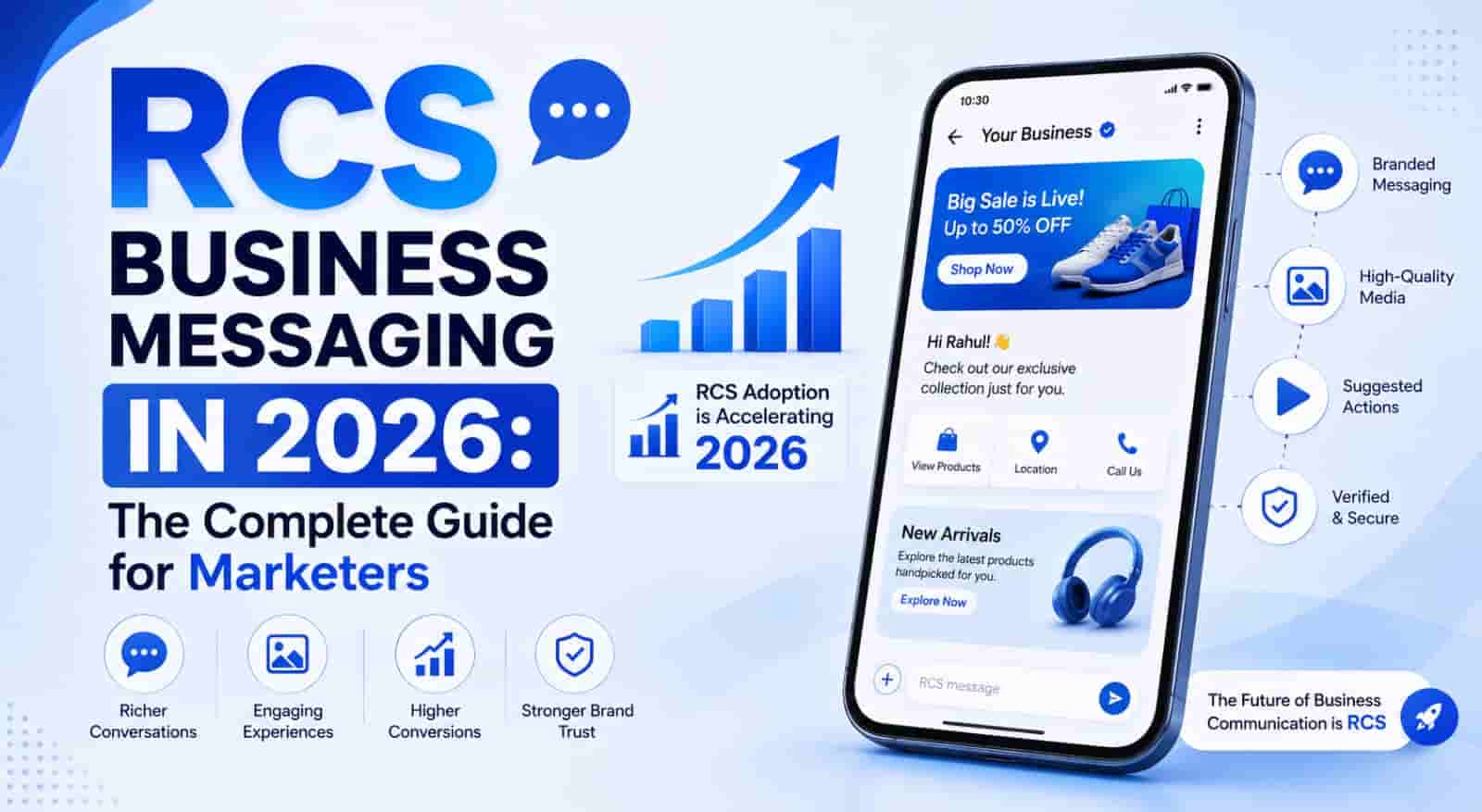
Rich Communication Services (RCS) has moved from a niche Android feature to a mainstream marketing channel. Unlike plain SMS, RCS lets brands send rich media, carousels, quick-reply buttons, and verified sender badges directly inside the native messaging app — no extra download required.
A Brief History of RCS
RCS was originally developed as a carrier-led successor to SMS, designed to bring iMessage-like features to the default messaging app on Android devices. For years, adoption was slow and fragmented because each carrier implemented it differently. That changed once Google took over RCS infrastructure with Google Messages and pushed for a unified standard — and again more recently as Apple added RCS support to iMessage, finally making rich messaging viable across both major mobile ecosystems.
Why Marketers Are Switching to RCS in 2026
- Higher engagement: Rich cards and buttons drive significantly higher click-through rates than plain text SMS.
- Verified branding: A verified business profile with logo and name builds instant trust.
- Two-way conversations: Customers can reply, browse a carousel, or complete an action without leaving the chat thread.
- Wider reach: With both Android and iOS now supporting RCS, brands can finally run one rich-messaging campaign across the majority of smartphones.
Use Cases That Work Best
Order confirmations, delivery tracking, appointment reminders, abandoned cart recovery, and customer support are the strongest early use cases because they combine transactional relevance with rich visuals.
Industry-Specific RCS Applications
Retail and e-commerce: Product carousels showing new arrivals, restock alerts with a direct "Buy Now" button, and order-tracking cards with a live map link. Banking and finance: Verified transaction alerts with fraud-check buttons, statement notifications, and loan offer cards — all benefiting from RCS's verified sender badge, which reduces phishing risk compared to plain SMS. Travel and hospitality: Boarding pass cards, check-in reminders with a one-tap action, and itinerary updates sent as a rich card rather than a wall of text. Healthcare: Appointment confirmations with reschedule buttons and prescription-ready notifications with pharmacy location cards.
Getting Started with RCS
To launch RCS campaigns, businesses need a registered RCS sender ID, an approved brand profile, and a messaging partner who can handle fallback to SMS for devices that don't yet support RCS. This fallback logic is critical — it ensures no customer is left without a message.
RCS vs SMS vs WhatsApp: How They Compare
| Feature | SMS | RCS | |
|---|---|---|---|
| Rich media (images, carousels) | No | Yes | Yes |
| Verified brand identity | No | Yes | Yes |
| Works without an app download | Yes | Yes | No |
| Requires recipient opt-in to a platform | No | No | Yes |
| Universal device support | Yes | Growing | Requires app install |
RCS effectively sits between SMS and WhatsApp — it has the native, no-download reach of SMS combined with much of the rich functionality of an app-based channel.
Building an Effective RCS Campaign
1. Start With a Clear Sender Identity
Set up your verified business profile with an accurate logo, business name, and category. This is what customers see before they even open your message, so it needs to build immediate trust.
2. Design for the Card Format
RCS rich cards work best with a single strong image, a short headline, and one clear call-to-action button. Avoid cramming multiple offers into a single card — use a carousel instead if you have more than one product or option to show.
3. Keep Quick Replies Simple
Limit quick-reply buttons to two or three clear choices, such as "Track Order," "Reschedule," or "Talk to Support." Too many options increases decision fatigue and lowers response rates.
4. Always Plan the SMS Fallback
Not every device supports RCS yet. A well-configured messaging platform automatically falls back to plain SMS for unsupported devices, so your campaign reach never drops even as you upgrade the experience for supported users.
RCS Compliance and Best Practices
Because RCS carries verified sender identity, carriers apply stricter vetting than they do for SMS short codes. Businesses should register through an approved aggregator, ensure their brand profile is accurate and consistent with their public web presence, and avoid sending unsolicited marketing messages to numbers that haven't opted in. Respecting quiet hours and providing a clear opt-out mechanism in every campaign protects both deliverability and brand reputation.
Measuring RCS Campaign Performance
Track delivery rate, read rate, button click-through rate, and conversion rate separately from your SMS benchmarks — RCS typically outperforms plain text on engagement metrics, but campaigns should still be measured on their own baseline rather than assumed to automatically outperform.
Common Mistakes to Avoid
- Skipping the fallback strategy: Leaving unsupported devices without any message at all.
- Overloading cards with text: Rich cards work best with minimal copy and one clear action.
- Ignoring two-way replies: RCS is conversational — failing to route and respond to replies quickly undermines the channel's biggest advantage.
- Launching without brand verification: An unverified sender loses the trust signal that makes RCS effective in the first place.
Where RCS Is Headed Next
As carrier support and cross-platform compatibility continue to expand, expect RCS to take on more of the functionality currently reserved for app-based messaging — including in-message payments and deeper AI-assisted conversations — while retaining the universal reach that makes SMS-based channels so dependable.
Conclusion
RCS business messaging is one of the fastest-growing channels in mobile marketing today, combining the universal reach of SMS marketing with the rich, interactive experience of app-based messaging. For businesses evaluating RCS messaging, bulk SMS services, or business messaging platforms in 2026, the takeaway is simple: adopt a hybrid RCS and SMS marketing strategy now to stay ahead of customer expectations, boost engagement rates, and future-proof your mobile marketing and customer engagement efforts.