

QR Code Marketing: How Indian Businesses Can Turn Print, Packaging and Counters Into Trackable Customer Journeys

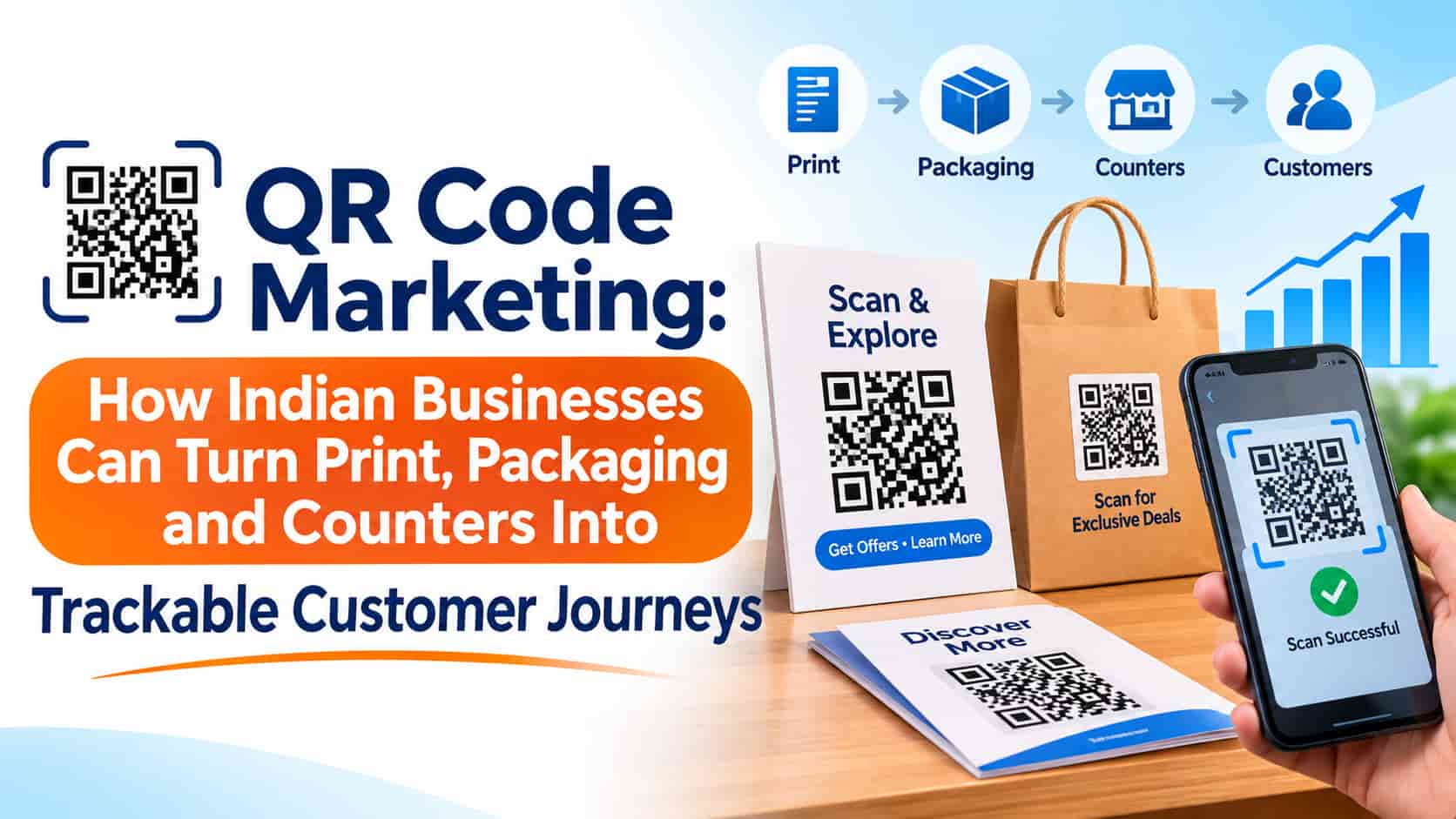
A decade ago, QR codes looked like a failed idea. Few people scanned them, and fewer knew why. Then payments changed everything. In India, scanning a QR code to pay has become a daily habit, from street vendors to large stores. That habit has opened the door for marketing: customers now expect that a square code on a poster, menu, package or invoice will do something useful. Used well, QR codes link the physical and digital worlds at almost no cost. Used badly, they waste space and annoy people. This guide covers QR code marketing best practices for Indian businesses.
What QR codes can do
A QR code is a scannable image that holds information, most often a web address. When a customer scans it with a phone camera, their phone opens the link. QR codes can also start a WhatsApp chat with a pre-filled message, open a map location, dial a number, add a contact, open an app store page, show a menu, display a video or lead to a payment screen. This makes them versatile for marketing, sales, support and operations.
Smart use cases for businesses
Restaurant and cafe menus. Table QR codes lead to a digital menu, with an option to order or call a waiter. They reduce printing cost and let you update prices instantly.
WhatsApp enquiries and orders. A code on a shop counter, vehicle, hoarding or packaging opens a WhatsApp chat with your business. This is one of the most effective uses in India, because customers prefer chatting.
Collecting consent and sign-ups. Place a code at billing counters inviting customers to join your updates list or loyalty programme, with clear consent wording.
Reviews. A code that opens your Google review page makes it easy for happy customers to leave feedback.
Product information and authenticity. Packaging codes can show usage instructions, videos, warranty registration or proof of authenticity.
Print advertising and outdoor. A code on a newspaper ad, flyer or hoarding lets people respond instantly instead of remembering a number.
Events and exhibitions. Registration, schedule, lead capture and brochure downloads can all start from a scan.
Real estate and automobiles. Site boards and showroom displays can link to brochures, walkthrough videos and enquiry forms.
Customer support. Codes on appliances and equipment can lead to manuals, service booking or troubleshooting help.
Static or dynamic codes
A static QR code holds the destination directly. It cannot be changed after printing, and gives no scan data. A dynamic QR code points to a short redirect address that you control. You can change the destination later without reprinting, and you can track scans: number, time, approximate location and device type. For marketing, dynamic codes are usually the better choice, especially for print runs and permanent signage. Use reliable services, and keep control of the account, since a dynamic code depends on the redirect service continuing to exist. For critical or long-lived uses, consider hosting the redirect on your own domain.
Design for scanning success
A code that does not scan is worse than no code. Keep a clear quiet zone, which is white space around the code. Use strong contrast between the code and background, with dark code on a light background working best. Do not distort or stretch the code. If you add a logo or colours, test thoroughly. Make the code large enough for the scanning distance: a code on a hoarding must be far larger than one on a business card. Avoid placing it on curved, shiny or crumpled surfaces. Test with several phones, in different lighting, before printing in bulk.
Give people a reason to scan
People scan when they see a clear benefit. Always add a short call to action next to the code: "Scan to see today's menu", "Scan to chat with us on WhatsApp", "Scan for a free quote" or "Scan to leave a review". A bare code with no explanation gets few scans. Mention what the customer will get, and where it leads. For offers, tell people what they will receive.
Make the destination mobile-friendly
Everyone who scans uses a phone. The page must load fast, work on small screens and get to the point immediately. Avoid long forms, large images, pop-ups and desktop-only content. Make the main action obvious, such as a WhatsApp button, a booking form or a call button. If the code leads to an app store, offer a web alternative for customers who do not want to install an app. Keep the experience consistent with the message on the printed material.
Track and learn
Use unique codes for different placements, such as the counter, packaging, flyers and newspaper ads. Add campaign parameters to the destination address so analytics can attribute visits and conversions. Compare scan rates and conversion rates by placement. Test different calls to action and positions. Retire placements that do not perform, and put more effort into those that do.
Security and trust
QR codes can be abused in scams, where fraudsters paste fake codes over genuine ones to steal payments, or lead people to phishing pages. Protect customers and your brand. Check printed codes regularly for tampering, especially in public places. Use your own domain or a trusted redirect service so that the address looks credible. Tell customers to check the address shown after scanning, and never enter sensitive information on unfamiliar pages. For payment QR codes, display the business name clearly, and train staff to verify the code.
Privacy and compliance
If a scan leads to data collection, explain how data will be used and obtain consent for marketing messages. Follow India's data protection requirements, and the rules for SMS, WhatsApp and email marketing. Do not hide terms or collect more data than necessary.
Common mistakes
Common errors include tiny codes, low contrast, no call to action, desktop-only landing pages, static codes on large print runs, no tracking, broken or expired links, placing codes where people cannot stop to scan, such as moving vehicles and high billboards, and leaving old campaign codes active with outdated offers.
Frequently asked questions
Do QR codes still work for marketing?
Yes. In India, payment habits have made scanning familiar, and codes work well when they offer a clear benefit.
Should I use dynamic codes?
Usually yes for marketing, since you can change destinations and track scans.
How big should the code be?
Large enough to scan comfortably from the expected distance. Test before printing.
Connect print to digital
OM Enterprises designs QR campaigns with WhatsApp chat links, tracking and mobile landing pages. Talk to our marketing team.