

Progressive Web Apps vs Native Apps: Which Should You Build?

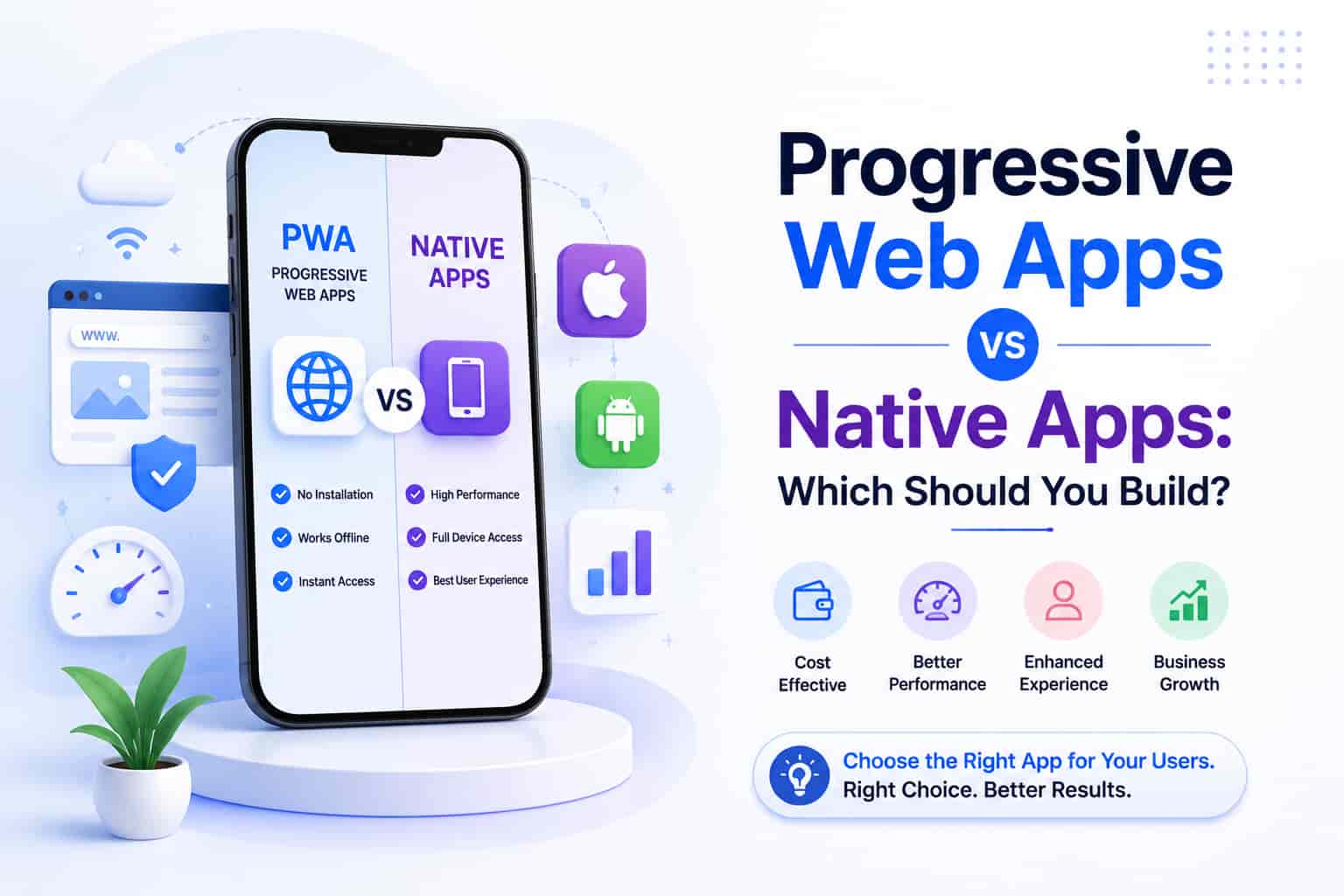
Two Paths to a Mobile Presence
Businesses building a mobile experience in 2026 usually choose between a Progressive Web App (PWA) and a native app. Each comes with real trade-offs in cost, performance, and reach.
What Makes PWAs Appealing
A PWA runs in the browser but behaves like an app — offline support, push notifications, and a home-screen icon — without requiring users to visit an app store. Development is faster and cheaper since one codebase works across platforms.
Where Native Apps Still Win
Native apps offer the best possible performance, full access to device hardware, and deeper integration with platform-specific features like biometric authentication or advanced camera controls. For apps with heavy graphics or complex offline functionality, native remains the safer choice.
Cost and Maintenance
PWAs are significantly cheaper to build and maintain since there's a single codebase and no app store approval cycle. Native apps require separate iOS and Android codebases (or a cross-platform framework), plus ongoing store compliance work.
Discoverability
Native apps benefit from app store search and featured placements. PWAs are discovered through the web, meaning your SEO and web presence directly influence how many people find and install them.
Side-by-Side Snapshot
| Factor | PWA | Native App |
|---|---|---|
| Development cost | Lower — single codebase | Higher — separate iOS/Android builds |
| App store presence | None | Yes, with discoverability benefits |
| Performance ceiling | Good, but browser-bound | Best possible, direct hardware access |
| Offline capability | Basic to moderate | Full, deeply integrated |
| Update process | Instant, no approval needed | Subject to store review cycles |
Hybrid Approach: Starting with a PWA
Many growing businesses launch a PWA first to validate demand and gather user feedback quickly, since updates ship instantly without app store review delays. Once usage justifies the investment, they build a native app to unlock deeper device integration and app store discoverability.
Real-World Scenarios: Which Approach Fits
A local service business testing a booking app: A PWA is usually the right first step — low cost, fast to launch, and easy to iterate on based on real customer feedback before committing to a larger native build. A fintech app requiring biometric login and secure local storage: Native is typically necessary from day one, since these security features depend on deep OS-level integration that browsers can't fully replicate. A media or content app with heavy offline reading: Native usually wins here too, given the more robust offline storage and background sync native platforms provide. An internal tool or B2B dashboard used by employees on company devices: A PWA is often sufficient and dramatically cheaper to maintain, since app store discoverability isn't a factor for internal tools.
Cross-Platform Frameworks as a Middle Ground
Frameworks that compile to native code from a shared codebase offer a middle path between full native development and a PWA — closer to native performance with less duplicated engineering effort than maintaining two fully separate codebases, though typically with some trade-offs in access to the newest platform-specific features compared to fully native development.
Questions to Ask Before Deciding
- Does your app need camera, biometric, or sensor access beyond what a browser can provide?
- How important is app store visibility to your acquisition strategy?
- What's your budget and timeline for ongoing maintenance across two native codebases?
- Will users expect to find your app by browsing the App Store or Play Store specifically?
Making the Decision
Choose a PWA if you need speed to market, lower cost, and broad reach. Choose native if your app depends on advanced device features, needs the smoothest possible performance, or must be prominently discoverable in app stores. Many growing businesses start with a PWA and move to native once the use case justifies the investment.
Conclusion
There's no universal winner in the Progressive Web App vs native app debate — the right choice depends on your budget, timeline, and how much your product depends on deep device integration. PWAs offer a faster, cheaper path to a mobile presence with instant updates and broad web-based reach, while native apps deliver the best performance and app store discoverability. Many successful businesses use a phased mobile app development strategy: launch a PWA to validate demand, then invest in native once the ROI is clear.