

Product Launch Marketing Plan: A Four-Phase Guide From First Teaser to Repeat Customers

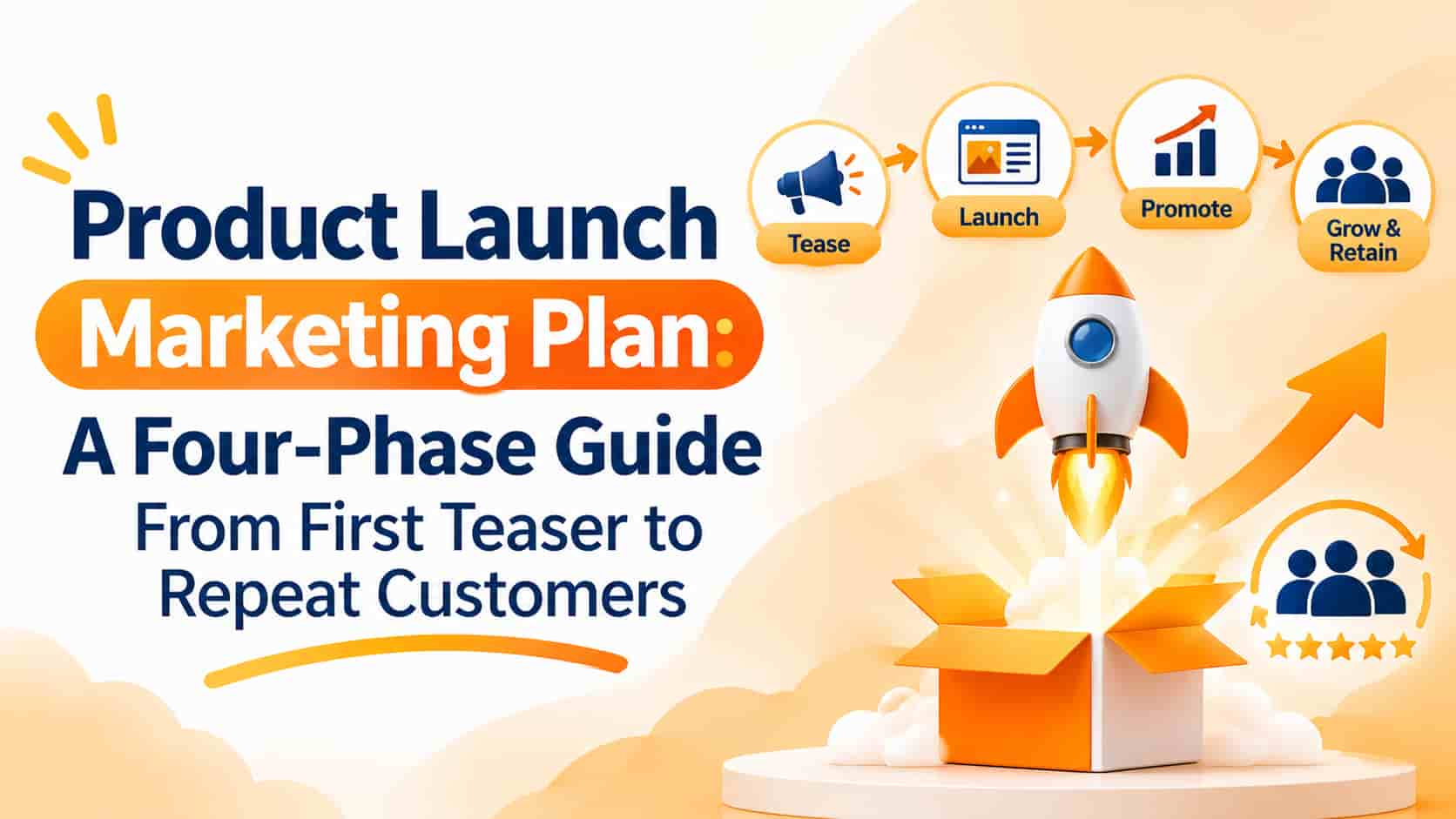
A product launch is a one-time event with a long tail. Done well, it builds early momentum, gathers first customers and creates stories that fuel months of marketing. Done badly, it produces a flurry of posts, a handful of sales and silence. Many Indian businesses treat launches as a single announcement day. In reality, a successful launch is a campaign that begins weeks before the product is available and continues for weeks afterwards. This guide offers a practical product launch marketing plan that works for small and mid-sized businesses, whether you sell a new food item, a software feature, an apparel line or a service.
Phase one: lay the foundations (four to six weeks before)
Define the goal. Decide what success means: units sold, sign-ups, pre-orders, store visits, waitlist size or revenue. Set a number and a time frame.
Know your customer. Describe who the product is for, what problem it solves and what alternatives they use today. Talk to ten real customers if you can. Their words will help you write better messages.
Clarify positioning. Write one sentence that explains what the product is, who it is for and why it is different. For example, a snack brand might describe a baked millet snack for office workers who want healthy options without compromising on taste. Everything you create should reflect this.
Set pricing and offers. Decide the launch price, any introductory offer, bundles and guarantees. Make sure margins hold after discounts and marketing costs.
Prepare the basics. Ready your website or product page, product photos and videos, descriptions, FAQs, support process and order fulfilment. Test the buying journey on mobile, including payment and delivery. Prepare tracking so that you can measure sources of sales.
Phase two: build anticipation (two to four weeks before)
Create a waitlist. Set up a simple landing page where interested people can leave their name and phone number or email, with clear consent for launch updates. Offer a reason to join, such as early access, a launch discount or a bonus.
Tease on social media. Share behind-the-scenes content: development stories, ingredient or material sourcing, prototypes, team moments and sneak peeks. Use short videos and Stories. Avoid revealing everything. Build curiosity.
Engage existing customers first. Your current customers are your warmest audience. Send them early notice through WhatsApp, SMS and email, with consent. Offer them preview access or a special price. Their feedback and early orders create social proof.
Involve partners and creators. Send samples to micro-influencers, local creators, relevant community leaders and industry contacts. Brief them clearly, ask for honest feedback and require disclosure for gifted or paid collaborations.
Prepare press and content. Write a short press note, gather high-quality images and prepare a story that explains why the product exists. Share it with local media, industry publications and newsletters where relevant.
Phase three: launch day and week
Announce on every owned channel. Post on social media, send emails and WhatsApp messages to your waitlist and customers, update your website banner, change your Google Business Profile posts and tell your sales team to mention it.
Give people a reason to act now. A launch offer, limited early-bird pricing, free delivery or a gift for the first customers can create urgency. Make the deadline real and the terms clear.
Use paid ads to extend reach. Run targeted campaigns on Meta and Google to reach interested audiences, and retarget waitlist members and website visitors. Start with a controlled budget, test creatives and watch cost per sale. Make sure that landing pages match the ad promises.
Be present and responsive. Answer questions quickly in comments, DMs and WhatsApp. Monitor reviews and mentions. Share customer reactions and photos with permission. Fix problems immediately.
Host a live moment. A live session, webinar, demo or event adds energy. Invite customers, partners and media, and record it for later use.
Phase four: sustain and learn (weeks after)
Collect reviews and feedback. Ask early customers for honest reviews and testimonials. Share their experiences, and respond to criticism constructively.
Keep the story going. Publish how-to content, use cases, customer stories and comparison guides. Share milestones, such as the first thousand customers. Introduce variants or bundles.
Retarget and follow up. Remind people who showed interest but did not buy. Send post-purchase tips to new customers, and invite them to refer friends.
Analyse results. Compare actual numbers against your goals: sales, conversion rates, cost per customer, channel performance, returns and feedback. Identify what worked and what did not. Write a short report and use it to plan the next launch.
Choose channels by product type
Consumer products often benefit from Instagram Reels, creator collaborations, WhatsApp updates and marketplace listings. B2B products rely on LinkedIn, webinars, case studies, outreach and demos. Local services benefit from Google Business Profile, local press, community partnerships and WhatsApp. Software products benefit from waitlists, product demos, free trials and partner announcements. Choose a few channels and execute them well.
Prepare operations as carefully as marketing
A launch can fail because of fulfilment problems. Make sure you have enough stock or capacity, packaging, courier arrangements and customer support coverage. Prepare for surges in questions by creating FAQs and saved replies. Define how returns, refunds and complaints will be handled. If you use pre-orders, be honest about delivery dates.
Budget wisely
Divide your launch budget between creative production, paid media, creators and samples, events and tools. Reserve a portion for the weeks after launch, since many brands overspend on day one and have nothing left to sustain momentum. Track spending and results weekly, and shift money towards what works.
Common mistakes
Common errors include launching without a waitlist, ignoring existing customers, over-discounting, poor product photography, no tracking, weak follow-up, no operations plan and declaring success or failure after one day.
Frequently asked questions
How long should a launch campaign run?
Typically four to eight weeks in total, including pre-launch and post-launch phases.
Do I need a big budget?
No. A focused plan using owned channels, partners and modest ads can work well.
Should I discount at launch?
A limited, well-structured offer can help, but avoid training customers to wait for sales.
Launch with a plan
OM Enterprises plans product launches across social media, WhatsApp, SMS, ads and websites, with tracking from first teaser to repeat sales. Talk to our launch marketing team.