

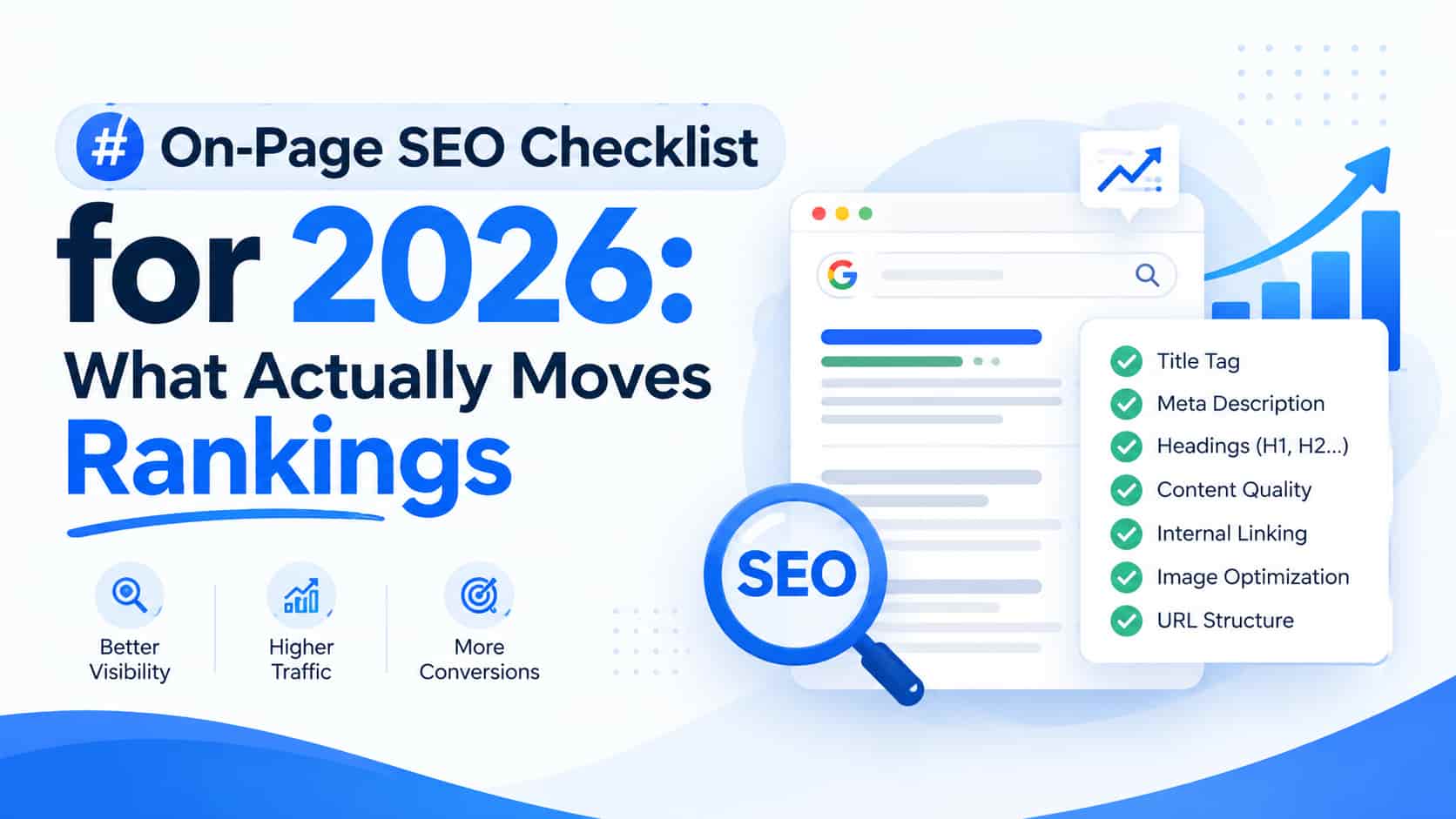
On-Page SEO Checklist for 2026: What Actually Moves Rankings

SEO Fundamentals Haven't Disappeared
Even with AI-driven search results reshaping discovery, solid on-page SEO remains the foundation every page needs before it can rank. Here's the checklist that still matters in 2026.
Why On-Page SEO Still Deserves Priority
With so much attention on AI search and generative results, it's tempting to think traditional on-page SEO has lost relevance. In practice, the opposite is true: AI systems still rely on well-structured, technically sound pages as their source material. A page that ranks poorly in classic search rarely gets surfaced by an AI summarizer either, because both systems reward clarity, relevance, and trust signals. On-page SEO is the shared foundation underneath every kind of modern search visibility.
1. Search Intent Match
Before writing a single word, confirm what searchers actually want — informational, transactional, or navigational — and structure your page to satisfy that intent in the first few lines.
2. Title Tags and Meta Descriptions
Keep title tags under 60 characters with the primary keyword near the front. Meta descriptions won't directly boost rankings, but a compelling one improves click-through rate, which indirectly helps performance.
3. Header Structure
Use one clear H1, followed by logically nested H2s and H3s. Search engines and AI summarizers both rely on heading structure to understand page hierarchy.
4. Internal Linking
Link to related pages using descriptive anchor text. This spreads authority across your site and helps both users and crawlers find related content.
5. Page Speed and Core Web Vitals
Slow pages lose rankings and users. Compress images, lazy-load below-the-fold content, and minimize render-blocking scripts.
6. Structured Data
Schema markup helps your content qualify for rich results and gives AI search engines clean, structured facts to pull from.
7. Original, Specific Content
Generic content is easy to outrank. Include real data, examples, and unique insights that competitors haven't already published.
8. Image Optimization
Use descriptive file names and alt text that accurately describe each image, not just a repeated keyword. Compress images before upload so they don't drag down page speed, and consider modern formats like WebP for smaller file sizes without visible quality loss.
9. URL Structure
Keep URLs short, readable, and keyword-relevant. A URL like /on-page-seo-checklist tells both users and search engines what the page is about at a glance, while long strings of parameters or numbers do not.
10. Mobile Optimization
With the majority of searches happening on mobile, a page that isn't fully responsive — readable text, tappable buttons, no horizontal scrolling — will underperform regardless of how well-optimized the content itself is.
11. Keyword Placement Without Keyword Stuffing
Place your primary keyword naturally in the title, the first 100 words, at least one H2, and the meta description — but never at the expense of readability. Modern search algorithms penalize forced repetition and reward natural language that still clearly signals topic relevance. A good test: read the paragraph aloud; if the keyword placement sounds unnatural, revise it.
12. Content Depth and Comprehensiveness
Pages that thoroughly answer a topic — covering related subtopics, common follow-up questions, and practical detail — tend to outperform short, surface-level pages for competitive keywords. This doesn't mean padding content with filler; it means genuinely covering what a searcher needs to know in one place.
A Quick Pre-Publish Audit
- Does the H1 match search intent within the first line of content?
- Is the primary keyword present in the title, one H2, and the opening paragraph — naturally, not forced?
- Are there at least 2–3 relevant internal links?
- Have all images been compressed and given descriptive alt text?
- Does the page load quickly on mobile?
- Does the content go deep enough to fully answer the search intent, not just skim the surface?
Final Thought
On-page SEO in 2026 is less about tricking algorithms and more about making pages genuinely easier for both humans and AI systems to understand and trust.
Conclusion
Mastering on-page SEO remains one of the highest-ROI investments a website can make in 2026. From search intent and title tags to Core Web Vitals and structured data, every checklist item here directly supports better search rankings, higher organic traffic, and improved click-through rates. Use this on-page SEO checklist before every publish to keep your content optimized for both traditional search engines and AI-powered search results.