

Meta Ads Creative Fatigue: Why Your Best-Performing Ad Stops Working

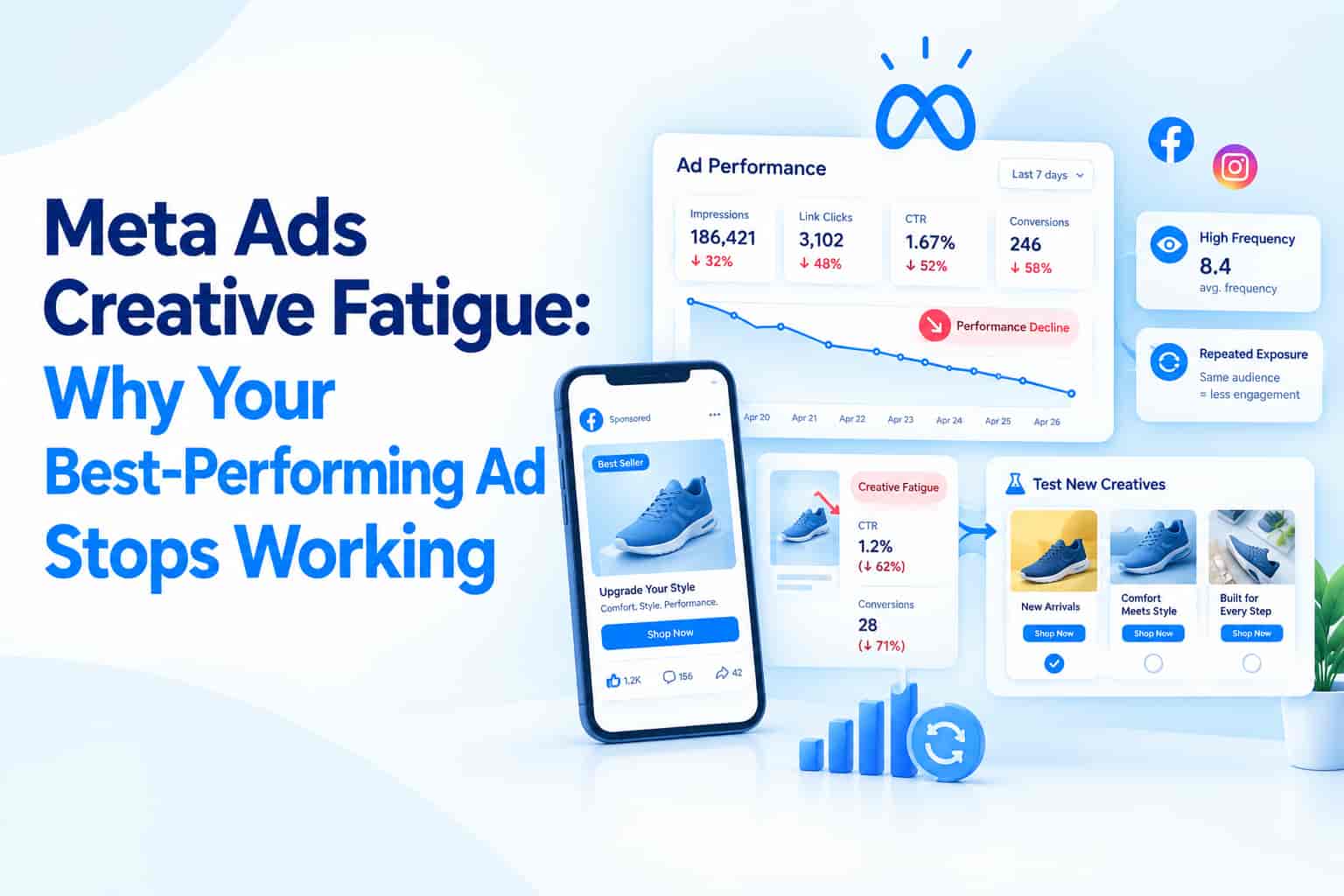
A Meta ad launches strong, delivers a great cost per result for two weeks, and then performance quietly declines even though nothing about the targeting, budget, or landing page changed. The most common explanation isn't a platform problem or a sudden shift in the audience's interests — it's creative fatigue, where the same audience has simply seen the same ad enough times that it stops earning attention.
What Creative Fatigue Actually Looks Like in the Data
The clearest early signal is frequency — the average number of times a unique user has seen the ad — climbing alongside a declining click-through rate and rising cost per result, even with stable or improving relevance signals elsewhere in the account. A campaign with frequency climbing past three or four within a short period, paired with softening CTR, is showing early fatigue before cost metrics fully reflect the problem, which makes frequency a useful leading indicator rather than waiting for cost to visibly rise.
Why It Happens Faster Than Most Advertisers Expect
Meta's ad delivery system continues showing an ad to the same audience as long as it's performing well relative to other creative in the account, which means a genuinely strong ad often gets fatigued faster than a mediocre one — it earns more impressions per user precisely because the system rewards its early performance. Smaller, more specific audiences fatigue faster than broad ones simply because there are fewer unique people to rotate the ad through, which is a common issue for niche B2B or local-business campaigns with limited audience size.
Refreshing Without Starting From Scratch
Full creative fatigue doesn't always require an entirely new concept — often, a new opening hook, a different format (static image to short video, or a new headline variation), or a new angle on the same core offer is enough to reset engagement with an audience that's grown numb to the specific creative execution rather than the underlying message. Running multiple creative variations within the same ad set from the start, rather than a single hero ad, gives Meta's delivery system room to rotate naturally and slows the onset of fatigue.
Audience Refresh as a Complementary Fix
Alongside creative refresh, periodically expanding or adjusting the audience — adding a new lookalike source, testing a broader interest set, or excluding an audience segment that's already converted — reduces how quickly any single piece of creative gets fatigued, since it's being shown to more genuinely new people rather than repeatedly reaching the same saturated group.
Building a Creative Refresh Cadence
Rather than waiting for visible performance decline, businesses running always-on Meta campaigns benefit from a planned creative refresh cadence — often every two to four weeks for actively spending campaigns, adjusted based on actual frequency and CTR trends in the account rather than a fixed calendar alone. Planning creative production around this cadence in advance avoids the scramble of building replacement ads only after performance has already dropped.
Frequently Asked Questions
What frequency level signals creative fatigue?
There's no universal number, but a frequency climbing past three to four within a short window, paired with declining CTR, is a common early signal worth investigating rather than ignoring.
Does a bigger budget delay creative fatigue?
Not directly — fatigue is driven by audience size and how often the same people see the ad, not spend level; a larger budget spent on a small audience can actually accelerate fatigue rather than delay it.
Keeping Campaigns Performing Past the First Two Weeks
The ads that keep performing aren't the ones that never need refreshing — they're the ones with a planned rotation built in before fatigue sets in. OM Enterprises manages Meta Ads accounts for Indian businesses with creative refresh cadences built into the campaign plan from launch, not added only after performance has already declined.