

Marketing Automation for SMEs: What to Automate First When You Have No Marketing Team

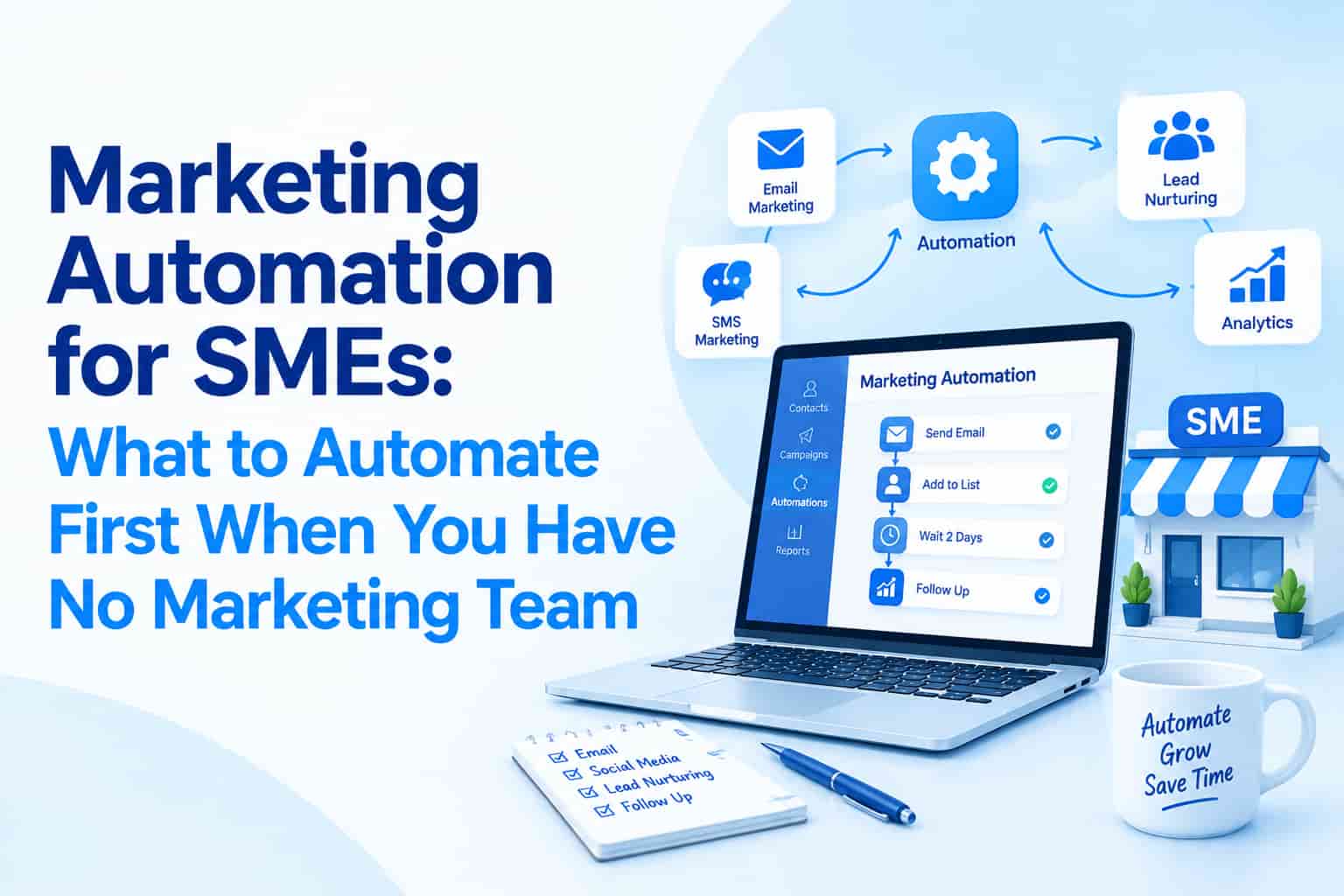
A small business owner runs sales calls in the morning, handles deliveries in the afternoon, and remembers to follow up with a warm lead from last week only if they happen to notice the missed WhatsApp thread while scrolling for something else. This isn't a discipline problem — it's a bandwidth problem, and it's exactly the gap marketing automation was built to close, without requiring a dedicated marketing hire to make it work.
Automate the follow-up before anything else
The single highest-value automation for most SMEs isn't a fancy multi-channel campaign — it's making sure no enquiry ever goes unanswered for more than a few minutes, and no warm lead ever gets forgotten simply because the owner got busy. An automated instant acknowledgment (WhatsApp, email, or SMS) the moment a form is submitted, followed by a scheduled sequence of follow-ups over the next several days, recovers a meaningful share of leads that would otherwise quietly go cold.
A realistic starting order
1. Instant lead acknowledgment
An automatic "thanks, we got your enquiry, here's what happens next" message the moment someone fills a form or messages your business — closing the anxious gap between enquiry and human response that causes a lot of otherwise-interested leads to look elsewhere.
2. A simple multi-day follow-up sequence
Three to five scheduled touchpoints (not just one) spread over a week or two after initial contact recover leads who were interested but simply didn't respond to the first message — most buying decisions, especially higher-consideration ones, aren't made on the very first contact.
3. Abandoned enquiry and cart recovery
For businesses with any kind of online booking or cart, an automated reminder to someone who started but didn't finish is one of the highest-ROI automations available, since it's targeting someone who already showed real intent.
4. Customer re-engagement after a gap
An automated check-in to a customer who hasn't purchased or engaged in a while — three, six, twelve months — costs nothing to run and regularly reactivates a share of an existing customer base more cheaply than acquiring a new customer from scratch.
What not to automate yet
Complaint handling, anything emotionally sensitive, and high-value custom negotiations should stay manual — automation here tends to frustrate rather than help, and the cost of getting it wrong (a lost customer, a damaged relationship) outweighs the time saved.
Tool choice matters less than most SMEs assume
Most no-code automation and CRM platforms available today (many with genuinely usable free or low-cost tiers) can handle the four steps above without custom development. The bigger determinant of success is usually whether a business actually maps out its real follow-up process before automating it, rather than which specific tool gets chosen.
FAQ
Do I need a CRM before I can automate anything?
A basic CRM helps track who's in which stage of follow-up, but a simple automation (instant acknowledgment plus a few scheduled messages) can be set up with lightweight tools even before a full CRM is in place.
Will automated messages feel impersonal to customers?
Not if they're written in a genuine, specific voice rather than generic corporate language, and as long as there's always an easy way to reach a real person — the goal is speed and consistency, not replacing human contact entirely.
How much time does this actually save?
Most owners underestimate how much of their week goes to manual, repetitive follow-up until they see it consolidated into an automated sequence — the time saved usually shows up less in hours logged and more in leads that stop slipping through.
Conclusion
Marketing automation isn't a luxury reserved for businesses large enough to afford a marketing department — for a small business with no dedicated team, it's often the only realistic way to make sure follow-up happens consistently at all. Starting with instant lead acknowledgment and a simple multi-day sequence delivers most of the available value before any more sophisticated automation is needed.