

Local SEO for Small Businesses: A Step-by-Step Guide

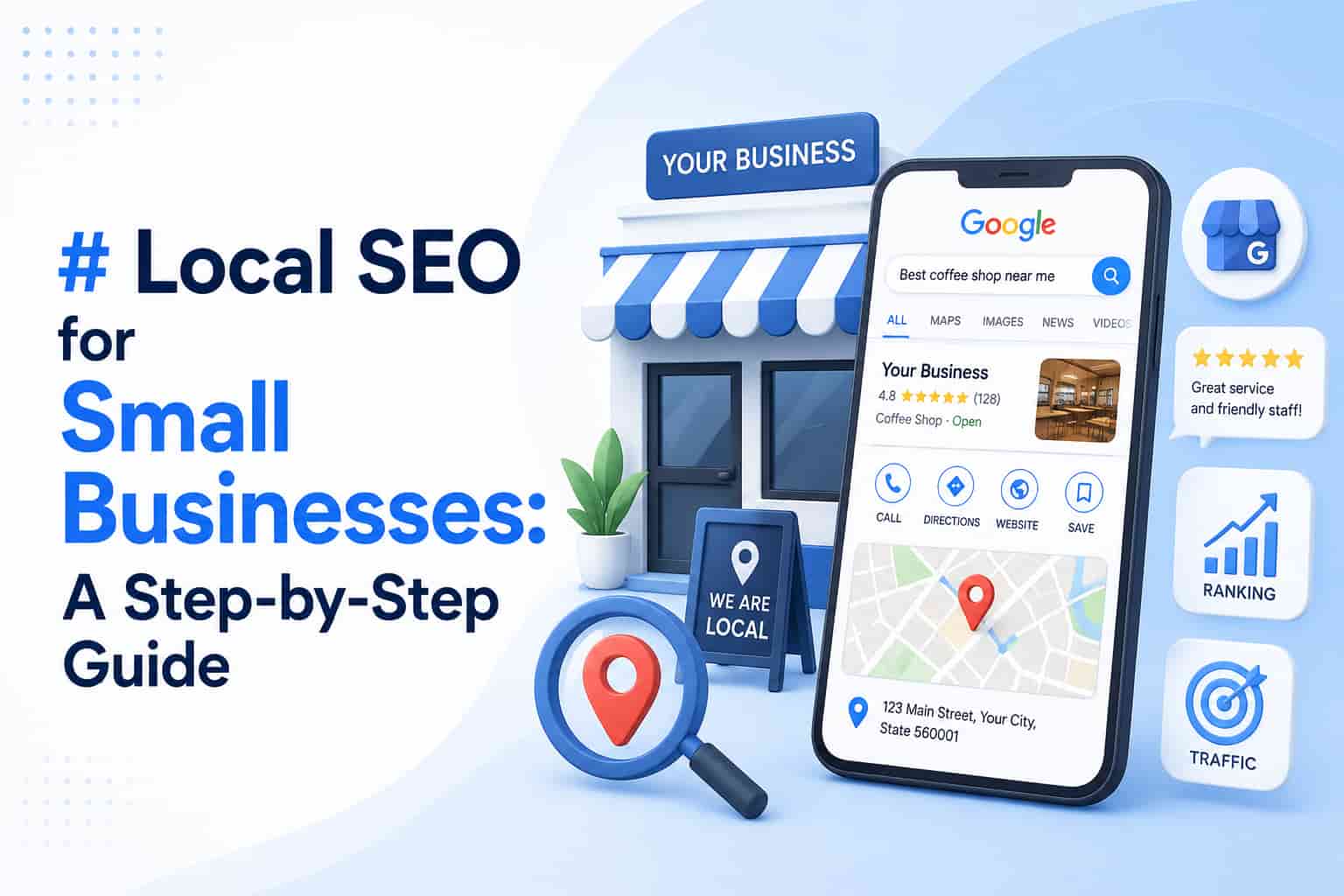
Why Local SEO Is a Priority for Small Businesses
Most local customers search online before visiting a store or booking a service. Ranking well in local search results directly translates into foot traffic, calls, and bookings.
Step 1: Claim and Optimize Your Google Business Profile
Complete every field — hours, categories, services, and photos — and keep information consistent and up to date. This profile is often the first thing potential customers see.
Step 2: Build Consistent NAP Citations
Your business Name, Address, and Phone number should match exactly across your website, directories, and social profiles. Inconsistencies confuse search engines and hurt local rankings.
Step 3: Collect and Respond to Reviews
Reviews influence both rankings and customer trust. Actively ask satisfied customers for reviews, and respond to every review — positive or negative — professionally.
Step 4: Create Location-Specific Content
Publish content relevant to your service area — neighborhood guides, local case studies, or location-specific landing pages — to signal local relevance to search engines.
Step 5: Build Local Backlinks
Partnerships with local organizations, sponsorships, and mentions in local news or blogs build the kind of location-relevant authority that boosts local rankings.
Step 6: Optimize for Mobile and Voice Search
Many local searches happen on mobile devices or through voice assistants using natural, conversational phrases. Ensure your site is fast on mobile and your content answers common local questions directly.
Step 7: Use Local Schema Markup
Adding LocalBusiness structured data to your website helps search engines understand your address, hours, and service area precisely, increasing your chances of appearing in map packs and rich local results.
Step 8: Get Listed in Relevant Local Directories
Beyond Google, industry-specific and city-specific directories add further citation consistency and can drive direct referral traffic, especially in niches where customers actively browse curated local listings.
Understanding the Local Map Pack
The map pack — the block of three local business listings shown above organic results for location-based searches — is driven primarily by three factors: relevance to the search query, distance from the searcher, and prominence, which includes review volume, review quality, and the strength of your overall online presence. Unlike organic rankings, the map pack is highly sensitive to proximity, meaning even a well-optimized profile may not appear for searchers outside your immediate service area.
Handling Negative Reviews Without Hurting Your Rankings
A single negative review rarely damages local rankings on its own, but ignoring it or responding defensively can. Respond promptly, acknowledge the specific concern, and offer to resolve the issue offline where appropriate. Search engines and prospective customers both read professional, solution-oriented responses to negative reviews as a positive trust signal, not a liability.
A Simple Monthly Local SEO Routine
- Check for and respond to any new reviews within 48 hours
- Post one update, offer, or photo to your Google Business Profile
- Scan for and correct any NAP inconsistencies across directories
- Review local search rankings for your top 5–10 target keywords
The Payoff
Consistent effort across these steps compounds over time, helping small businesses compete for visibility even against larger, better-funded competitors.
Conclusion
Local SEO remains one of the most cost-effective ways for small businesses to win visibility in their community. By optimizing your Google Business Profile, maintaining consistent NAP citations, collecting reviews, and using local schema markup, you build the local search authority needed to rank in map packs and mobile search results. Follow the monthly local SEO routine above consistently, and you'll steadily outrank larger competitors who neglect local search optimization.