

Lead Scoring for B2B and High-Ticket Businesses: How to Help Your Sales Team Call the Right Leads First

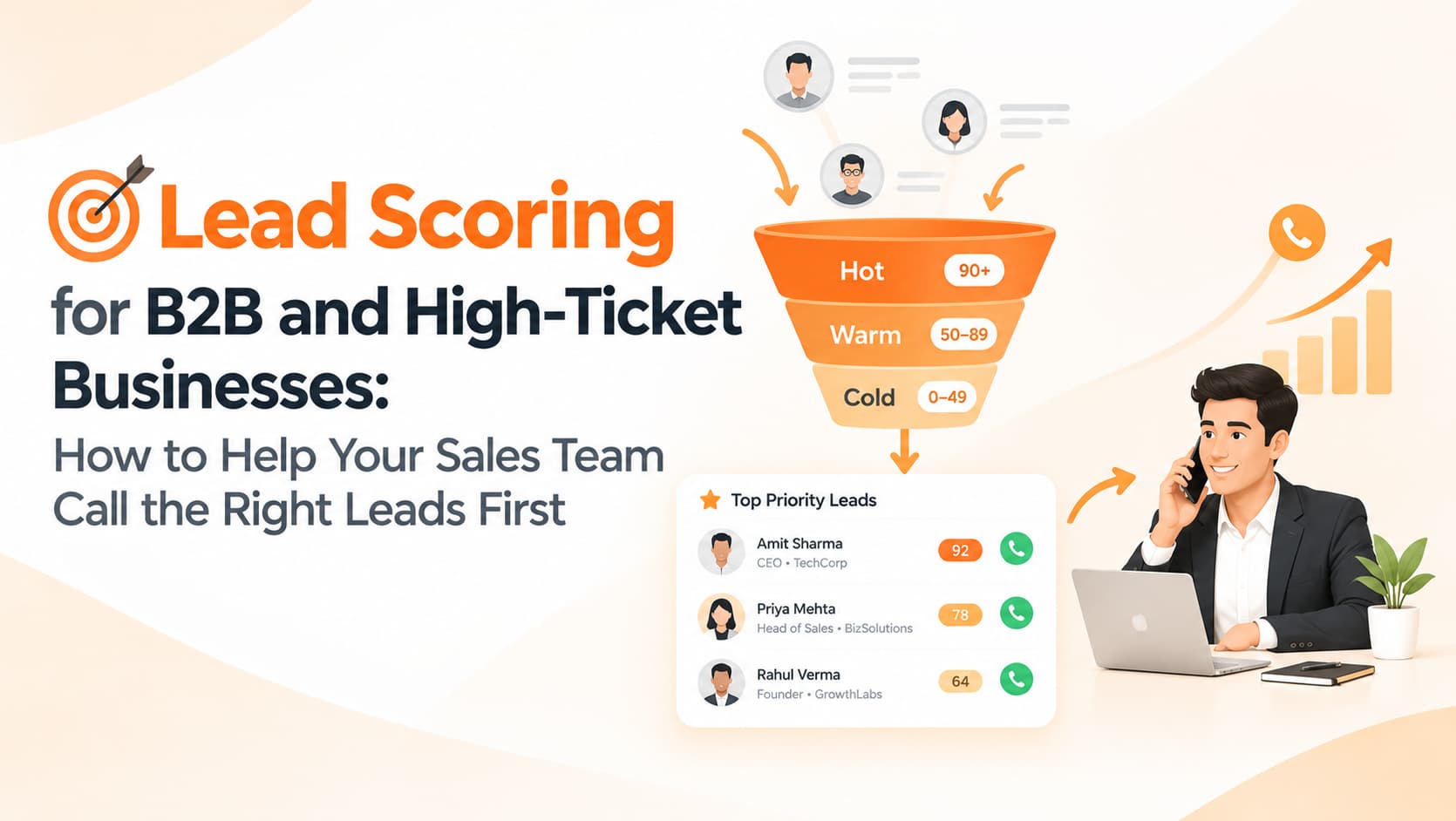
It is Monday morning, and your sales team has 180 new leads waiting. They came from Google Ads, the website, WhatsApp enquiries and last week's trade exhibition. Realistically, the team can call about sixty today. Which sixty? Without a system, salespeople pick at random, start at the top of the spreadsheet or chase whoever sounded keenest on the form. Meanwhile, some of the best opportunities sit untouched until Wednesday, by which time those prospects have already spoken to a competitor.
Lead scoring solves this by assigning points to each lead based on how closely they match your ideal customer and how engaged they are. The result is a simple ranking that tells your team who to contact first, who to nurture and who to set aside.
The two dimensions of a good score
The first dimension is fit, which describes who the lead is. Fit includes whether they belong to an industry or business type you serve well, whether their company size or budget matches your offering, whether they are located within your service area, whether the person is a decision-maker rather than a student researching a project, and whether their stated need matches what you actually provide.
The second dimension is engagement, which describes what the lead has done. A request for a quote or demo is a strong signal, as is visiting your pricing page several times. Replying on WhatsApp or asking detailed questions shows real interest, while opening and clicking emails, attending a webinar, visiting your exhibition stall or downloading a brochure or case study all indicate growing intent. A lead with strong fit but little engagement may need nurturing; a lead with strong engagement but poor fit may never become a customer however keen they seem.
A simple starting model
You do not need complex software to begin. A straightforward points system works well for most businesses. For example, you might award fifteen points for belonging to a target industry, twenty for a budget in your range, fifteen for a decision-maker role and ten for being within your service area. On the engagement side, you might add twenty-five points for a demo or quote request, ten for repeated visits to the pricing page and ten for a reply on WhatsApp. Negative scores matter too: subtracting thirty points for students or job seekers, twenty for leads outside your service area and ten for no activity in thirty days stops unsuitable leads from clogging the queue.
Once leads have scores, group them into bands. Hot leads should be called within the hour, warm leads the same day, nurture leads should enter an automated sequence of helpful WhatsApp or email messages, and disqualified leads can be set aside politely. These numbers are only an illustration. The real value comes from building your model around your own data.
Building the model from your own deals
Start by pulling your last fifty to one hundred won and lost deals. Look for the traits and actions that were common among the deals you won but rare among those you lost. Perhaps most closed deals came from manufacturers in Punjab with more than fifty employees who requested a demo, while most lost deals came from very small businesses that only downloaded a brochure. Give the strongest predictors the highest points.
Apply the model to new leads for a month, then compare scores with actual outcomes. If high-scoring leads are not converting, or low-scoring leads keep surprising you, adjust the points. Lead scoring is never finished; it improves as you learn.
Capturing the right signals
Scoring is only as good as the information behind it. Forms and WhatsApp Flows with one or two qualifying questions, such as budget, timeline or role, provide fit data without adding much friction. Website tracking connected to your CRM, used with appropriate consent, reveals engagement such as pricing page visits. Your email platform shows opens and clicks, and notes from sales calls add context that no system can capture automatically.
Acting on the scores
A score only matters if it changes behaviour. Route hot leads to sales instantly with an alert, so someone calls while interest is highest. Send warm leads a personalised WhatsApp message followed by a call the same day. Place nurture leads into automated sequences that share useful content, such as case studies, guides and answers to common questions, until they show stronger intent. Finally, feed qualified and won leads back to Google and Meta advertising, so their systems learn which kinds of people become customers and find more of them.
Common mistakes
The most frequent mistakes are building a model so complicated that nobody understands it, basing scores on assumptions rather than past deals, never revisiting the model once it is built, and leaving the sales team out of its design. Salespeople are far more likely to trust and use scores they helped create.
Frequently asked questions
Do we need expensive software for lead scoring?
No. Many CRMs include scoring features, and a spreadsheet formula can work well at the start.
Does lead scoring work for consumer businesses?
Yes, particularly for high-value purchases such as property, education, vehicles and insurance.
Can AI handle lead scoring?
Some CRMs offer predictive scoring, which works best with plenty of historical data and regular human review.
Help your sales team focus
OM Enterprises sets up lead capture, scoring and automated WhatsApp, SMS and email nurturing connected to your CRM. Talk to us about smarter lead management.