

Lead Nurturing Strategy: 14-Day Multi-Channel Plan

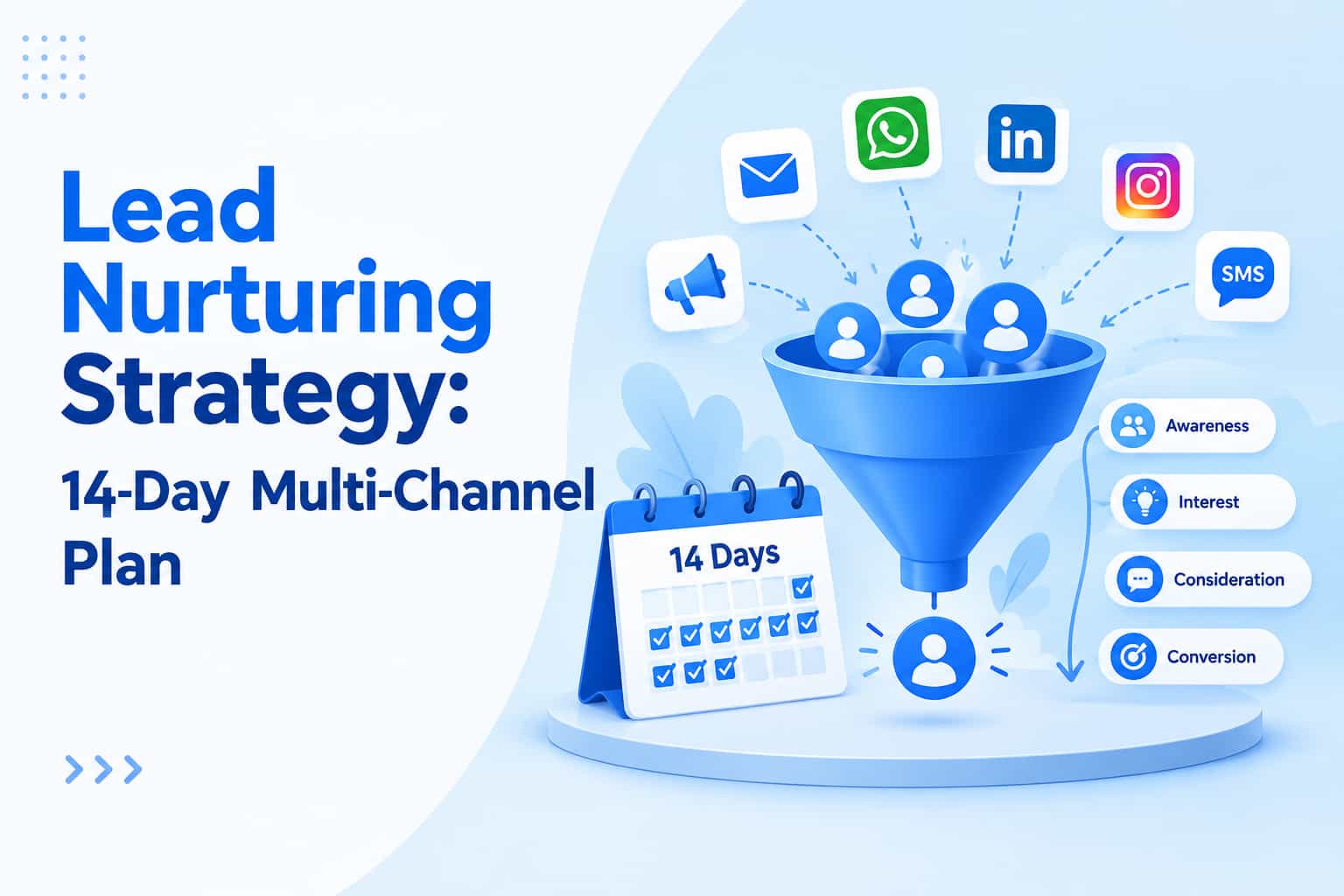
Most leads are not ready to buy on day one. They enquire, compare, wait for approval or simply get busy. Lead nurturing is the planned process of staying useful and visible until they are ready. Done across several channels, it turns cold enquiries into customers without nagging. This guide explains how to build a multi-channel lead nurturing sequence using WhatsApp, SMS, email and calls, with a sample 14-day plan you can adapt.
What Lead Nurturing Really Is
Lead nurturing is a series of helpful, well-timed messages that answer questions, build trust and move a prospect toward a decision. It is not constant discounting or repeated pressure. Each touchpoint should give the lead a reason to engage, whether that is useful information, proof that you deliver or an easy next step. It sits in the middle of your sales funnel, between the first enquiry and the final purchase.
Why Speed and Consistency Matter
A lead who enquires at six in the evening may contact three competitors by seven. Businesses that reply within minutes usually have a real advantage over those that respond the next day. Automating the first acknowledgement and following up consistently afterwards keeps you in the race while your team focuses on the conversations that need a human voice.
Map the Buyer Journey
Every lead sits somewhere along a path. In the awareness stage they are learning about the problem and the options, in the consideration stage they are comparing providers, prices and reviews, and in the decision stage they are ready to choose and need reassurance and an easy way to act. Match your messages to the stage: early messages educate, middle messages build proof and later messages ask for action.
Choose the Right Channel for Each Touch
Each channel has a role. WhatsApp is personal, highly visible and ideal for two-way conversations with leads who have opted in. SMS offers universal reach for reminders, confirmations and deadlines. Email suits guides, case studies and detailed information, RCS adds rich cards and buttons on supported devices, and phone calls are best reserved for warm, high-value leads. Using a mix lets each message arrive where it works best.
A Sample 14-Day Plan
On day zero, send an instant acknowledgement by WhatsApp or SMS that thanks the lead and explains what happens next. On day one, follow up with an email containing a helpful guide or checklist related to their enquiry. By day three, share a customer story, short video or sample of your work on WhatsApp. On day six, a personal phone call lets you answer questions directly. Day nine is a good moment for an email or RCS message with FAQs, pricing guidance or a comparison sheet, and on day twelve you can invite the lead to a site visit or demo using WhatsApp. Finish on day fourteen with a short SMS carrying a clear call to action and a booking link or call-back number.
For example, a first WhatsApp message might read: "Hi Rahul, thanks for your enquiry about modular kitchens. Our designer will call you within 2 hours. Meanwhile, here is our design catalogue." The day-nine email might simply be titled "Five questions to ask before choosing a modular kitchen company, plus a price guide for Punjab homes".
Let Behaviour Change the Path
A good sequence adapts. If a lead clicks your pricing page, move them to a faster follow-up or a call. If they reply, stop the automation immediately and hand the conversation to a person. If they ignore several touches, pause and try a different channel or type of content, and if they book or buy, move them into an onboarding sequence. Giving leads simple scores for actions such as replying, opening several emails, visiting pricing or downloading a brochure helps your team call the most interested people first, even if the scoring happens in a basic spreadsheet.
Respect Consent and Preferences
Message only people who have opted in on each channel, honour opt-outs quickly and avoid contacting people at unsuitable hours. For WhatsApp, use approved templates for business-initiated messages. Responsible nurturing builds trust and protects your sender reputation, and our guide to bulk SMS for small businesses covers compliant messaging basics.
Metrics and Mistakes
Track speed to first response, lead-to-opportunity and opportunity-to-sale rates, engagement by channel and message, the average number of days from enquiry to purchase and the cost of acquiring each customer. Common mistakes include sending the same generic message to every lead, waiting days for the first reply, overloading people with too many touches, pushing a sales pitch in every message and never tracking which leads actually become customers.
Frequently Asked Questions
How many touches are too many?
It depends on your sales cycle. Focus on relevance, and stop when a lead asks you to.
Which channel is best for nurturing?
The one your lead actually responds to. Use a mix and learn from the data.
Do I need marketing automation software?
Not on day one. A simple CRM, a messaging platform and a clear calendar can run an effective sequence, and automation helps as volume grows.
Conclusion
Effective lead nurturing combines speed, relevance and consistency across channels. Respond instantly, map the buyer journey, educate before you sell, let behaviour guide the next step and measure the results. Even a simple fourteen-day plan can lift your conversion rate noticeably.
OM Enterprises builds automated, multi-channel nurturing journeys across WhatsApp, SMS, RCS, email and voice. Book a free strategy call and turn more enquiries into customers.