

IVR System for Small Businesses: Do You Need One, and How to Set It Up Without Annoying Callers

Your business number rings on the owner's mobile phone. When he is in a meeting or driving, calls go unanswered. Sales enquiries end up with the accountant, and customers with service complaints reach the sales team, who are not equipped to help. Nobody knows how many calls were missed last month, or how many of those were customers ready to buy. For many growing Indian businesses, the phone remains the most important sales channel and the least organised one.
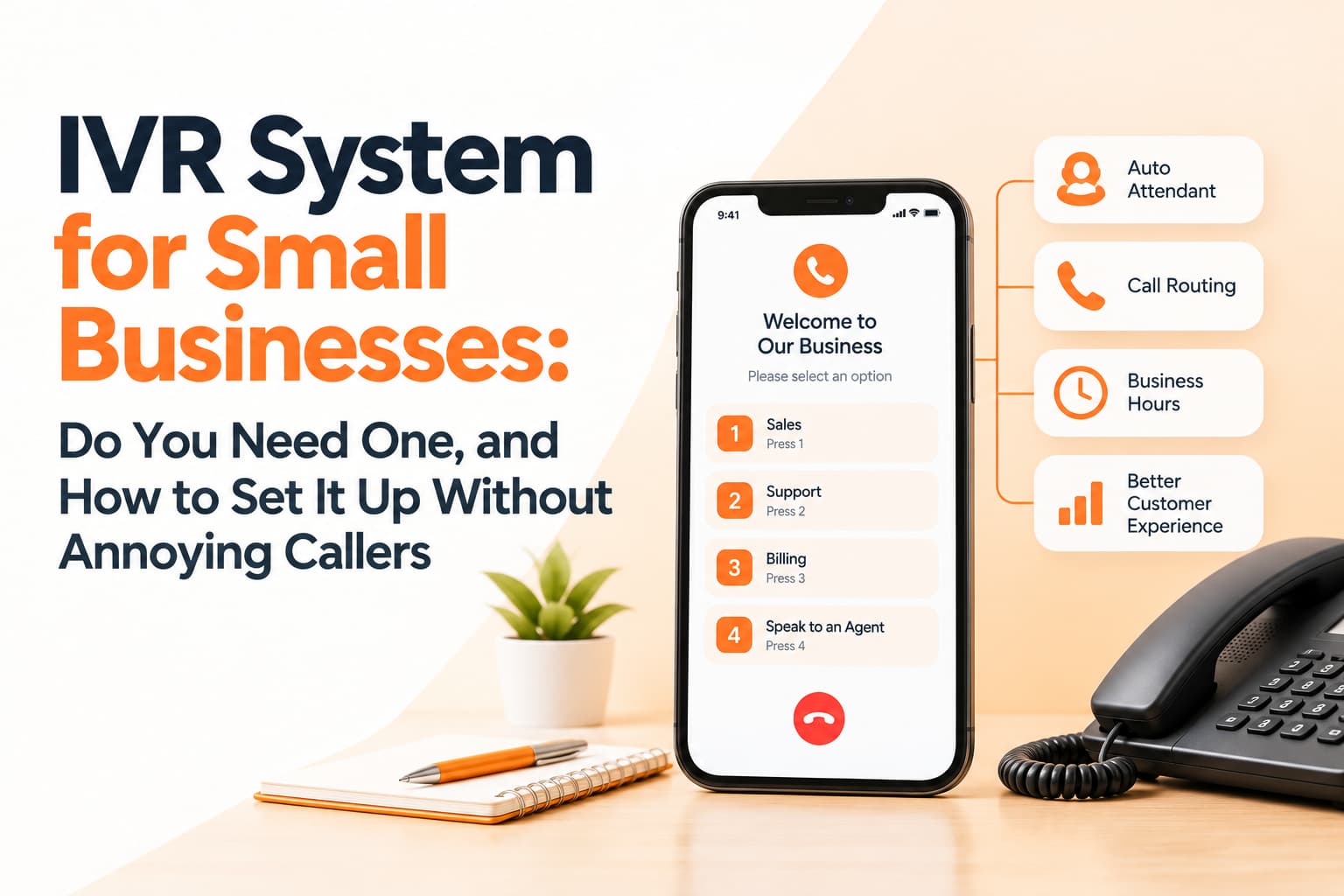
An IVR system, short for Interactive Voice Response, combined with modern cloud telephony, can bring order to this chaos. It is the familiar "press 1 for sales, press 2 for support" experience. Designed well, it makes a small business sound professional and ensures callers reach the right person. Designed badly, it frustrates callers and drives them away. The difference lies in how it is set up.
What an IVR actually does
At its simplest, an IVR greets callers with a recorded message and routes them to the right person or team based on the key they press or, increasingly, what they say. Behind that simple experience sit several useful capabilities. Calls can ring several phones at once or rotate among staff so no single person is overloaded. Common information, such as business hours, location or how to track an order, can be played automatically without anyone picking up. Voicemail can be recorded and missed calls logged, so nothing disappears. And modern systems integrate with CRM software and messaging tools, automatically sending an SMS or WhatsApp message after a call.
Today's cloud IVR systems need no hardware in your office. You receive a virtual number and manage everything from a web dashboard or mobile app, with calls routed to staff mobiles wherever they are.
Signs your business needs an IVR
An IVR becomes valuable when more than one person or department handles calls, when you regularly miss calls during busy periods, or when you advertise one number across many campaigns and want to understand which ones work. Businesses that want call recordings for quality checks or staff training, with callers informed, also benefit. On the other hand, a one-person business that receives only a few calls a day may not need a full IVR. A forwarding number with missed-call alerts could be enough.
Designing an IVR that callers do not hate
Most people's frustration with IVRs comes from poor design rather than the technology itself. Keep the greeting short; ten seconds is plenty, while a forty-second introduction about your company's history tests anyone's patience. Offer no more than three or four options in each menu, and put the most common reason for calling first, so most callers can press 1 and move on.
Always provide a way to reach a human. Being trapped in a loop of recorded messages is the single most hated IVR experience. Use the languages your customers speak; in many parts of India, offering Hindi or a regional language option can make a noticeable difference to how callers feel. Avoid deep menus with more than two levels, announce clearly if calls are recorded, and test the experience yourself regularly from an ordinary phone, as a customer would.
Features worth paying for
Some features deliver far more value than others. Missed-call alerts combined with automatic SMS or WhatsApp follow-up help recover leads you could not answer immediately, which for many businesses is the single biggest benefit. Multiple tracking numbers allow you to measure which advertisement, hoarding or campaign generates calls. Time-based routing plays an after-hours message or takes voicemail when the office is closed. Call recording and analytics support training and quality checks. CRM integration shows agents the caller's history as the phone rings. And some systems now offer voice bots that can answer common questions automatically.
Combine voice with messaging
The most effective setups connect phone calls with text messaging. A caller who chooses the option for a price list can instantly receive a WhatsApp brochure. Someone whose call was missed can receive an SMS apologising and offering a callback. An appointment booked during a call can be confirmed by SMS or RCS. These small connections make the whole experience feel organised and responsive.
Compliance notes
Inbound IVR is generally straightforward. Outbound calling, especially for promotional purposes, must follow TRAI's commercial communication rules and respect customers' preferences. Call recordings and caller data should be handled carefully in line with India's data protection framework.
Frequently asked questions
Is an IVR expensive for a small business?
Cloud IVR plans are usually subscription-based and affordable, with costs depending on numbers, minutes and features.
Can calls still ring on staff mobiles?
Yes. Calls to a virtual number can typically be routed to existing mobile phones.
Should we choose a toll-free or regular number?
Toll-free numbers can increase call volume for consumer brands, while a regular virtual number suits most SMEs.
Never miss a customer call again
OM Enterprises provides cloud IVR, virtual numbers, missed-call automation and voice campaigns, integrated with SMS and WhatsApp. Request an IVR demo.