

Instagram Reels Algorithm in 2026: What Changed and How Businesses Should Adapt

A business keeps posting Reels in the exact format that worked well a year ago, watches reach quietly decline despite consistent posting, and assumes Instagram is simply suppressing business accounts. More often, the algorithm's actual ranking signals have shifted, and content built for last year's rules is being measured against this year's — a gap that shows up as declining reach even when posting frequency and quality stay the same.
What Reels Ranking Actually Weighs in 2026
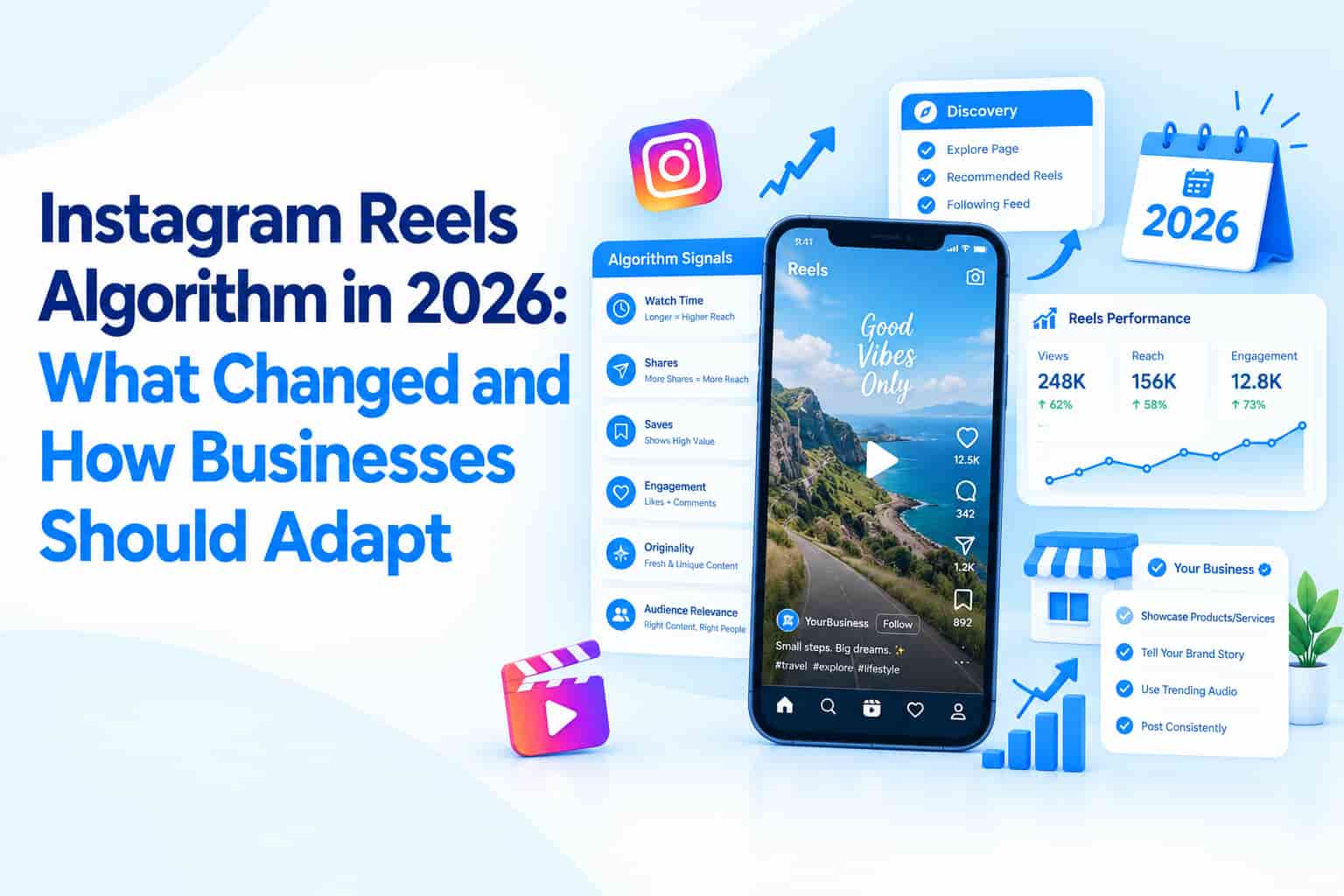
Watch time and completion rate remain the foundation of Reels ranking, alongside rewatches, reshares, and how quickly engagement happens after a Reel is posted. Shares specifically carry increasing weight as a ranking signal compared to likes alone, since a share represents a stronger endorsement — the viewer found it worth actively sending to someone else, not just tapping a like button while scrolling past.
The First Three Seconds Matter More Than Ever
With Instagram's algorithm weighing early engagement speed and watch time heavily, a Reel's opening seconds determine whether it gets an early boost or gets deprioritized before most of the intended audience ever sees it. A slow build — branding, a logo intro, a generic opening line — costs a disproportionate share of potential reach compared to a Reel that states its hook or payoff within the first three seconds.
Original Content Over Recycled Material
Instagram has continued pushing original, made-for-the-platform content over recycled or watermarked material sourced from other platforms, meaning a Reel that's visibly a TikTok repost with a watermark, or heavily recycled stock content, tends to underperform genuinely original Instagram-native content even when the underlying message is similar.
User Control Over Content Preferences
Instagram's expanded user controls over Reels content preferences mean audiences increasingly self-select the topics and creators they see more of — this makes a business's existing follower and engagement quality more consequential than before, since content reaching an audience that has actively signaled interest in similar content performs better than the same content shown to a broader, less aligned audience.
Length and Format Considerations
Shorter Reels — generally under 90 seconds — tend to sustain higher completion rates than longer-form Reels, since completion rate is a heavily weighted signal; a business with genuinely longer content to share is often better served by a tighter, more focused Reel than a longer one that loses viewers partway through, since a Reel that isn't finished by most viewers signals weaker relevance to the algorithm regardless of the content's actual quality.
What This Means for a Posting Strategy
Rather than chasing every algorithm change individually, the durable strategy is consistently producing original, tightly-hooked, platform-native content and paying attention to which specific pieces earn strong watch time and shares — then producing more in that direction, since the algorithm's core preference for genuine engagement over gamed metrics hasn't fundamentally changed even as specific weightings shift.
Frequently Asked Questions
Do hashtags still matter for Reels reach in 2026?
They contribute as a categorization signal, but watch time, completion rate, and shares are the dominant ranking factors — hashtags alone won't compensate for a Reel that loses viewers early.
Should Reels always be under 90 seconds?
Generally shorter Reels sustain higher completion rates, which is a heavily weighted ranking signal, though the right length ultimately depends on whether the specific content can hold attention for its full duration.
Adapting Without Chasing Every Algorithm Shift
The businesses maintaining strong Reels reach are the ones producing genuinely engaging, original, tightly-paced content — not the ones reacting to every individual algorithm announcement. OM Enterprises builds Instagram Reels content strategy for Indian businesses around these durable engagement fundamentals, adjusted for the platform's current specific weightings.