

How to Find Content Gaps Your Competitors Are Missing

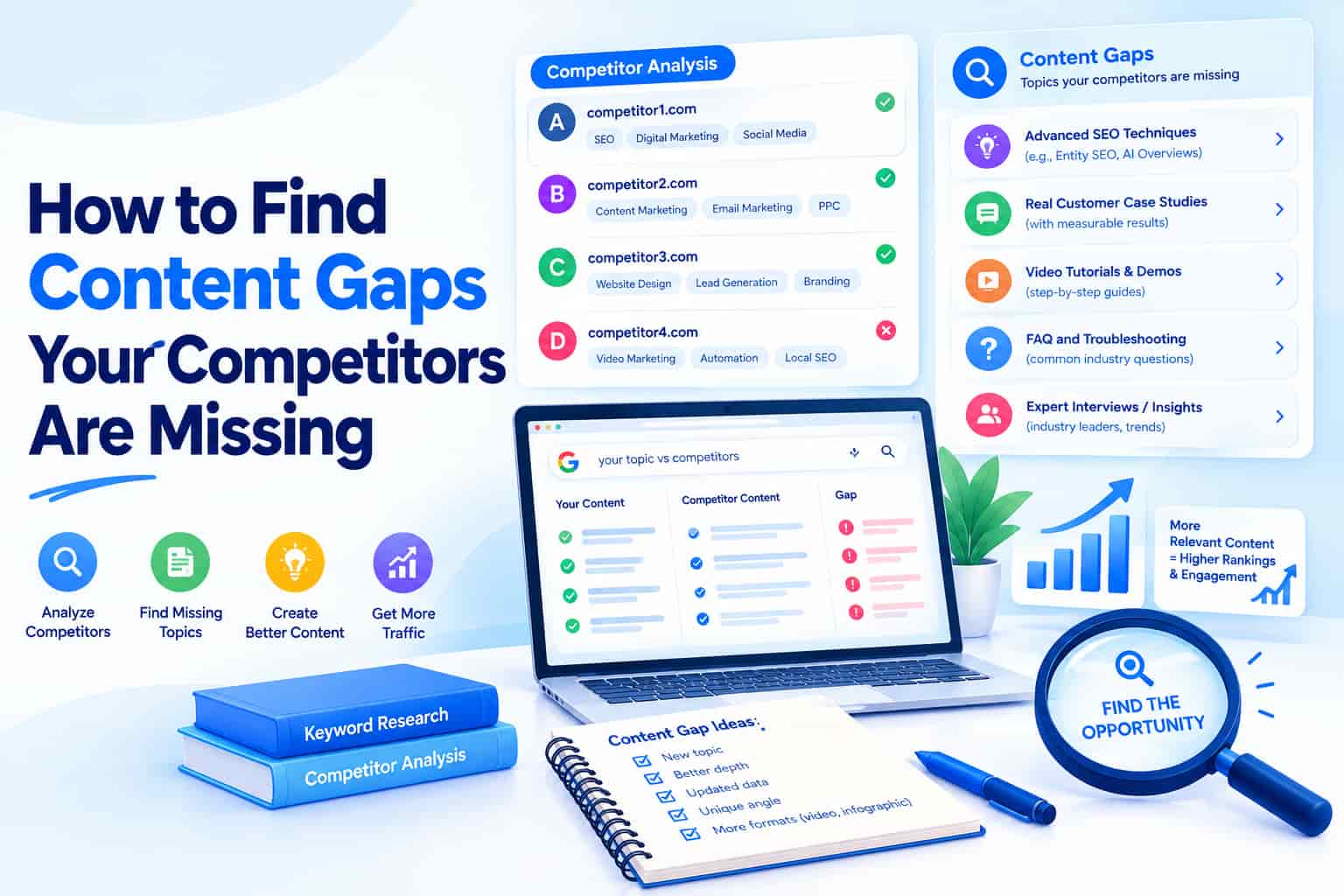
A business researches its top three competitors' blogs, finds they've all written near-identical "benefits of X" articles, and writes a fourth nearly identical version — competing for the exact same search intent as three established competitors instead of finding what none of them actually answered. Competitor research is genuinely valuable for content strategy, but only when it's used to spot what's missing, not as a template to imitate.
What a Genuine Content Gap Looks Like
A content gap is a real question or search intent that the target audience has, that existing content — a business's own and its competitors' — doesn't answer well, or doesn't answer at all. This is different from a topic simply not having been written about yet; a topic with no search demand and no genuine business relevance isn't a gap worth filling just because it's unclaimed. The gaps worth pursuing sit at the intersection of genuine audience need, unclaimed or poorly served search intent, and relevance to what the business actually offers.
A Practical Process for Finding Gaps
Start by cataloging what competitors have already covered — their published titles, the primary angle of each piece, and roughly what search intent each targets. Then look for patterns in what's covered repeatedly (a sign of validated demand, but also of saturated competition) versus what's mentioned only in passing or not addressed directly at all. Real customer questions — from sales call notes, support tickets, comment sections, and forum discussions — are often a richer source of genuine gaps than competitor content alone, since customers ask questions in their own words that polished competitor articles sometimes talk around rather than answer directly.
Distinguishing a Gap From a Weak Opportunity
Not every uncovered topic is worth pursuing. A useful filter is asking whether a real customer has actually asked this question, whether answering it well would require genuine expertise the business has (rather than research alone), and whether it connects naturally to a service the business offers. A topic that passes all three tests is a stronger opportunity than one chosen purely because a keyword tool shows some search volume with no genuine connection to the business or its audience's actual questions.
Using Competitor Content Without Copying It
The purpose of reviewing competitor content is understanding the landscape — what's been said, how thoroughly, and what's missing — not lifting their structure, examples, or specific frameworks. A genuinely differentiated piece on the same broad topic a competitor already covered might take a different angle entirely (a different audience segment, a different stage of the buying journey, a more specific use case) rather than simply writing a longer or more polished version of the same article.
Turning a Gap Into a Piece Worth Publishing
Once a genuine gap is identified, the resulting content needs the depth and specificity that made it a gap in the first place — a generic treatment of a specific question defeats the purpose of finding a precise gap. Real examples, an honest treatment of trade-offs and limitations rather than only benefits, and a clear point of view earned through actual expertise are what separate content that fills a gap well from content that simply exists where a gap used to be.
Frequently Asked Questions
How often should a business redo its competitor content gap analysis?
Every few months for active content categories, and whenever a competitor makes a significant content push, since gaps close as competitors publish new material.
Is a topic with zero existing content always a good opportunity?
Not necessarily — a topic might be uncovered because it has no genuine audience demand; a real gap combines an actual question people have with weak or missing coverage, not simply the absence of existing articles.
Finding Gaps Worth Writing For
The most valuable content gaps come from genuine research into what audiences actually ask and what competitors leave unanswered — not from writing a slightly different version of what already exists. OM Enterprises runs content gap analyses for Indian businesses combining competitor research, real customer questions, and search intent data before recommending what to write next.