

How AI-Powered Search Is Changing SEO Strategy

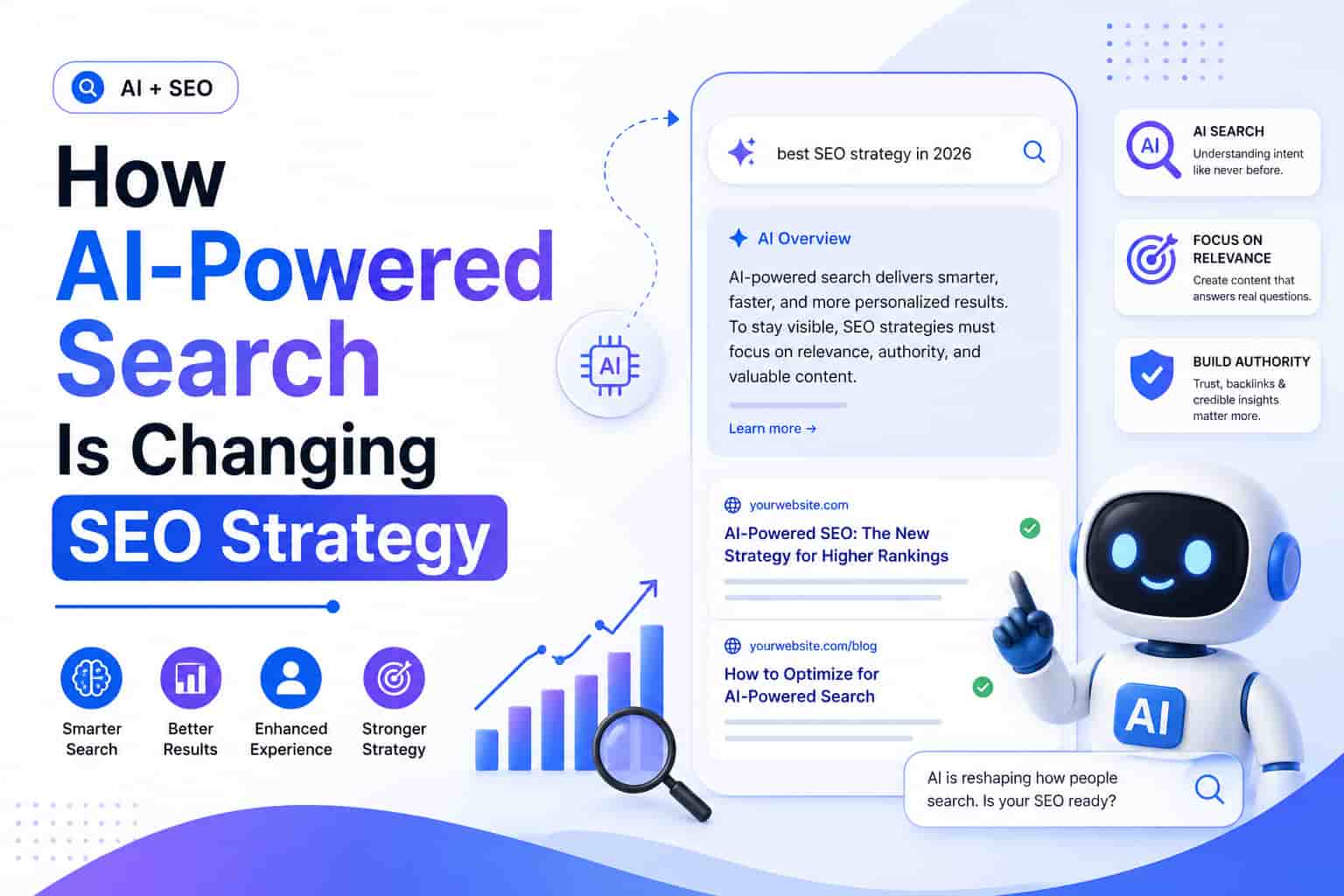
Search Is No Longer Just a List of Blue Links
AI-generated search summaries now answer many queries directly on the results page, before a user ever clicks through. This shift means SEO strategy has to account for being cited by AI systems, not just ranking in the traditional sense.
What Changes for Content Creators
AI search tools favor content that is clearly structured, factually precise, and easy to extract. Vague, keyword-stuffed pages are harder for these systems to summarize accurately, so they get cited less often.
Strategies That Help You Get Cited
- Answer the question early: Put a direct, concise answer near the top of the page, then expand with detail.
- Use structured formatting: Lists, tables, and clear headers make it easier for AI systems to parse and quote your content.
- Back claims with data: Specific numbers and sources build the credibility AI systems look for when choosing what to cite.
- Maintain topical authority: A cluster of well-linked, in-depth pages on a subject signals expertise more than a single isolated article.
Traditional SEO Still Matters
Technical health, page speed, and backlinks still influence whether your content gets crawled and trusted in the first place. AI search optimization builds on top of traditional SEO, it doesn't replace it.
How to Structure a Page for AI Extraction
Open each major section with a direct, self-contained sentence that could stand alone as an answer, then follow with supporting context. AI summarizers tend to pull the first clear statement under a heading, so burying the answer three paragraphs down reduces your odds of being cited.
The Role of E-E-A-T in an AI Search World
Experience, Expertise, Authoritativeness, and Trustworthiness matter more, not less, as AI systems try to determine which sources are reliable enough to cite. Author bios, transparent sourcing, and a track record of accurate content all feed into this signal.
Optimizing for Featured Snippets and AI Overviews Together
There's significant overlap between content that wins a traditional featured snippet and content that gets pulled into an AI overview. Both favor a concise, direct answer of one to two sentences immediately following a clear question-style heading, supported by a well-organized list or table beneath it. Structuring your most important pages this way lets you compete for both formats without writing two separate versions of the content.
Building Topical Authority Through Content Clusters
Rather than publishing isolated articles, group related content into clusters — a central pillar page covering a broad topic, linked to and from several supporting articles that go deep on specific subtopics. This internal linking structure signals topical depth to both traditional crawlers and AI systems evaluating which sources to trust as authoritative on a subject.
Measuring AI Search Visibility
Traditional rank-tracking tools don't capture AI citations. Businesses should start monitoring how often their brand or content is referenced in AI-generated answers across major search and chat platforms, treating this as a distinct KPI alongside classic keyword rankings.
Looking Ahead
Brands that treat AI search visibility as a core KPI — alongside traditional rankings — will capture attention in an increasingly answer-first search landscape.
Conclusion
AI search optimization is quickly becoming as important as traditional SEO strategy. By combining strong on-page SEO fundamentals with content structured for AI extraction, clear E-E-A-T signals, and active monitoring of AI search visibility, brands can stay discoverable whether a customer searches on Google, an AI chatbot, or a generative search engine. Start applying these AI SEO best practices now to keep your content competitive in 2026 and beyond.