

Google Display Ads Are Moving to Demand Gen: What Advertisers Should Do Before the Auto-Migration

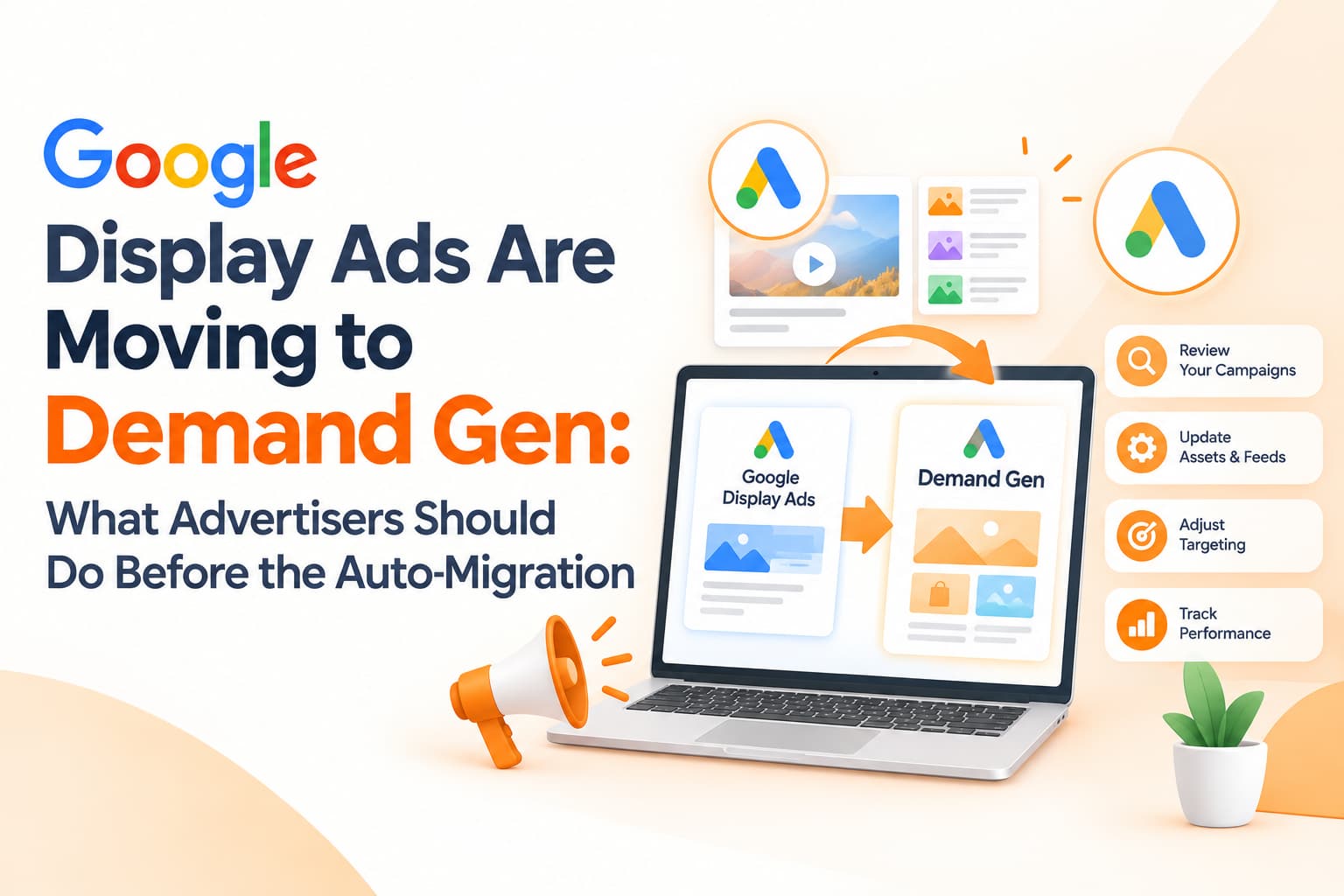
If you run banner ads on the Google Display Network, the campaign type you've used for years is on its way out. In May 2026 Google announced that standalone Display campaigns are moving into Demand Gen, and since June a migration tool has been rolling out in eligible accounts. Google says remaining eligible campaigns will eventually be migrated automatically, with the transition expected to complete by 2027.
You can wait for Google to move you — or move on your own terms. Here's what changes and how to prepare.
What is Demand Gen?
Demand Gen is Google's visual, AI-driven campaign type for creating and capturing demand on surfaces where people browse rather than search. It already covered YouTube (including Shorts), Discover, Gmail and Google Maps placements. Now Google Display Network inventory sits inside it too, so one campaign can reach people across all of these.
Google says advertisers who added GDN to Demand Gen campaigns saw an average 9.5% increase in ROI, based on its internal data. As always, your own results depend on creative, data and goals.
What you gain
- More formats: image, carousel, video and Shorts-friendly vertical assets in one place.
- Channel controls: choose which surfaces to run on, including GDN, YouTube, Discover and Gmail.
- Lookalike-style audience options built from your customer lists.
- Better creative reporting, including breakdowns by format.
What you may lose or need to adjust
- Manual CPC isn't supported in Demand Gen — you'll move to automated bidding such as target CPC, target CPA or maximise conversions.
- Some legacy targeting and placement settings may behave differently or not carry over exactly.
- Old banner-only creative libraries will underperform next to campaigns with video and carousel assets.
- Budget can flow across surfaces — useful for performance, but it can blur reporting if you're used to GDN-only results.
A migration checklist
- Audit your Display campaigns. List objectives, audiences, placements, exclusions, bidding, budgets and the conversions each campaign optimises for.
- Decide what's worth keeping. Many accounts have old remarketing or awareness campaigns nobody reviews. Pause what doesn't contribute.
- Upgrade your creative. Prepare square, landscape and vertical images, a few short videos (even simple 10–15 second edits), logos and multiple headlines.
- Check conversion tracking. Demand Gen's automated bidding depends on reliable conversion data. Fix tags and consider enhanced conversions.
- Test before the forced move. Use the migration tool on one or two campaigns, or build a fresh Demand Gen campaign alongside your Display campaign and shift budget gradually.
- Set channel controls deliberately. If brand safety or reporting needs GDN-only delivery, configure that; otherwise test all surfaces.
- Compare fairly. Judge on cost per conversion and conversion quality, not just CTR — Demand Gen often reports differently from old Display.
Who benefits most
- D2C and e-commerce brands with strong product visuals
- Education, real estate and auto brands that need mid-funnel consideration
- Advertisers already running YouTube ads who can reuse video assets
Pure B2B lead-gen accounts with thin creative may need more work to see results.
Frequently asked questions
Will my Display campaigns stop running?
Not immediately. Google plans to automatically migrate remaining eligible campaigns later, with completion expected by 2027.
Can I still target only the Display Network?
Demand Gen includes channel controls that let you choose surfaces. Check current options in your account.
Does performance history carry over?
The migration tool is designed to move existing campaigns into Demand Gen, but review settings carefully after migration.
Migrate with confidence
OM Enterprises audits Display accounts, builds Demand Gen creative sets and runs controlled migrations so performance doesn't dip during the switch. Contact our Google Ads team.