

Google Ads vs Meta Ads for B2B Lead Generation in India

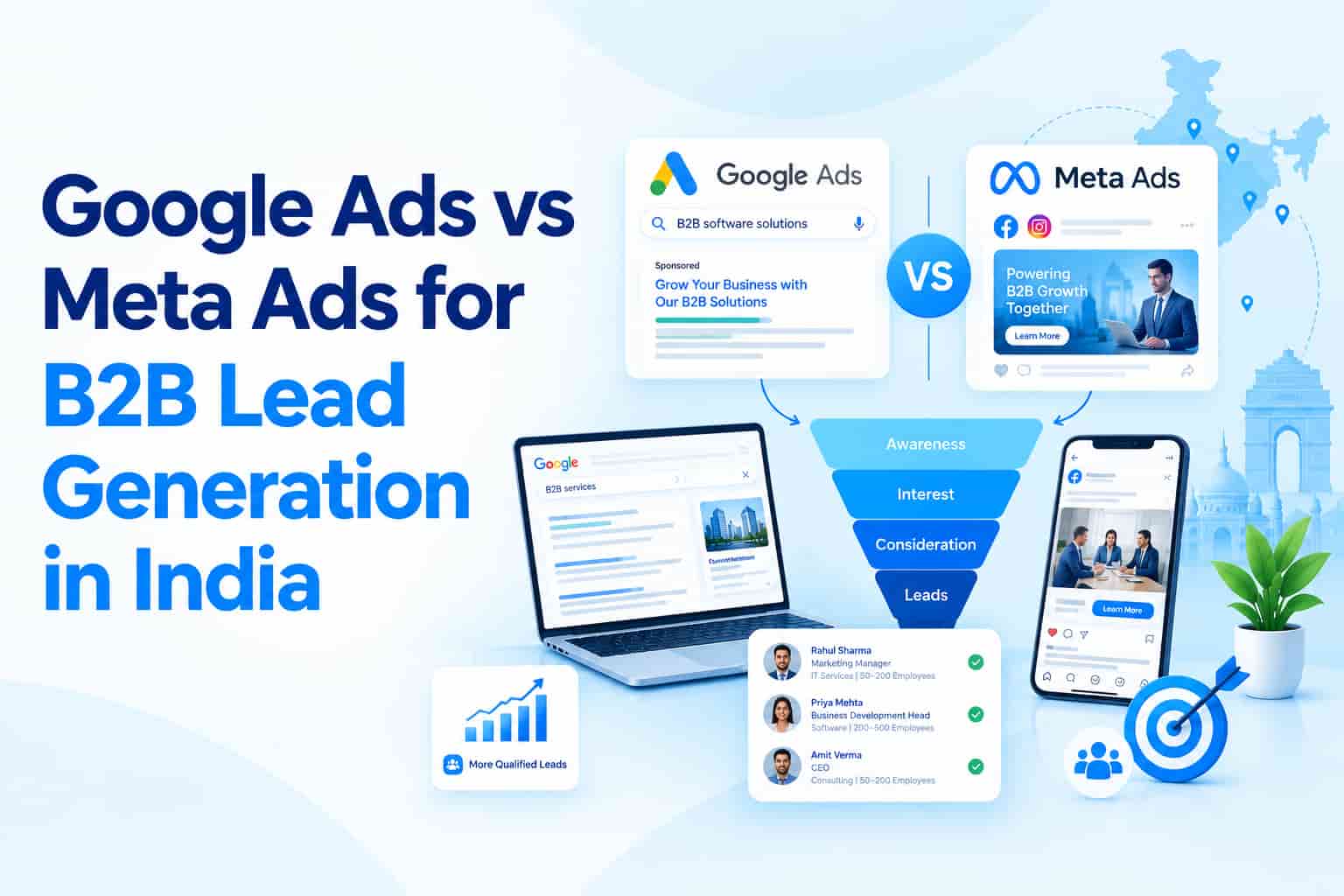
A B2B software company running Meta Ads with a consumer-style playbook — bright creative, broad targeting, a "Book a Demo" button — usually ends up with a pile of unqualified leads and a frustrated sales team. B2B lead generation in India isn't a smaller version of e-commerce advertising; it runs on longer cycles, fewer but higher-value conversions, and a completely different reason each platform works.
The Cost Reality for B2B
B2B categories carry some of the highest acquisition costs on both platforms, reflecting how competitive and high-value these searches and audiences are. Globally, B2B software sees a median cost-per-acquisition of roughly $75 on Google Ads versus $126 on Meta Ads. In the Indian market specifically, Google Ads for B2B software/SaaS runs approximately ₹50–₹120 per click with ₹600–₹2,000 per lead, while Meta Ads for B2B services in India runs roughly ₹100–₹280 CPM with ₹400–₹1,200 per lead.
Why Google Wins for Bottom-of-Funnel B2B Intent
When a decision-maker searches "CRM software for manufacturing India" or "best payroll software for startups," that's an active, high-intent moment Google Search is built to capture. B2B buyers doing deliberate research before a purchase decision are exactly the audience Search Ads reach at the exact right time — which is also why B2B Google Ads costs run high: the traffic is genuinely valuable.
Where Meta Still Has a Role in B2B
Meta doesn't compete well for that same bottom-of-funnel intent, but it's effective for two specific B2B jobs: building awareness with a defined audience (job title, industry, company size targeting) before they start actively searching, and retargeting website visitors and webinar sign-ups who haven't yet converted. A B2B buying committee in India often includes multiple people who need repeated exposure to a brand before a demo request happens — Meta's lower-cost impressions are well suited to that repetition, even if its direct conversion rate is lower.
A Practical B2B Funnel Split
| Funnel Stage | Platform | Goal |
|---|---|---|
| Awareness (cold audience) | Meta / LinkedIn | Introduce the brand to a defined job-title/industry audience |
| Consideration (warm) | Meta retargeting | Re-engage website visitors and content downloaders with case studies |
| Active research (high intent) | Google Search | Capture decision-makers actively comparing solutions |
| Decision (bottom of funnel) | Google Search (branded) | Defend against competitors bidding on your brand name |
Why Long Sales Cycles Change the Math
Unlike e-commerce, a single B2B lead can be worth lakhs in eventual contract value, which justifies a much higher acceptable cost-per-lead than most business owners initially expect. The mistake most Indian B2B companies make is judging campaign success by cost-per-click or cost-per-lead alone, rather than tracking leads through to actual sales-qualified status and closed revenue — a ₹2,000 lead that closes is far cheaper than a ₹400 lead that never converts.
Frequently Asked Questions
Is Meta Ads worth it for B2B if it doesn't convert as well as Google?
Yes, when used for its actual strength — awareness and retargeting — rather than expected to directly close deals the way Google Search often does for high-intent queries.
Why are B2B costs so much higher than e-commerce on both platforms?
Higher contract values and longer buying cycles mean businesses can justify paying more per click or lead, which drives up competitive bidding across both platforms for B2B keywords and audiences.
Should a B2B company track cost-per-lead or cost-per-closed-deal?
Cost-per-closed-deal, ultimately — cost-per-lead alone can be misleading if lead quality varies significantly between campaigns or platforms.
Getting B2B Ad Spend to Actually Work
B2B lead generation in India rewards patience and proper funnel thinking over quick-win tactics borrowed from e-commerce playbooks. OM Enterprises builds B2B ad strategies for Indian companies that connect Meta's awareness reach with Google's high-intent capture, tracked through to actual sales outcomes rather than surface-level lead counts.