

Festive Season 2026: Building a Navratri-to-Diwali Marketing Calendar for Indian Businesses

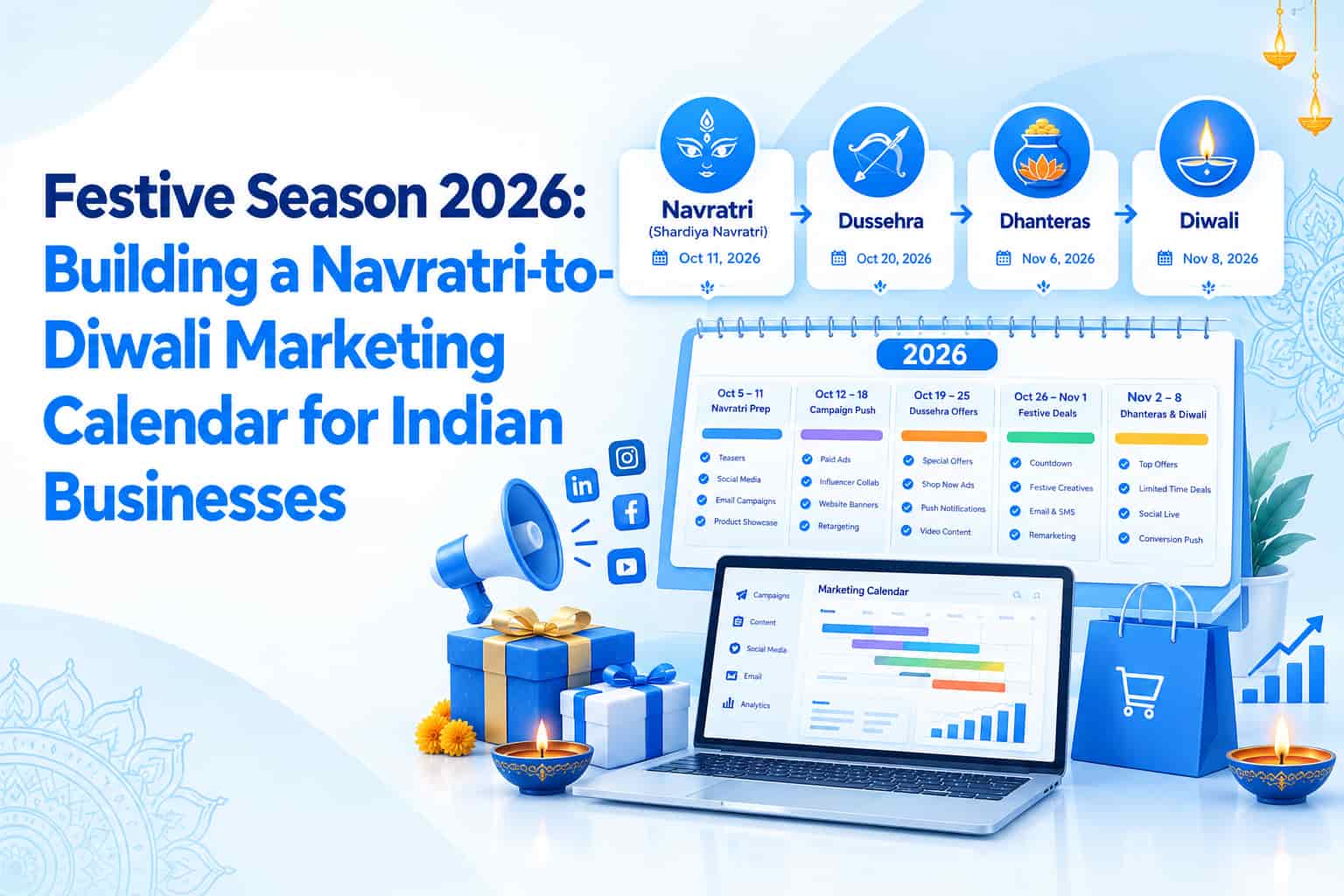
A business waits until the week before Diwali to plan its festive campaigns, and by then the ad auctions are more expensive, the best creative slots are booked, and customers who research early have already decided where to buy. India's festive season isn't one event — it's a roughly six-week window from Navratri through Diwali where buying intent rises in stages, and businesses that map a calendar to those stages consistently outperform ones treating it as a single Diwali-week push.
The Festive Window Is Longer Than Diwali Itself
Diwali 2026 falls on November 8, with the festive period running from Dhanteras (November 6) through Bhai Dooj (November 11). But consumer research and comparison shopping typically start weeks earlier, around Navratri in October — industry estimates put the combined Navratri-to-Diwali festive commerce period at several lakh crore rupees in India. Treating late October through mid-November as one continuous campaign window, rather than a single Diwali-day event, captures both the early research phase and the final purchase decision.
Stage One: Awareness and Early Research (Navratri Onward)
Early in the festive window, shoppers are browsing and comparing rather than ready to buy — content and ads here should focus on product discovery, gift guides, and building brand familiarity rather than hard discount pushes, which tend to underperform with an audience that isn't ready to commit yet. This is also the window to build retargeting audiences that later, higher-intent campaigns can draw on.
Stage Two: Consideration and Comparison (Mid-October)
As Diwali approaches, shoppers move into active comparison — this is when clear pricing, honest product comparisons, reviews, and specific offer details matter more than broad brand messaging. Retargeting the audience built during the awareness stage, now with more specific, decision-ready content, typically converts meaningfully better than cold traffic at this stage.
Stage Three: Peak Purchase Window (Dhanteras Through Diwali)
The five days from Dhanteras to Bhai Dooj carry the highest purchase intent of the year for many categories — this is when urgency-driven messaging, limited-time offers, and fast, frictionless checkout matter most, since a slow site or a confusing offer costs disproportionately more during this narrow window than at any other time of year.
Channel Allocation Across the Calendar
Different channels suit different stages: awareness-stage budget tends to work harder on Meta and Instagram (broad reach, visual gift-guide content), while consideration and purchase-stage budget works harder on Google Search and Shopping (capturing people actively searching with purchase intent) and WhatsApp (direct, high-open-rate offer delivery to an existing customer list). Shifting budget allocation across the calendar, rather than running identical spend on every channel throughout, generally produces better return than a flat approach.
Frequently Asked Questions
When should festive marketing planning actually start for Diwali?
Content, creative, and technical preparation should begin four to six weeks ahead — for Diwali 2026 (November 8), that means late September through October is the working window, not the first week of November.
Should the same offer messaging run throughout the whole festive period?
No — messaging should shift from awareness and discovery early in the window to comparison-focused content mid-window, and urgency-driven offers only in the final peak-purchase days.
Planning a Calendar That Matches How Customers Actually Buy
A festive campaign built around a single Diwali-day push leaves most of the six-week buying window uncontested. OM Enterprises builds staged festive marketing calendars for Indian businesses — from Navratri awareness through the Dhanteras-to-Bhai Dooj peak — matched to how customers actually research and buy during this period.