

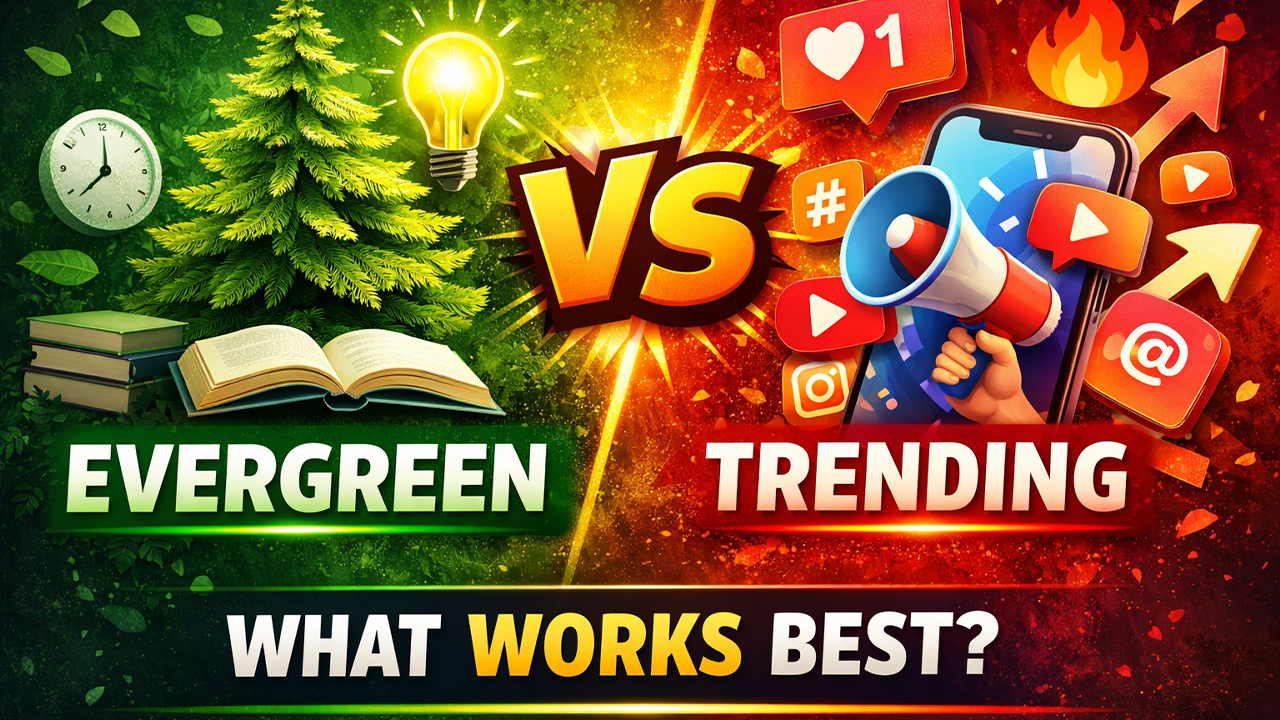
Evergreen vs. Trending Content: What Works Best?

Introduction
In the fast-paced world of digital marketing, content is still king—but not all content is created equal. As search algorithms evolve and audience behaviour shifts, marketers face a crucial question: Should you focus on evergreen content or trending content?
Both strategies have their strengths. Evergreen content delivers long-term value and consistent traffic, while trending content captures immediate attention and viral potential. The real challenge lies in understanding how to balance both to maximize visibility, engagement, and ROI.
In this blog, we’ll break down the differences between evergreen and trending content, explore their benefits, and help you decide what works best for your content strategy in 2026.
What is Evergreen Content?
Evergreen content refers to content that remains relevant and valuable over a long period of time. It doesn’t rely on current trends or news cycles and continues to generate traffic months or even years after publication.
Examples of Evergreen Content:
“Ultimate Guide to SEO in 2026”
“How to Start a Blog and Make Money”
“Top Digital Marketing Strategies for Small Businesses”
“What is Content Marketing?”
Key Characteristics:
Timeless and informative
Search-driven (high-ranking keywords)
Consistent organic traffic
Low maintenance with occasional updates
Benefits of Evergreen Content:
1. Long-Term Traffic Growth
Evergreen blogs rank steadily on search engines, bringing in consistent visitors without ongoing promotion.
2. Higher ROI
One well-optimized evergreen article can generate leads for years, making it cost-effective.
3. Authority Building
Publishing in-depth, valuable content helps establish your brand as an industry expert.
4. SEO Powerhouse
Evergreen content targets high-volume keywords like:
“best digital marketing strategies”
“SEO tips for beginners”
“content marketing guide”
What is Trending Content?
Trending content focuses on current events, viral topics, or emerging industry trends. It is time-sensitive and designed to capture immediate interest.
Examples of Trending Content:
“Latest Google Algorithm Update 2026”
“Top Social Media Trends This Month”
“AI in Digital Marketing: What’s New?”
“Instagram Reels vs YouTube Shorts: 2026 Update”
Key Characteristics:
Time-sensitive
High engagement potential
Driven by social media trends
Short lifespan
Benefits of Trending Content:
1. Quick Traffic Boost
Trending topics can drive a sudden spike in website visits.
2. Viral Potential
If your content aligns with current discussions, it can spread rapidly across platforms.
3. Brand Visibility
Trending content helps your brand stay relevant and active in the industry.
4. Social Media Engagement
Perfect for platforms like Instagram, LinkedIn, and X (Twitter), where trends dominate conversations.
Evergreen vs. Trending Content: Key Differences
Factor | Evergreen Content | Trending Content |
|---|---|---|
Lifespan | Long-term | Short-term |
Traffic | Consistent | Spike-based |
SEO Value | High | Moderate |
Engagement | Steady | High (temporary) |
Maintenance | Occasional updates | Frequent creation |
Which One Works Best?
Here’s the honest answer: Neither works best alone.
Relying only on evergreen content can make your brand feel outdated, while focusing only on trends can lead to inconsistent traffic and burnout. The most successful digital marketing strategies combine both.
When to Use Evergreen Content
Use evergreen content when your goal is:
Building long-term SEO traffic
Educating your audience
Generating consistent leads
Establishing authority
Best Evergreen Content Ideas (2026 Keywords):
“Digital marketing strategies for small businesses 2026”
“How to rank on Google fast”
“Beginner’s guide to SEO optimization”
“Content marketing tips for startups”
“Best tools for digital marketing”
When to Use Trending Content
Use trending content when your goal is:
Gaining quick visibility
Boosting social engagement
Staying relevant in your niche
Leveraging viral opportunities
Best Trending Content Ideas (2026 Keywords):
“Latest AI tools for marketing 2026”
“Top social media trends this week”
“Google algorithm update April 2026”
“Future of digital marketing with AI”
“Short-form video trends 2026”
The Winning Strategy: Hybrid Content Approach
The smartest strategy is a hybrid content model, combining evergreen and trending topics.
1. Build a Strong Evergreen Foundation
Create pillar content that targets high-ranking keywords and provides deep value.
2. Add Trending Content Regularly
Publish timely blogs to capture spikes in traffic and social media engagement.
3. Update Evergreen Content with Trends
Refresh your evergreen articles by adding new data, trends, and insights.
4. Interlink Both Content Types
Link trending blogs to evergreen guides to convert short-term traffic into long-term readers.
SEO Strategy for Evergreen & Trending Content
For Evergreen Content:
Focus on long-tail keywords
Optimize for search intent
Use internal linking
Update content regularly
For Trending Content:
Target short-term keywords
Publish quickly
Promote on social media
Use catchy headlines
Common Mistakes to Avoid
1. Ignoring Keyword Research
Even trending content needs proper keyword targeting.
2. Not Updating Evergreen Content
Outdated content loses rankings over time.
3. Chasing Every Trend
Not all trends align with your brand—be selective.
4. Lack of Content Balance
Too much of one type can hurt overall performance.
Future of Content Marketing in 2026
With AI, voice search, and personalized content rising, the line between evergreen and trending content is blurring. Smart marketers are now:
Creating dynamic evergreen content that evolves
Using AI tools for trend prediction
Focusing on user intent over keywords
Prioritizing experience-driven content
Conclusion
Evergreen and trending content are not competitors—they are partners in a successful digital marketing strategy. Evergreen content builds your foundation, driving consistent traffic and authority over time. Trending content, on the other hand, injects energy into your strategy, bringing in bursts of attention and engagement.
If you want sustainable growth in 2026, the key is balance. Invest in evergreen content for long-term success, and leverage trending topics to stay relevant and visible.
In the end, the brands that win are not the ones choosing between evergreen and trending content—but the ones mastering both.