

Email Marketing Automation: A Beginner's Guide for Small Businesses

Why Automation Matters for Small Teams
Small businesses rarely have the bandwidth to send every email manually. Automation lets you set up a sequence once and have it work in the background, nurturing leads and customers around the clock.
Essential Automated Sequences to Start With
- Welcome series: Introduce your brand and set expectations for new subscribers.
- Abandoned cart emails: Recover lost sales by reminding shoppers what they left behind.
- Post-purchase follow-ups: Encourage reviews, repeat purchases, and referrals.
- Re-engagement campaigns: Win back subscribers who haven't opened emails in a while.
Segmentation Makes Automation Work Better
Sending the same automated email to everyone reduces relevance. Segment your list by behavior, purchase history, or engagement level so automated emails feel personal rather than generic.
Choosing the Right Triggers
Good automation is trigger-based: a signup, a purchase, a click, or a period of inactivity. Map out these trigger points before building your first workflow so each email arrives at a meaningful moment.
A Sample Welcome Series Structure
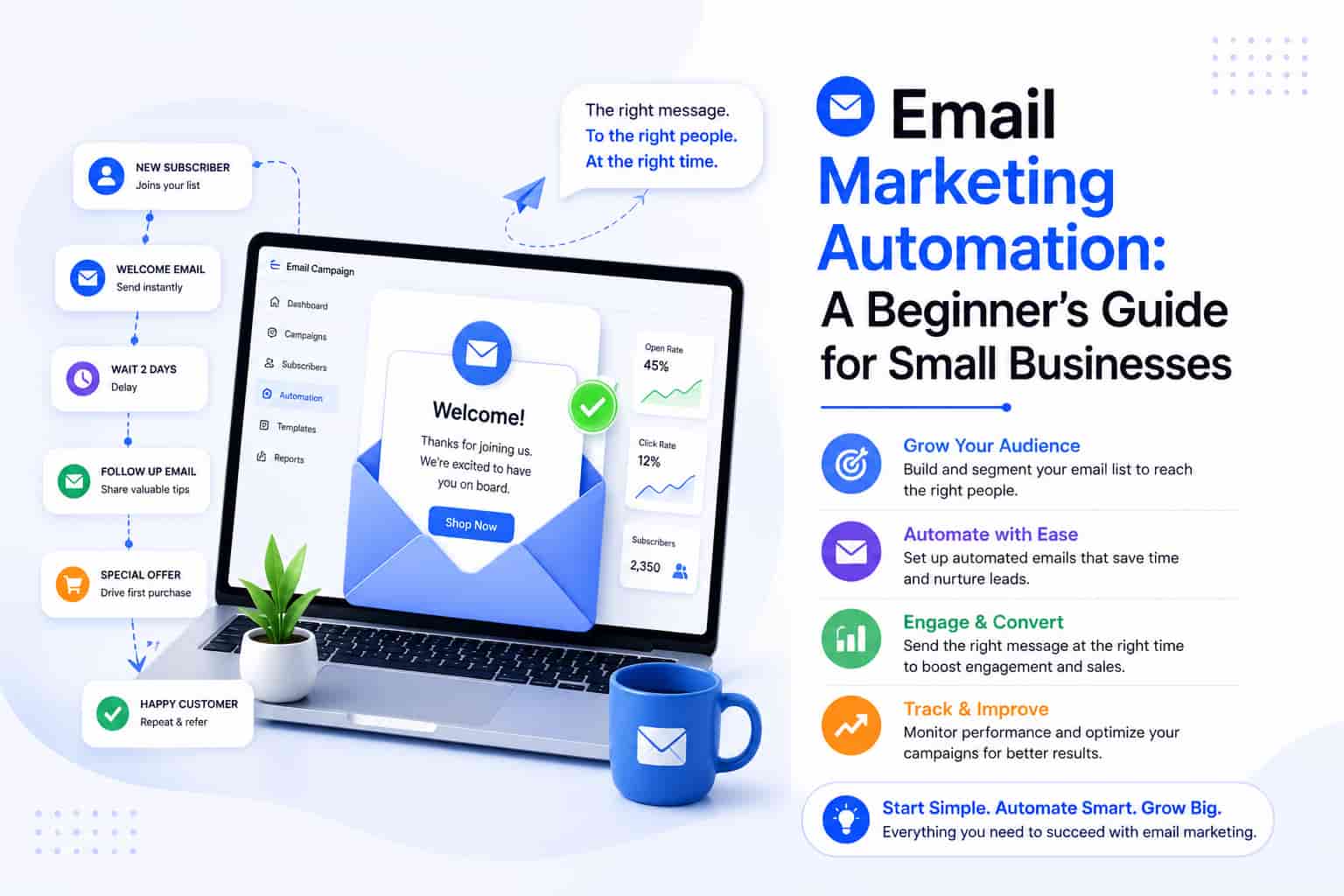
Email 1 (immediately): a warm welcome, what to expect, and a first small incentive. Email 2 (day 2–3): highlight your best-selling products or most useful resources. Email 3 (day 5–7): share social proof — reviews, case studies, or user-generated content. Email 4 (day 10): a stronger call-to-action, such as a limited-time offer, to convert engaged subscribers into first-time customers.
A Sample Abandoned Cart Sequence
Email 1 (1 hour after abandonment): a friendly reminder with images of the exact items left in the cart. Email 2 (24 hours later): address common objections — free shipping thresholds, return policy, or a limited-time incentive. Email 3 (48–72 hours later, final touch): a modest discount or urgency-based nudge, reserved for this final email so it doesn't train customers to always wait for a discount.
Writing Automated Emails That Don't Feel Robotic
Use conversational language, reference the specific trigger that brought the subscriber into the sequence, and avoid overly templated phrasing. Personalization tokens — first name, last viewed product, purchase history — go a long way toward making automated emails feel individually written.
A/B Testing Your Automated Sequences
Once a sequence is live, test one variable at a time — subject line, send time, or call-to-action wording — rather than changing multiple elements simultaneously, which makes it impossible to know what actually drove the improvement. Run each test long enough to gather statistically meaningful data before declaring a winner and updating the sequence permanently.
Measuring What Matters
Track open rates, click-through rates, and — most importantly — conversion rates for each automated sequence, not just for your list as a whole.
Common Automation Mistakes
- Too many emails, too fast: Overloading new subscribers with daily emails in the first week often triggers unsubscribes.
- Never updating sequences: Automated doesn't mean "set and forget" — review and refresh sequences quarterly based on performance data.
- Ignoring mobile formatting: A large share of emails are opened on mobile; unresponsive templates hurt both readability and conversion.
Start Small, Then Expand
Begin with one or two automated sequences, refine them based on real performance data, and gradually build a fuller automation ecosystem as your list and resources grow.
Conclusion
Email marketing automation gives small businesses the power to nurture leads, recover abandoned carts, and re-engage customers without adding manual workload. By focusing on smart segmentation, meaningful triggers, and continuously optimized welcome series and follow-up sequences, you can steadily improve open rates, click-through rates, and conversions. Start with one automated email marketing sequence today and build toward a full-funnel automation strategy over time.