

E-E-A-T for Small Business Websites: How to Show Google (and Customers) You're the Real Expert

Imagine two websites publishing an article on how to choose a home loan in India. The first is written anonymously, full of generic advice anyone could have written, illustrated with stock photographs and last updated three years ago. The second is written by a named loan advisor with twelve years of experience, includes real examples of the situations her clients face, explains fees using current figures, and shows the firm's registration details clearly. Which one would you trust with a decision worth lakhs of rupees? Google's quality guidelines are designed to reward the second.
That idea is captured in a framework called E-E-A-T, and understanding it helps small businesses compete with much larger websites.
What E-E-A-T means
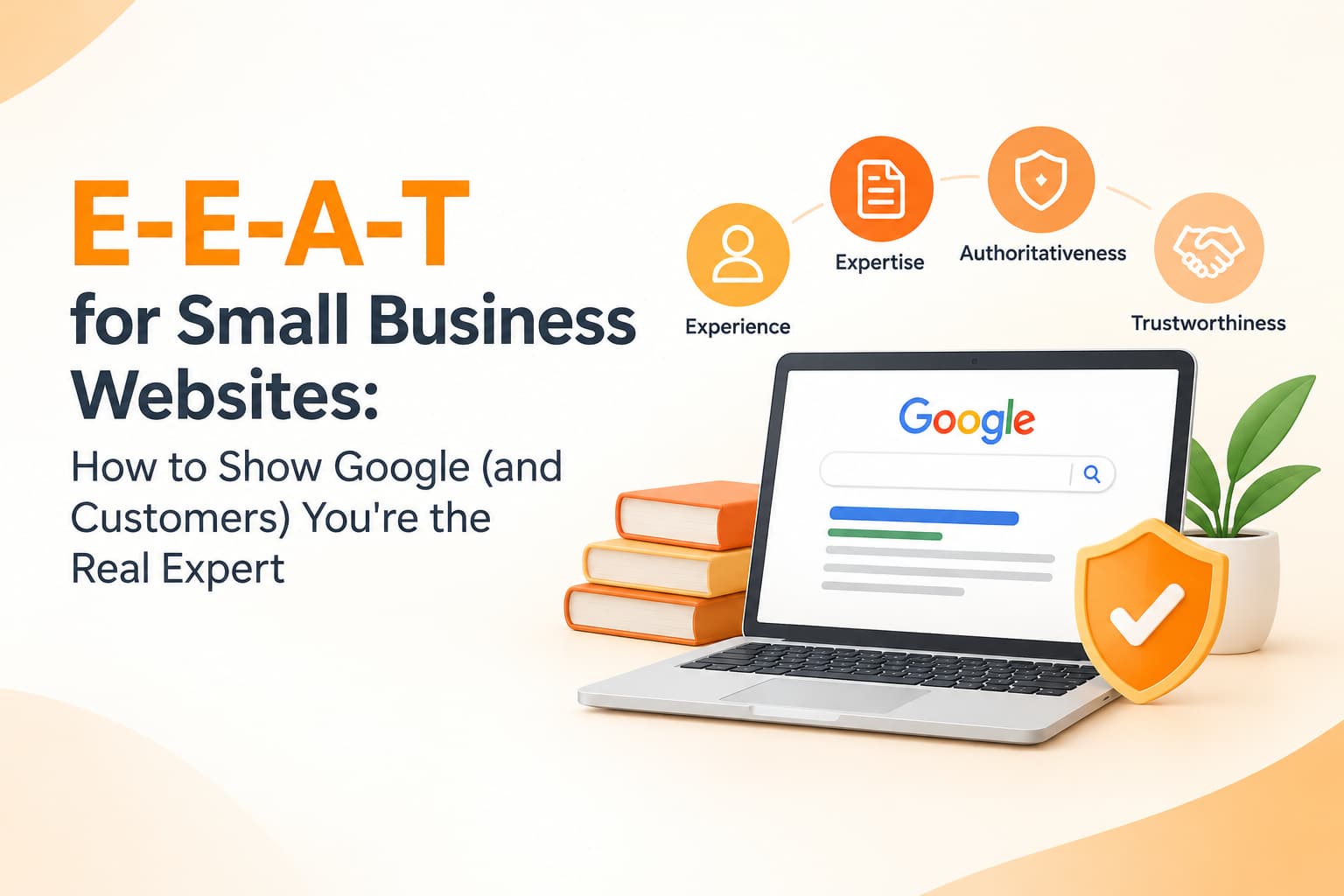
E-E-A-T stands for experience, expertise, authoritativeness and trust. Experience refers to first-hand involvement: you have actually done the work, used the product or lived the situation you are writing about. Expertise means relevant knowledge or skill in the subject. Authoritativeness is recognition by others, for example being cited, recommended or reviewed as a reliable source. Trust, which Google describes as the most important of the four, covers accuracy, honesty, safety and transparency.
E-E-A-T comes from Google's Search Quality Rater Guidelines, which help Google evaluate whether its search results are useful. It is not a single ranking factor or score that can be measured directly. Instead, it describes the qualities that Google's ranking systems aim to reward, and it matters most for topics that can affect people's health, finances or safety.
Why small businesses have an advantage
Large content websites can publish thousands of generic articles on every subject. What they often cannot show is genuine, hands-on local experience. An interior designer in Ludhiana, a dental clinic in Jaipur or a chartered accountancy firm in Chandigarh has real projects, real patients and real clients. They know the local regulations, prices and problems in detail. When that experience is shown clearly on a website, it becomes a powerful advantage that no content farm can easily copy.
Show who is behind the content
Start by naming the people who write or review your content. Each author should have a simple profile page with a real photograph, their role, qualifications, years of experience and links to professional profiles such as LinkedIn. Anonymous content, especially on serious topics, gives readers little reason to trust it. For health, finance and legal topics, content should be written or reviewed by qualified professionals, with a clear note explaining who reviewed it.
Demonstrate real experience
First-hand experience shows up in details. Include your own photographs of projects, products and premises rather than stock images. Describe real client situations, anonymised where necessary. Share the price ranges you actually quote and the lessons you have learned over years of work. A sentence such as "in the kitchens we have designed over the past decade, the most common regret is too little storage" signals genuine experience, provided it is true. Never invent experience; readers and search engines are increasingly good at noticing when content is hollow.
Make the business transparent
Trust grows when people can see exactly who they are dealing with. A clear About page introducing the founders and team, a physical address, phone number and email, relevant registration numbers such as GST or professional licences, and clear privacy, terms and refund policies all contribute. Hidden contact details and vague company information do the opposite.
Show proof and keep content current
Case studies, client logos used with permission, certifications, awards, media mentions and genuine reviews all demonstrate that others trust you. Equally important is accuracy over time. Show when content was last updated, and actually update it when rules, prices or tools change. Outdated information quietly erodes trust, particularly in fast-changing areas such as taxation, regulations and technology.
Build reputation beyond your website
Authority is not only built on your own pages. Reviews on Google, mentions in local media, speaking at industry events, active professional profiles and contributions to respected publications all shape how your brand is perceived, both by people and by search engines.
What damages trust
Anonymous content on serious topics, fake reviews or testimonials, exaggerated claims such as "guaranteed results", outdated information, hidden contact details and mass-produced content without real insight all undermine trust. Avoiding these is as important as adding positive signals.
Frequently asked questions
Is E-E-A-T a ranking factor?
Not as a single score. It describes qualities Google's systems aim to reward, so improving them generally supports better visibility.
Do service pages need author details?
Not always, but showing the people behind the business builds trust across the whole website.
Can AI-assisted content demonstrate E-E-A-T?
Only when real experts add genuine experience, check accuracy and take responsibility for what is published.
Show your real expertise
OM Enterprises helps businesses build author pages, case studies and expert-led content that earns trust with customers and search engines alike. Talk to our content team.