

Digital Marketing for Real Estate: Generating Qualified Leads in 2026

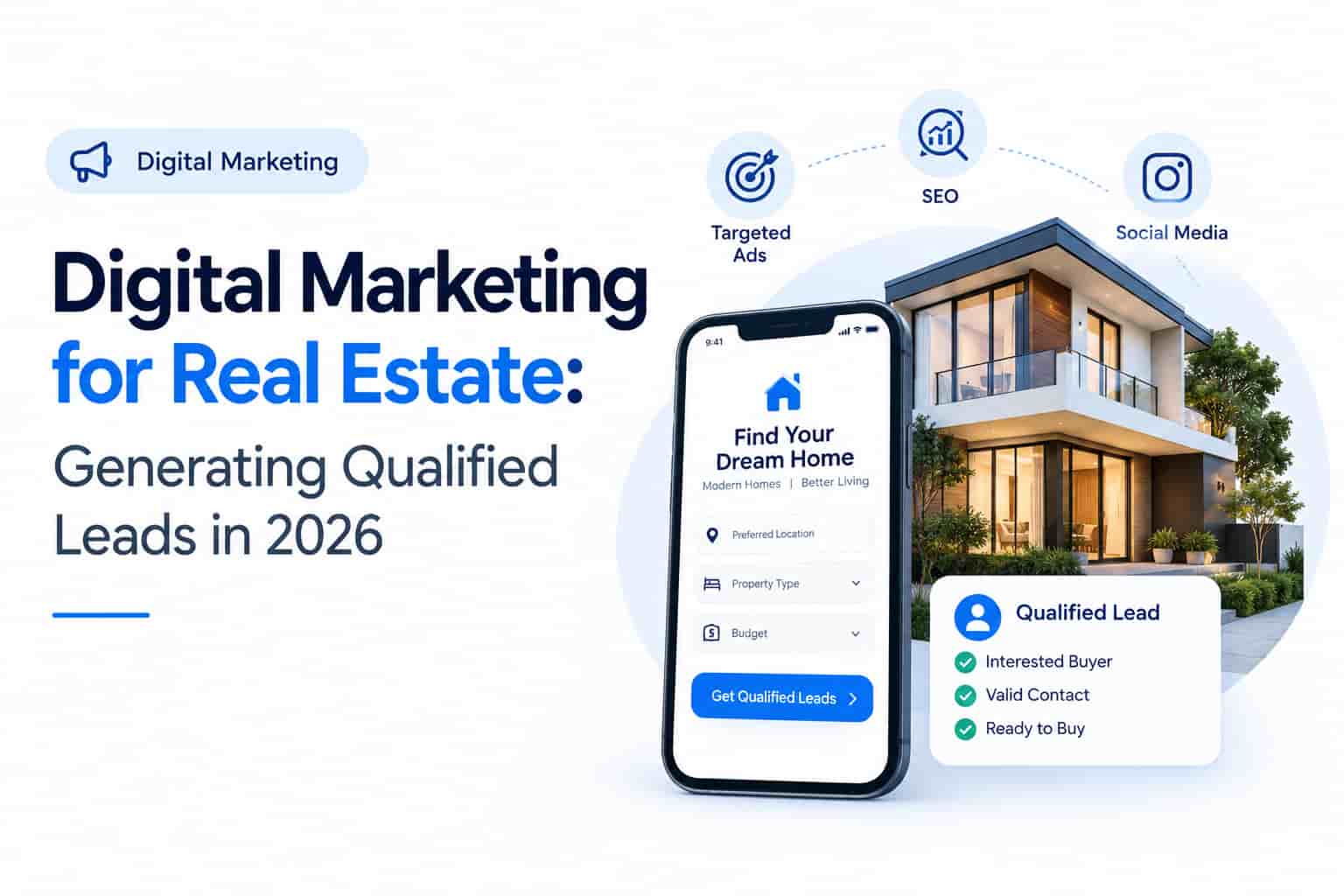
A real estate developer runs a lead-generation campaign, gets 400 form fills in a month, and closes zero site visits from them. The campaign "worked" by the metric it was measured on — cost per lead — while failing at the only metric that actually matters in real estate: cost per qualified site visit. This gap between lead volume and lead quality is the single most common problem in real estate digital marketing, and it usually traces back to how the campaign was set up, not how it was run.
Why Real Estate Lead Generation Behaves Differently
A real estate purchase is a high-consideration, high-value decision with a long research cycle, often involving multiple family decision-makers and site visits before any commitment. A lead form optimized purely to reduce cost-per-click will attract browsers, students researching for assignments, and people who accidentally clicked an ad — not necessarily people close to a buying decision. The fix isn't spending more; it's designing the funnel to filter for intent before the lead ever reaches a sales team.
Building Intent Into the Funnel
Instead of a single generic "get a callback" form, effective real estate funnels ask one or two qualifying questions upfront — budget range, preferred configuration (2BHK/3BHK), or intended timeline to purchase — which does two things: it filters out low-intent clicks before they become leads, and it gives the sales team context that speeds up the first call. WhatsApp-based lead capture, where a prospect can browse a project brochure, floor plans, and pricing directly in a chat rather than downloading a PDF from an ad landing page, tends to produce more engaged leads than a static form, because the prospect has already interacted with real project details before being asked to share contact information.
Channel Mix for Different Stages
Google Search ads capture people actively searching for a property type or location — high intent, but often high competition and cost per click in dense markets. Meta (Facebook/Instagram) ads work better for awareness and retargeting — showing project visuals and amenities to people who fit a demographic and interest profile but haven't searched yet. YouTube and Instagram Reels featuring genuine project walkthroughs, drone footage, and neighborhood context tend to build more trust than static images, particularly for under-construction projects where buyers can't physically visit yet. The right mix depends on project stage: new launches benefit more from broad awareness (Meta, YouTube), while near-completion or ready-to-move inventory benefits more from high-intent search capture (Google Ads, local SEO for "ready to move flats in [location]" queries).
Follow-Up Speed and Automation
Real estate leads decay fast — a lead contacted within five minutes of form submission converts to a site visit at a meaningfully higher rate than one contacted after a few hours, simply because the prospect is still actively comparing options. Automated instant WhatsApp or SMS acknowledgment (confirming receipt, sharing next steps) followed by a genuine human call within minutes closes this gap without requiring a sales team to be glued to a dashboard all day.
Common Mistakes
The most damaging mistake is judging campaign success purely by cost-per-lead rather than cost-per-qualified-site-visit or cost-per-booking, which rewards campaigns that generate cheap, low-intent volume. The second is treating every project launch with the same channel mix regardless of price point or construction stage. The third is slow or generic follow-up that treats every high-value real estate lead like a low-touch e-commerce order.
Frequently Asked Questions
What's a better metric than cost-per-lead for real estate campaigns?
Cost per qualified site visit or cost per booking, since these reflect actual buying intent rather than form-fill volume, which can be inflated by low-intent clicks.
Does WhatsApp work better than landing page forms for real estate?
It often produces more engaged leads because prospects interact with real project content in the conversation itself, though the best approach usually combines both depending on the ad platform and audience.
Turning Leads Into Site Visits
Real estate marketing succeeds or fails on lead quality and follow-up speed, not just ad spend. OM Enterprises builds qualifying lead funnels, WhatsApp-based project engagement, and fast follow-up automation for Indian real estate developers and brokers who need site visits, not just form fills.