

Customer Support Chatbot: What to Automate (WhatsApp & AI)

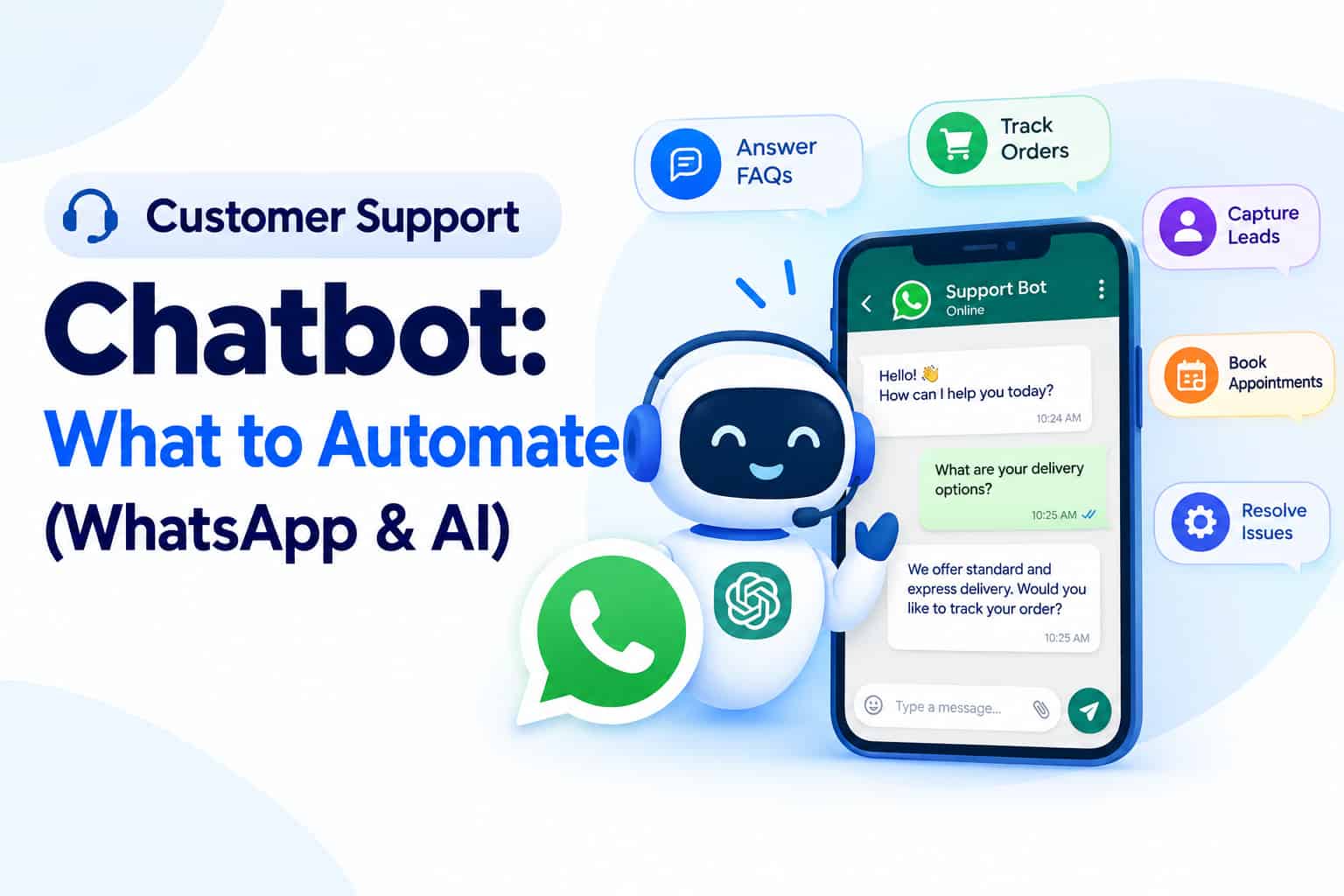
A customer support chatbot can answer routine questions at two in the morning, qualify leads while your team sleeps and cut response times from hours to seconds. A badly planned one frustrates customers and damages trust. The difference lies in planning rather than technology. This guide explains what chatbots do well, what should stay human, how rule-based and AI chatbots differ and how small businesses in India can set up a WhatsApp chatbot or website chatbot that genuinely helps.
What a Customer Support Chatbot Is
A chatbot is software that talks with customers through chat, usually on WhatsApp, a website widget, Instagram or Facebook Messenger. It can answer questions, collect details, book appointments and pass the conversation to a person when needed. When combined with the WhatsApp Business API, a chatbot lets you support customers on the app they already use every day, which is why so many Indian businesses start there.
What Chatbots Do Well
Chatbots shine at repetitive, predictable work. They answer the same questions about timings, prices, delivery areas, return policies and payment options without getting tired. They capture lead details such as name, number, requirement and budget before a salesperson gets involved, and they can book appointments by offering slots, confirming them and sending reminders. Connected to your store or CRM, they can share order or booking status instantly, and because they work around the clock they handle evenings, weekends and festival rushes when your team is stretched thin.
What Should Stay Human
Automation has limits. Complaints from upset customers need empathy that a bot cannot provide, and complex or high-value negotiations benefit from a real conversation. Anything involving sensitive health, financial or personal data should be handled with proper safeguards and usually by a person. A good rule is to hand over to a human whenever the bot fails to understand a customer twice in a row, so people never feel trapped in a loop.
Rule-Based vs AI Chatbots
Rule-based chatbots follow menus, buttons and fixed flows. They are predictable and easy to control, which makes them ideal for FAQs, bookings and order status. AI-powered chatbots use language models to understand free-text questions and respond more naturally, including in several languages, but they need accurate source content and ongoing monitoring because they can give wrong answers if your information is incomplete or outdated. Many growing businesses combine both, using buttons for the most common paths and AI for open-ended questions.
Seven Steps to Launch a Chatbot That Helps
Start by listing the twenty questions customers ask most, using calls, chats, emails and reviews as your source. Write short, accurate answers and assign one person to keep them updated. Choose the channel your customers already use, which is usually WhatsApp for support and your website for lead capture. Design a human handover that passes the full conversation to an agent, with the customer's name and issue, so nobody has to repeat themselves. Set the tone and language to match your brand, including Hindi, Punjabi and English where relevant. Test the bot with staff and a few real customers before launch, and review conversations every week afterwards to find unanswered questions and improve.
Be Transparent and Protect Data
Tell people when they are talking to an automated assistant and make it easy to reach a human. Honest design builds trust and reduces frustration. Collect only the information you need, explain how it will be used and store it securely, following India's data protection requirements and WhatsApp's business policies, including opt-in rules and approved templates for business-initiated messages. Our guide on SMS APIs explains how automated messaging connects with your other systems.
Measuring Chatbot Success
Judge your chatbot by results rather than novelty. Track the share of conversations resolved without an agent, the handover rate and the reasons behind it, customer satisfaction scores after chats, and the number of leads captured or appointments booked. Average response and resolution times show whether customers are getting faster help than before. Reading actual chat logs every week is the best way to spot gaps in your answers.
Common Mistakes to Avoid
The most frequent mistakes are long, confusing menus, no way to reach a person and outdated answers about prices, timings or offers. Many businesses also try to automate everything on day one, when it is far better to start with the top questions and expand gradually. The final mistake is launching a bot and never reading what customers actually say to it.
Frequently Asked Questions
Will a chatbot replace my support team?
No. It handles repetitive questions so your team can focus on complex, high-value conversations.
How long does chatbot setup take?
A simple rule-based bot can launch quickly, while AI chatbots need more time for content preparation and testing.
Which is better, WhatsApp or a website chatbot?
Most Indian customers prefer WhatsApp for support, while website chat works well for capturing new leads. Many businesses use both.
Conclusion
A well-planned customer support chatbot saves time, improves response speed and captures more leads while your team handles the conversations that need a human touch. Start with your most common questions, design clear handover, stay transparent and improve from real chat data.
OM Enterprises builds WhatsApp and website chatbots with human handover and CRM integration. Book a free demo and see how automation can transform your customer support.