

Connected TV Advertising in India: Why Brands Are Moving Budgets to Smart TV Screens in 2026

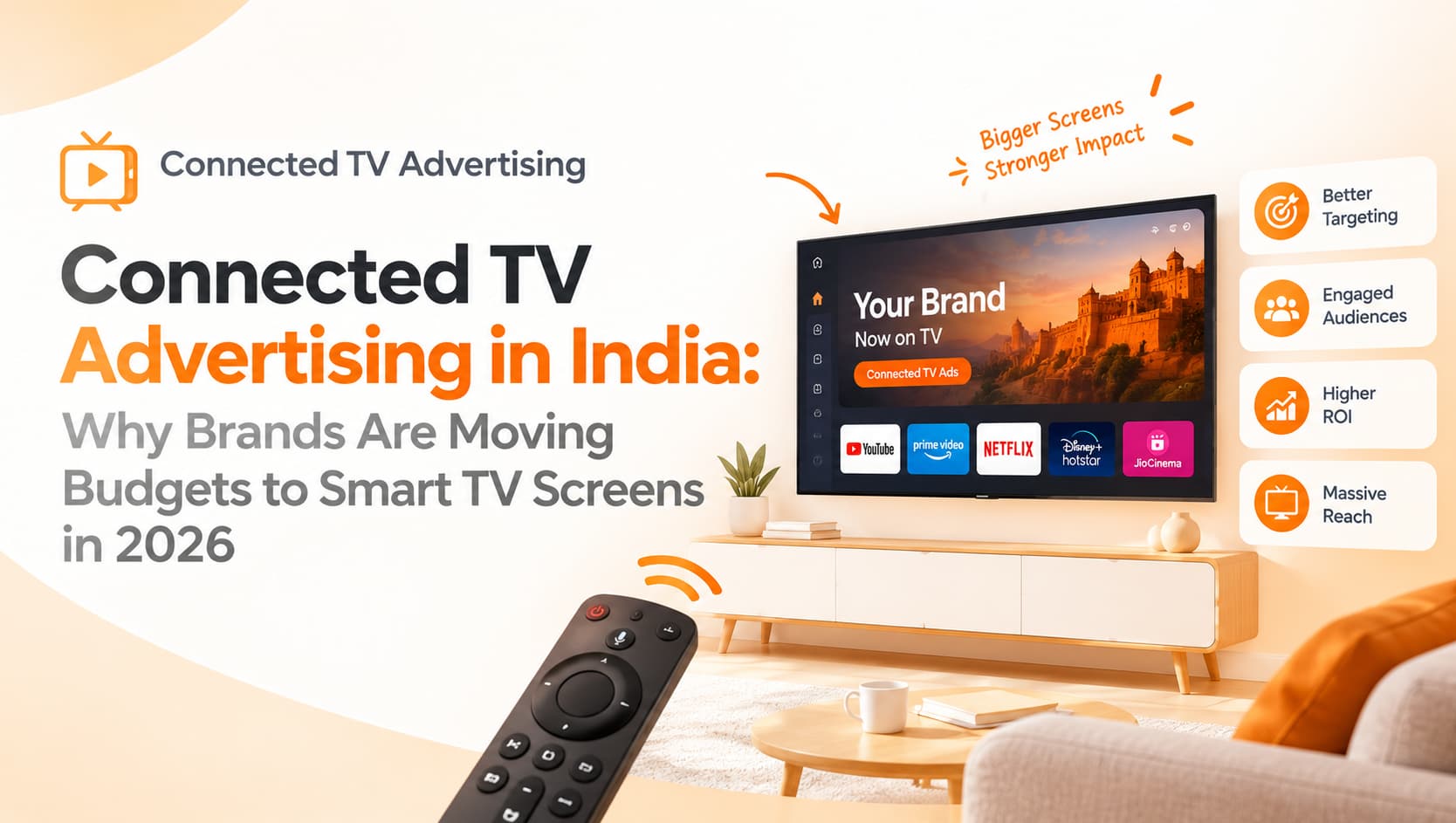
Walk into many urban Indian homes in the evening and the family is gathered around a television, but increasingly they are not watching a traditional cable channel. They are streaming cricket on JioHotstar, watching YouTube videos on the big screen, or catching a web series through a smart TV app. The television has become an internet device, and that shift is changing how brands reach households.
This is Connected TV, usually shortened to CTV, and it has grown quickly in India. A 2026 report by WPP Media and The Trade Desk, in partnership with Ormax Media, estimated that Connected TV reaches around 207 million viewers across roughly 62 to 65 million households, about three times the audience of 2022. JioStar reported that CTV was the fastest-growing platform during IPL 2026. For marketers, that combination of growing reach and big-screen attention is hard to ignore.
What Connected TV advertising is
Connected TV refers to any television that streams internet content, whether a smart TV, a streaming stick, a set-top box with apps or a gaming console. CTV advertising places video ads within that streamed content. Ads can appear within apps such as YouTube and major OTT platforms, inside live sports streams, and in some cases on the smart TV's own home screen or interface.
Unlike traditional television, where ads are bought by channel and time slot, CTV advertising can often be bought with digital targeting and measurement. That makes it a blend of television's impact and digital advertising's precision.
Why brands are paying attention
The first reason is attention and impact. Big screens, high-quality video and shared viewing create a strong environment for brand storytelling. Industry research from platforms has highlighted co-viewing, where several people watch together, which means one ad can reach a whole household at once.
The second reason is audience quality. Reports from industry bodies and platforms suggest CTV viewers skew towards more affluent, urban households, and many such homes watch less traditional linear television than before. For premium brands, financial services, automobiles, real estate, education and consumer durables, that audience is particularly valuable. Growth is also expected to spread to smaller cities as smart TVs become more affordable.
The third reason is measurement and targeting. Depending on the platform and buying method, advertisers may be able to target by location, language, interests, content type or audience segments, and measure reach, frequency and completion rates more precisely than traditional television allows.
Where CTV ads can run
For many Indian advertisers, YouTube is the most accessible entry point. YouTube campaigns can include TV screens as a device type, allowing brands to run video ads that appear when people watch YouTube on smart TVs. JioHotstar, which has the largest share of CTV ad inventory around major events such as IPL according to industry reporting, offers premium placements, particularly around live sports and popular shows. Other OTT platforms, smart TV manufacturers and programmatic platforms provide additional inventory, though buying options and minimum budgets vary widely.
Is CTV right for your business?
CTV makes the most sense for brands that want to build awareness and consideration at scale, especially those with strong video creative and a product relevant to households. Consumer brands, automobile dealers and manufacturers, real estate developers, education providers, financial services and D2C brands with growing budgets are natural fits. Local businesses can sometimes use location-targeted YouTube CTV campaigns effectively, particularly around festive seasons.
CTV is less suitable as a primary channel for businesses that need immediate, low-cost leads, since television viewers are not usually in a position to click and buy. It works best alongside search, social and messaging channels that capture the demand it creates.
Creative that works on the big screen
Television-style storytelling performs best. Show your brand clearly and early, keep the message simple and memorable, use high-quality visuals and sound, and design for viewers watching from across a room rather than on a phone. Because viewers cannot easily click, include clear brand recall cues and simple next steps such as a memorable website, a search term or a QR code where the platform supports it.
How to measure CTV campaigns
Measure CTV by reach, frequency and video completion rate, and look for its effect on other channels. Increases in branded search, website visits from the targeted regions, direct traffic and enquiries during and after campaigns are useful signals. Some platforms offer brand lift studies that compare exposed and unexposed audiences. Judging CTV purely by direct clicks undervalues its role.
Frequently asked questions
Is Connected TV advertising expensive?
Premium placements such as live sports can be costly, but YouTube CTV campaigns allow smaller budgets to test the channel.
Can I target specific cities with CTV ads?
Many CTV platforms, including YouTube, support location targeting, though options vary by platform.
Should CTV replace traditional TV advertising?
For many brands, CTV complements rather than replaces linear TV, depending on the audience.
Bring your brand to the big screen
OM Enterprises plans and manages video campaigns across YouTube, Connected TV and social platforms, connecting big-screen awareness to search, WhatsApp and lead capture. Talk to our video advertising team.