

Bulk WhatsApp Messaging vs Bulk SMS: Choosing the Right Channel for Festive Offers

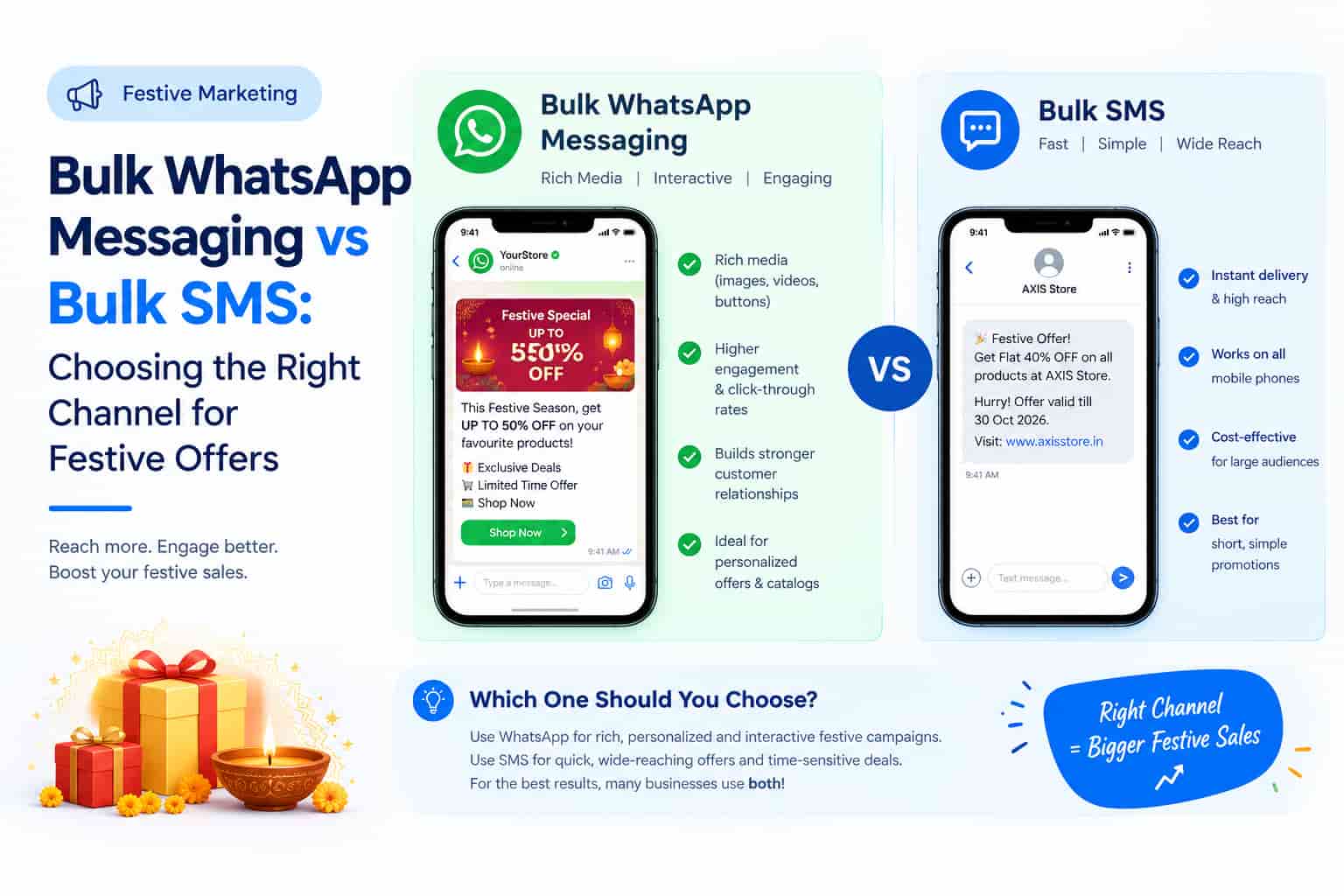
A business sends the same festive discount to its entire customer list on both bulk SMS and bulk WhatsApp simultaneously, spends double on messaging for the same offer, and can't clearly tell which channel actually drove the sales it saw. Running both channels isn't wrong, but running them identically and undifferentiated wastes budget and makes it impossible to learn which channel each part of the customer base actually responds to.
Reach: Where Bulk SMS Still Has an Edge
Bulk SMS reaches every mobile number regardless of smartphone ownership, app installation, or internet connectivity at the moment of delivery — a meaningful advantage for customer lists that include feature-phone users or areas with inconsistent connectivity. For a purely universal-reach broadcast, especially OTP-adjacent transactional-style offer codes, SMS remains the more dependable baseline channel.
Engagement: Where WhatsApp Generally Wins
WhatsApp messages are typically opened and read faster than SMS, and support rich formatting — product images, carousels, direct reply buttons — that plain SMS's 160-character text format can't match. For festive offers specifically, where showing the actual product or a visual of the discount tends to convert better than text alone, WhatsApp's format advantage is significant, provided the recipient has WhatsApp installed and the business is messaging within compliant, opted-in parameters.
Cost Comparison Isn't a Simple Per-Message Number
Bulk SMS pricing is straightforward and typically cheaper per message at scale, especially for promotional sends through DLT-registered promotional headers. WhatsApp's per-message pricing (Marketing template rate) is generally higher per message than bulk SMS, but can be offset by better response rates and by free replies within a customer-initiated service window — meaning the true cost-per-conversion, not cost-per-message, is the number that actually matters for comparing the two channels.
Compliance Considerations for Festive Campaigns
SMS promotional sends must respect the DND registry and permitted time windows under TRAI's framework, using a correctly registered promotional sender header. WhatsApp Marketing templates require pre-approval and, since businesses can't message a customer on WhatsApp without either an existing opted-in relationship or a template send, list quality and consent matter more directly on WhatsApp — a poorly-consented list risks template rejection or the business number being flagged.
A Practical Split for Festive Campaigns
A common, effective approach uses SMS as the universal-reach layer — ensuring every customer, regardless of app or device, receives the core offer — while WhatsApp carries the richer, higher-engagement version of the same campaign to the segment of the list known to be active on WhatsApp, often producing a meaningfully better response than either channel run identically to the full list. Segmenting by known engagement history (rather than blasting both channels to everyone) is what actually controls cost while improving results.
Frequently Asked Questions
Is WhatsApp always more expensive than SMS for festive campaigns?
Per message, generally yes for Marketing templates, but factoring in response and conversion rate, the effective cost per sale can be comparable or better on WhatsApp for audiences that are actively engaged there.
Should a business send the same festive offer on both channels to every customer?
Usually not — segmenting by known channel engagement and using SMS for guaranteed reach alongside WhatsApp for richer engagement with an active subset tends to outperform blasting both to everyone equally.
Choosing the Right Channel Mix for the Season
The right festive messaging mix depends on what each channel actually does best for a specific customer segment, not a default assumption that more channels means more sales. OM Enterprises plans and executes combined bulk SMS and WhatsApp festive campaigns for Indian businesses, segmented by what actually drives response on each channel.