

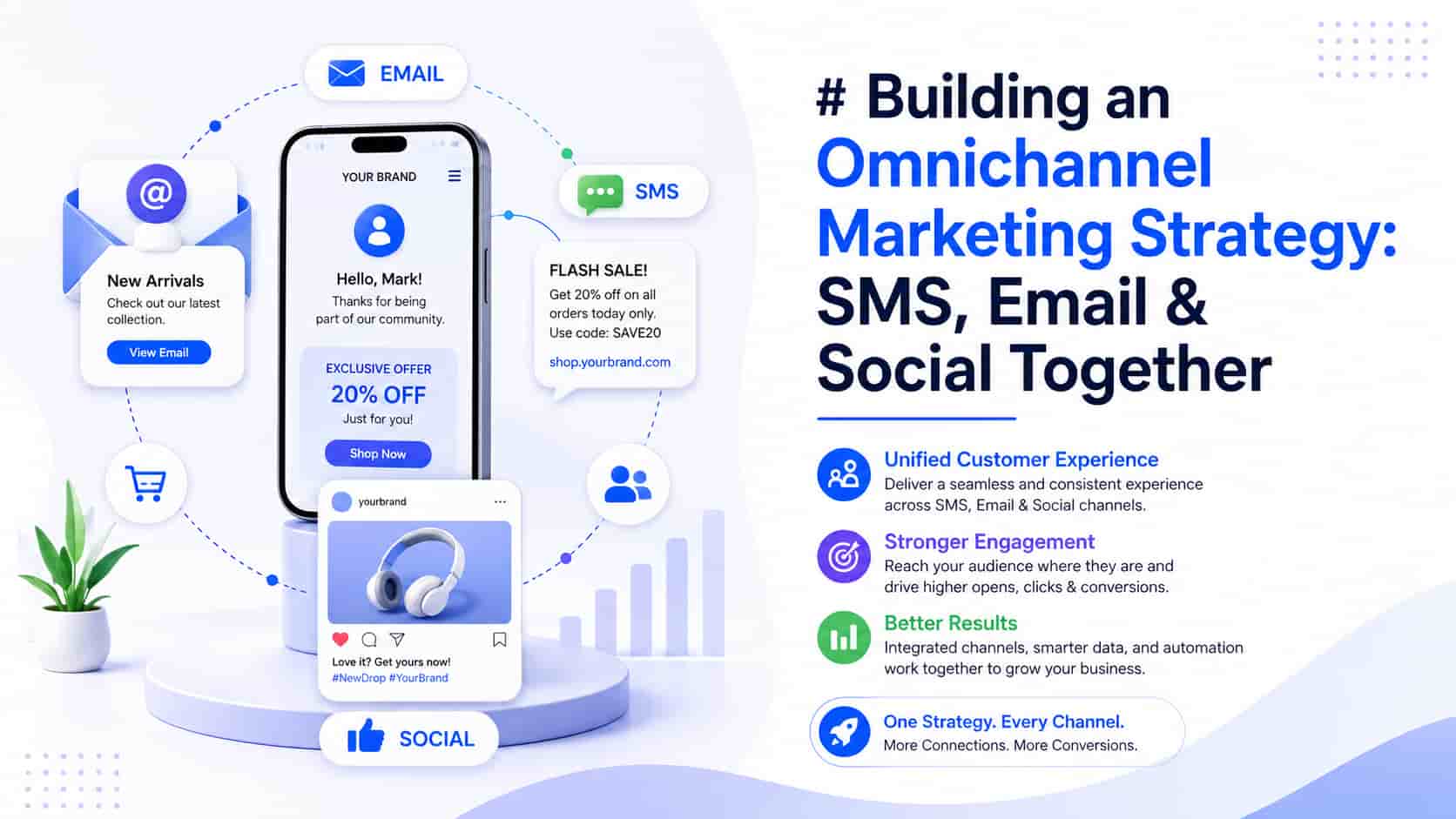
Building an Omnichannel Marketing Strategy: SMS, Email & Social Together

Why Single-Channel Marketing Falls Short
Customers today move fluidly between their inbox, social feed, and text messages. A brand that only shows up on one channel misses the moments when a customer is actually ready to engage.
The Core Channels of an Omnichannel Strategy
SMS delivers urgent, high-open-rate messages like order updates and flash sale alerts. Email handles richer storytelling, newsletters, and detailed offers. Social media builds brand presence and community engagement over time. Used together, each channel reinforces the others.
Omnichannel vs Multichannel: An Important Distinction
Multichannel marketing simply means being present on several channels. Omnichannel marketing goes further — it means those channels are connected, aware of each other, and coordinated around a single customer journey. A multichannel approach might send the same promotional email and SMS to everyone regardless of behavior; a true omnichannel approach adjusts the sequence, timing, and content based on what the customer has already seen or done on other channels.
Step 1: Map the Customer Journey
Identify where each channel fits naturally — a welcome email, a cart-abandonment SMS, a retargeting social ad — so messaging feels timed and relevant rather than repetitive.
Step 2: Unify Your Data
A single customer view across channels prevents the awkward experience of getting the same offer three times in one day through three different channels.
Step 3: Keep Messaging Consistent
Tone, offers, and branding should feel like one conversation, whether the customer sees your message in their inbox or their text thread.
Step 4: Measure Cross-Channel Impact
Track how channels influence each other — for example, whether an email open increases the likelihood of responding to a follow-up SMS — rather than measuring each channel in isolation.
A Sample Omnichannel Sequence
Consider a cart-abandonment flow: an email reminder goes out two hours after abandonment with product images and a discount code; if there's no open within 24 hours, a short SMS follows with a direct link; if the customer engages on social media in the meantime, a retargeting ad reinforces the same offer. Each channel picks up where the last left off instead of repeating the same message blindly.
Choosing the Right Channel Mix for Your Business
Not every business needs all three channels equally. E-commerce brands often lean on SMS and email for transactional moments and social for discovery. Service businesses may rely more heavily on email nurture sequences and SMS appointment reminders, with social media used primarily for brand awareness.
Tools and Technology for Omnichannel Execution
Running true omnichannel campaigns requires a customer data platform or marketing automation tool that can trigger actions across SMS, email, and social from a single rules engine, rather than managing three disconnected platforms manually. Look for a system that supports event-based triggers, unified customer profiles, and cross-channel reporting — without this foundation, "omnichannel" quickly reverts to disconnected multichannel messaging in practice.
Common Mistakes in Omnichannel Marketing
- Message fatigue: Sending the same offer across every channel on the same day overwhelms rather than engages.
- Disconnected tools: Using separate, unconnected platforms for SMS, email, and social makes a unified customer view nearly impossible.
- No clear channel role: Every channel should have a defined job in the journey — duplicating effort across channels wastes both budget and attention.
The Payoff
Businesses running coordinated, omnichannel campaigns consistently see stronger customer retention and higher lifetime value than those relying on a single channel.
Conclusion
A well-executed omnichannel marketing strategy turns SMS marketing, email marketing, and social media marketing into one coordinated system rather than three disconnected efforts. By mapping the customer journey, unifying your data, and measuring cross-channel impact, businesses can boost customer engagement, increase conversion rates, and build stronger long-term retention. Start with one connected sequence, like cart-abandonment recovery, and expand your omnichannel marketing strategy from there.