

Influencer Marketing in India 2026: ASCI Disclosure Rules Every Brand Must Follow

Festive season is when Indian brands spend most heavily on creators — gifting hampers, Diwali hauls, "my festive skincare routine" Reels. It's also when disclosure mistakes multiply. A creator forgets the #ad, buries it under twenty hashtags, or relies only on Instagram's "Paid partnership" label, and the brand ends up in an ASCI complaint list.
Many brands assume compliance is the creator's job. Under India's framework, it isn't only theirs. Here's what the rules require and how to build them into every campaign.
This article is general guidance, not legal advice. Refer to the latest ASCI guidelines and consult counsel for specific cases.
The core rule: disclose any material connection
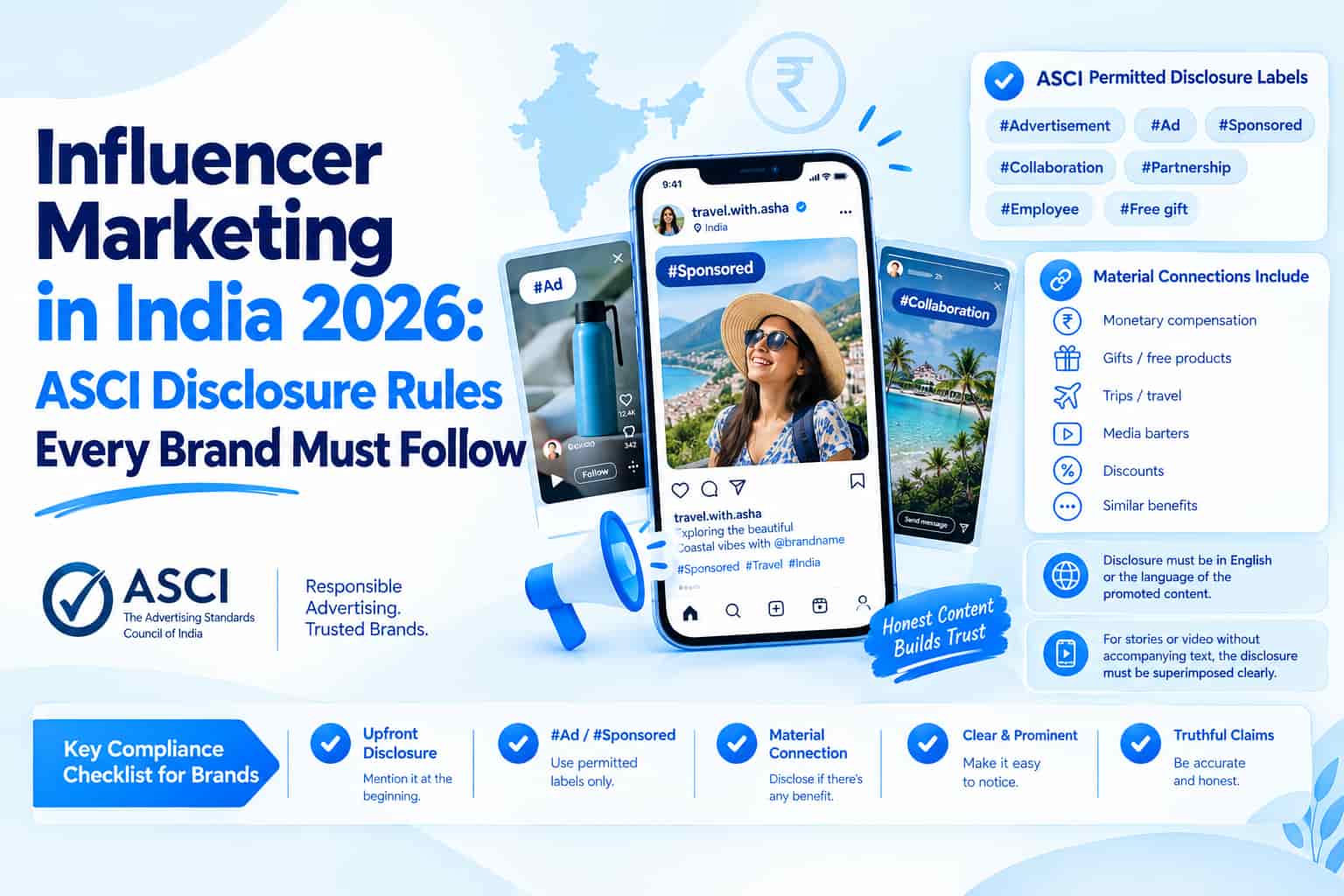
The Advertising Standards Council of India's Guidelines for Influencer Advertising in Digital Media require a clear disclosure whenever there is a material connection between the brand and the influencer. A material connection is broader than a cash payment. It includes:
- Payment or fees
- Free products or services (barter and gifting)
- Discounts, trips, hotel stays or event access
- Affiliate commissions
- Employment or family relationships with the brand
Follower count doesn't matter. The guidelines apply to a nano creator with a few thousand followers as much as to a celebrity.
Which labels count
ASCI expects plain labels an average consumer immediately understands, such as:
- #ad or Advertisement
- Sponsored
- Collaboration / #collab
- Partnership
- Employee (where relevant)
- Free gift (for gifted products)
Vague tags like #thanks, #love, #gifted-with-love or just tagging the brand handle don't meet the standard.
Where and how to disclose
- Upfront and hard to miss. Place the label at the start of the caption or prominently on the content — not hidden after "...more", in the bio, in a comment, or buried among hashtags.
- On the content itself for visual formats. For Stories and Reels where captions may not be read, the label should appear on the image or video.
- In video, not just in the description. For YouTube or long videos, the disclosure should be part of the video so viewers who never open the description still see or hear it.
- Platform tools help, but aren't enough alone. ASCI's guidance indicates that platform features like "Paid partnership" should supplement — not replace — the influencer's own clear disclosure.
- Match the language. If the content is in Hindi or Tamil, the disclosure should be understandable to that audience.
Special rules for sensitive categories
Finance creators (finfluencers)
ASCI's guidelines expect creators giving investment-related advice to disclose relevant SEBI registration details, alongside the usual paid-partnership disclosure. Brands in BFSI should check registration status before signing creators.
Health and nutrition creators
Creators making health-related claims are expected to have — and disclose — relevant qualifications. Claims must be substantiated; a fitness influencer shouldn't be promising medical outcomes.
Virtual influencers
Computer-generated or AI personalities should make clear to audiences that they aren't real humans, in addition to any advertising disclosure.
Why brands are responsible too
ASCI's guidelines place responsibility on advertisers to ensure influencer content complies, and brands can be asked to have non-compliant content edited or removed. Separately, the Central Consumer Protection Authority's endorsement guidance treats undisclosed paid endorsements as a consumer-protection issue. In other words, "the creator forgot" is not a defence.
A campaign compliance checklist
- Put disclosure in the contract. Specify the label, placement and format for each deliverable.
- Include it in the brief. Give creators example captions and on-screen label placements.
- Review content before it goes live. Check the disclosure, not just the product shots.
- Verify claims. Make sure creators only say what you can substantiate — especially on price, health and performance.
- Check qualifications for finance and health creators.
- Monitor after posting. Screenshot live posts and check Stories that disappear after 24 hours.
- Cover gifting. Even unpaid PR hampers create a material connection if the creator posts about them.
Does disclosure hurt performance?
It's a common fear, but audiences are used to labelled collaborations. What damages trust is discovering an undisclosed deal later. Clear disclosure, a creator who genuinely fits your product, and honest content tend to outperform disguised ads — and they keep your brand out of compliance trouble.
Frequently asked questions
Is Instagram's "Paid partnership" tag enough?
ASCI's guidance indicates platform tools should be used in addition to, not instead of, the creator's own clear disclosure.
Do gifted products need a disclosure?
Yes. Free products are a material connection, so posts about them should be labelled.
Do the rules apply to small creators?
Yes. ASCI's guidelines aren't tied to follower count.
Who is responsible if a creator doesn't disclose?
Both the influencer and the advertiser share responsibility under ASCI's guidelines.
Run creator campaigns the right way
OM Enterprises plans and manages influencer campaigns with creator selection, compliant briefs, content review and performance tracking built in. Talk to our social media team about your festive creator campaign.