

AI Personalisation in WhatsApp, SMS and Email Marketing: How to Send the Right Message to Each Customer

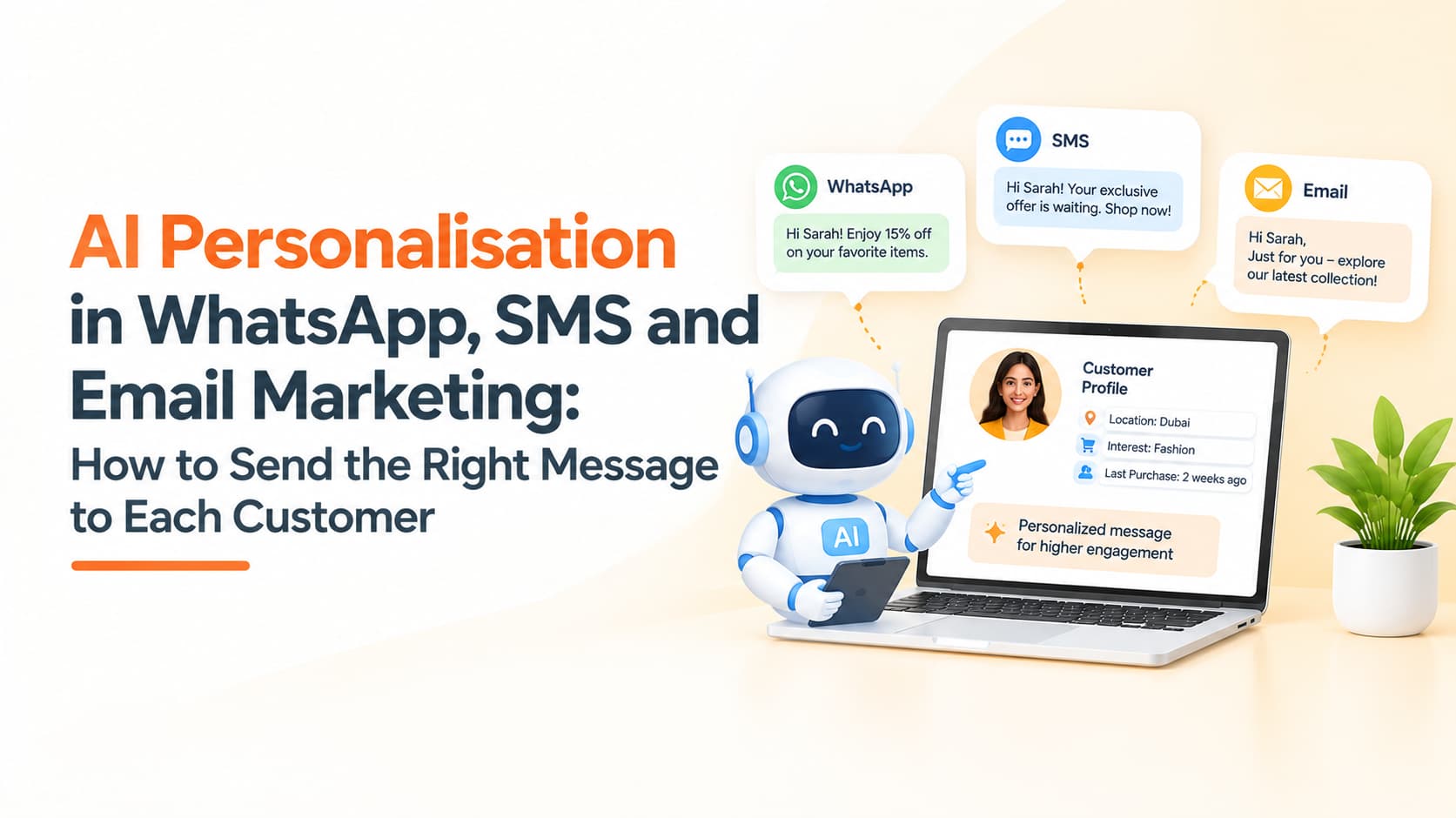
An online store sends the same festive offer to its entire customer list. A college student who bought a phone case once receives a message about premium furniture. A loyal customer who orders every month gets the same "We miss you!" discount as someone who has not bought in two years. A busy professional who only opens messages in the evening receives everything at nine in the morning. The result is predictable: low engagement, rising opt-outs and a sense among customers that the brand does not really know them.
AI personalisation offers a smarter approach. By analysing customer behaviour and preferences, AI tools can help businesses decide what to send, to whom, when and through which channel. Done well, it makes messages feel relevant and helpful rather than intrusive.
Personalisation goes beyond using a first name
For years, personalisation meant adding a customer's name to a message. That still helps, but it is only the beginning. Meaningful personalisation adapts the content itself, such as product recommendations based on past purchases, reminders based on usage cycles or offers that match a customer's interests. It adapts timing, sending messages when each customer is most likely to read them. And it adapts the channel, reaching some customers on WhatsApp, others through SMS or RCS and others by email, depending on how they prefer to engage.
How AI helps
AI tools can analyse large amounts of customer data far faster than people can. They can group customers into meaningful segments based on behaviour, such as frequent buyers, price-sensitive shoppers, lapsed customers or people interested in specific categories. They can predict which customers are likely to buy again soon, which are at risk of leaving and which products a customer is likely to be interested in next.
AI can also help with timing, learning when individual customers tend to open messages and scheduling accordingly. Generative AI can draft message variations for different segments, such as a warmer tone for loyal customers or a more informative message for new ones, which teams can then review and refine. Some platforms also use AI to test variations automatically and shift sending towards the best-performing versions.
Practical examples for Indian businesses
A D2C skincare brand might use purchase history to send a refill reminder around the time a customer's product is likely to run out, through WhatsApp for customers who usually reply there and SMS for others. A clinic could send personalised check-up reminders based on each patient's last visit and treatment type. A coaching institute might send course recommendations based on the subjects a student enquired about and the exam they are preparing for. An electronics retailer could recommend accessories relevant to the specific device a customer bought, rather than blasting every promotion to everyone.
In each case, the message feels relevant because it reflects something the customer actually did or needs.
The data foundation matters
AI personalisation is only as good as the data behind it. Businesses need reasonably clean customer records, including purchase history, preferences, engagement with past messages and consent status, ideally connected through a CRM or customer data platform. Scattered spreadsheets, duplicate records and missing consent information limit what AI can do and increase risk. Investing in data hygiene is often the most important first step.
Respect consent and privacy
Personalisation must never come at the expense of trust. Send marketing messages only to customers who have opted in, follow TRAI's rules for SMS, including DLT registration and approved templates, and follow Meta's policies for WhatsApp templates. India's Digital Personal Data Protection framework emphasises clear, purpose-specific consent and responsible handling of personal data, so be transparent about how you use customer information and make it easy for customers to opt out.
Avoid personalisation that feels invasive. Referencing a customer's recent purchase to suggest a relevant accessory feels helpful; referencing sensitive information such as health conditions or financial difficulties in a marketing message can feel creepy and damage trust. Keep a human review process for AI-generated messages, particularly in regulated sectors such as healthcare, finance and insurance.
How to start small
Begin with one or two high-value journeys, such as post-purchase follow-ups, repeat purchase reminders or win-back messages for lapsed customers. Segment customers using a few simple behaviours, test personalised messages against generic ones and measure the difference in engagement, conversions and opt-outs. As results prove the value, expand to more journeys and more sophisticated AI features.
Frequently asked questions
Do small businesses need AI for personalisation?
Not always. Simple segmentation can deliver strong results, while AI helps as data and customer numbers grow.
Can AI write personalised messages automatically?
It can draft variations, but human review is important for accuracy, tone and compliance.
Does personalisation increase opt-outs?
Relevant, well-timed messages usually reduce opt-outs compared with generic blasts.
Make every message feel relevant
OM Enterprises helps businesses build personalised journeys across WhatsApp, SMS, RCS and email, using customer data and AI responsibly. Talk to our automation team.