Ads in Google AI Overviews and AI Mode: What Advertisers Need to Know in 2026

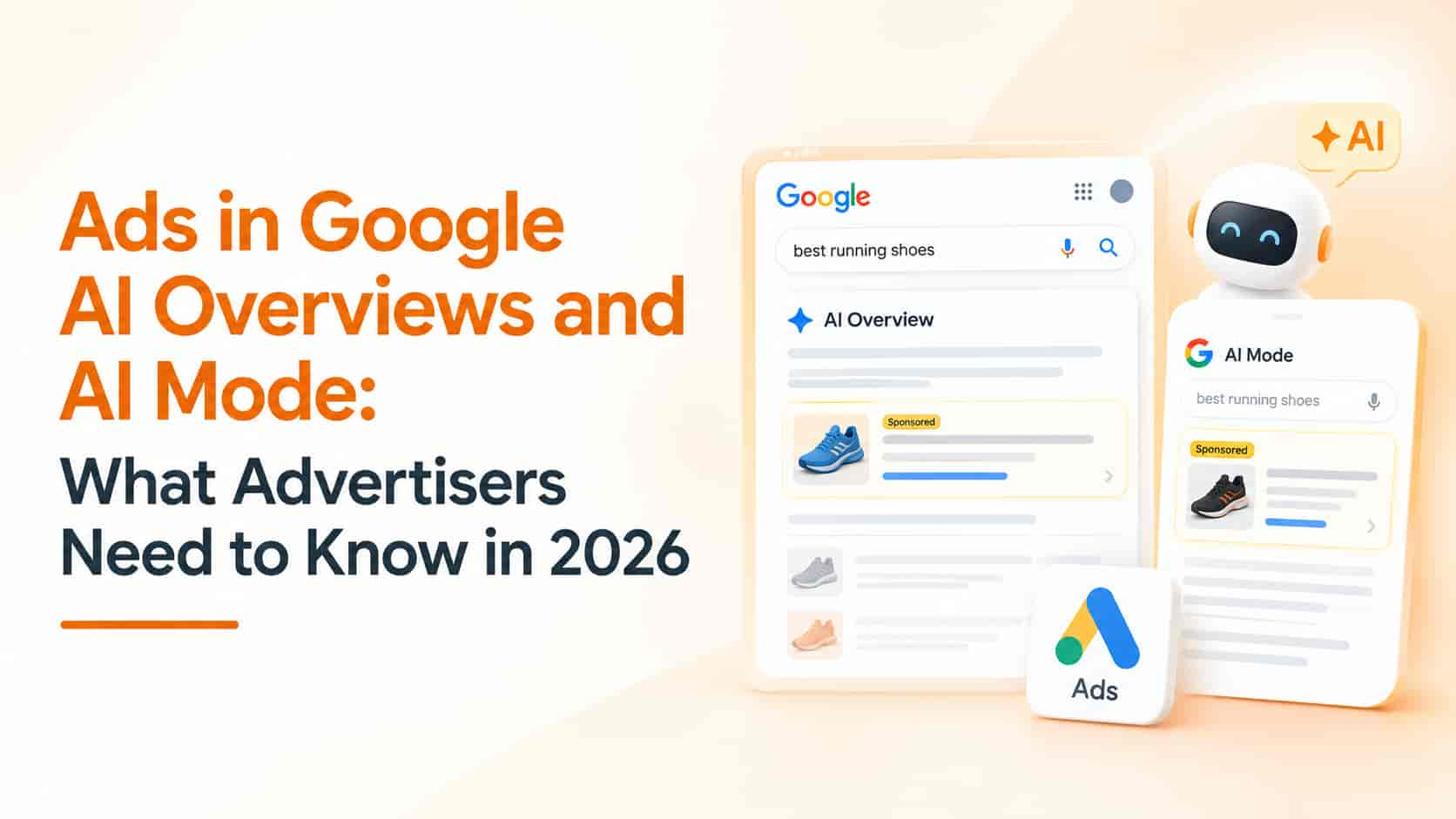
For more than two decades, search advertising followed a predictable pattern. Someone typed a few keywords, Google showed a list of ads and organic results, and the advertiser with the right keyword and a competitive bid won the click. AI-powered search is changing that pattern. Searchers now ask longer, more conversational questions, and Google increasingly answers with AI-generated summaries and multi-turn conversations in AI Mode. For advertisers, the obvious question is where ads fit in this new experience.
The answer is that ads are moving into these AI experiences too, and advertisers who understand how eligibility works will be better placed than those who simply keep running old keyword-only campaigns.
How AI search changes the advertising landscape
AI Overviews appear at the top of many search results, summarising information from across the web. AI Mode offers a more conversational experience, where people can ask follow-up questions and explore topics in depth. Both change user behaviour. Searches become longer and more specific, people may get answers without clicking through to websites, and the path from question to decision can become shorter.
Google has been integrating ads into these experiences, so that relevant commercial messages can appear alongside or within AI-generated responses when a user's question shows commercial intent. Availability and formats have been expanding gradually across markets and languages, so the exact experience depends on where your customers are and what they are asking.
Which campaigns can appear
Eligibility has broadened over time. Google's AI-driven campaign types, including Performance Max and Search campaigns using broad match or AI Max for Search, have been central to how ads reach AI search experiences, because they can match ads to the long, conversational queries these features generate. In September 2026, Google confirmed that exact and phrase match keywords in standard Search campaigns can also serve text ads in AI Mode for direct-intent queries, meaning advertisers who were not automatically migrated to AI Max can still reach some of this inventory without rebuilding campaigns.
Because Google continues to update these rules, check the latest guidance in your Google Ads account and help centre before making major structural changes.
What this means for keyword strategy
Traditional keyword lists were built around short phrases such as "bulk SMS provider". AI search queries often look more like "which bulk SMS provider in India is best for OTPs for a small fintech app". It is impossible to anticipate every such query with exact keywords. That is why Google's systems increasingly rely on understanding your business through your landing pages, assets and conversion data, rather than only through the keywords you add.
This does not make keywords irrelevant. They still signal intent and provide control. But it does mean that the quality of your website content, the clarity of your ad assets and the accuracy of your conversion tracking have become more important to reaching AI search users.
How to prepare your account
Start with your landing pages. AI-driven matching uses them to understand what you offer, so make sure each important page clearly explains a specific product or service, who it is for, prices or price ranges where appropriate and how to get started. Vague, generic pages give automation little to work with and may result in poorly matched traffic.
Next, strengthen your ad assets. Provide a variety of strong headlines and descriptions that cover different benefits and customer questions, along with sitelinks, callouts, images and other assets. If you use AI Max's text customisation, set brand guidelines and exclusions so generated copy stays accurate and compliant.
Conversion tracking is critical. Automated systems optimise toward the actions you track, so make sure you measure meaningful outcomes such as qualified leads and purchases rather than shallow actions. Enhanced conversions and offline conversion imports can significantly improve the signals Google receives.
Finally, keep control where it matters. Use negative keywords, brand exclusions and URL exclusions to prevent irrelevant matches, and review search term reports regularly to understand which conversational queries are triggering your ads.
Measuring performance in AI search
Reporting for AI search placements has been evolving, and advertisers may not always see these placements separated clearly from other search traffic. Focus on overall outcomes: cost per qualified lead, return on ad spend and conversion quality. Monitor search term reports for longer, question-style queries, which can indicate traffic from AI-driven experiences. Compare performance before and after adopting AI-driven features, keeping other variables steady where possible.
Frequently asked questions
Do I need AI Max to appear in AI Mode?
Not necessarily. Google has indicated that exact and phrase match keywords can serve text ads in AI Mode for direct-intent queries, though AI-driven matching can broaden reach.
Will AI search reduce my ad clicks?
It may change click patterns, but users with commercial intent still look for providers. Relevance and strong landing pages matter more than ever.
Are AI search ads available in India?
Availability has been expanding across markets and languages. Check current options in your Google Ads account.
Prepare for the next era of search ads
OM Enterprises helps advertisers adapt Google Ads accounts for AI-driven search, improving landing pages, assets and conversion tracking so campaigns reach the right customers. Book a Google Ads strategy review.